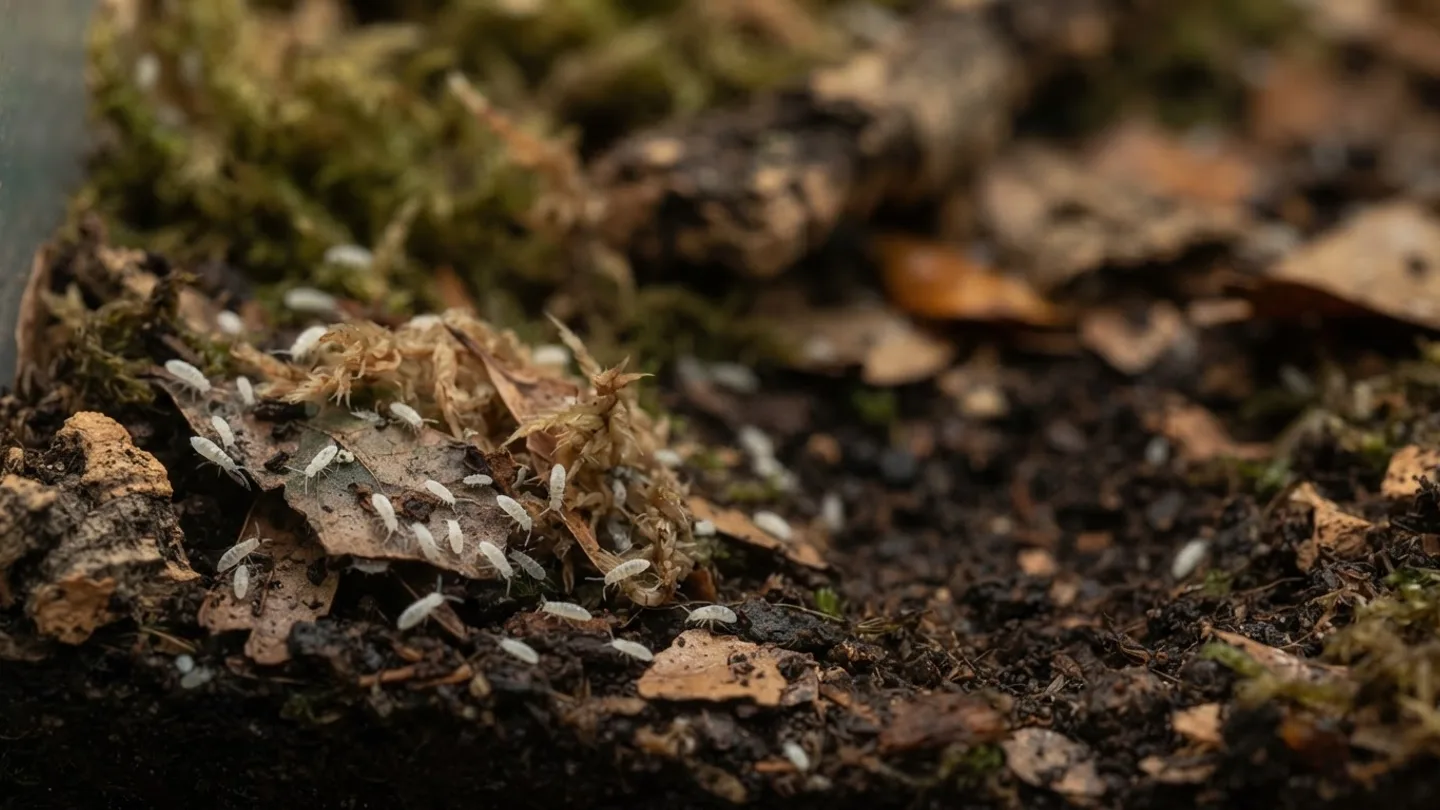
Springtails for Terrariums: Why Every Setup Needs Them
If your tarantula vivarium grows a fuzzy white patch near a water dish, or your jumping spider leaves small prey bits on the bark, springtails are a clean-up crew that can handle much of that mess before mold spreads. A clean-up crew is a group of small invertebrates added to help process waste in a setup.
They are not a cure for bad ventilation, and they are not needed in every plain dry tarantula hide. They shine in bioactive terrariums, where living plants, leaf litter, moist substrate and animals share a space. A springtail culture can also live beside a reptile setup, an isopod tank, or a jumping spider vivarium.
This guide keeps it practical: what springtails eat, whether they are safe with pet spiders, how many to add from a culture, how to keep them alive, and what to do if the population fades.
What this guide covers
Quick takeaways
- Springtails eat mold, spider waste, leftover prey and shed skin.
- They are safe with tarantulas and jumping spiders, and they do not bite.
- A moderate start is best: a pinch for a small vivarium, about a quarter cup for a 12 inch vivarium.
- Keep a damp corner, good ventilation, and room temperatures near 60 to 80°F for most common cultures.
- Persistent mold and almost no hopping specks usually mean the culture is struggling or too dry.
What springtails do and why they are safe
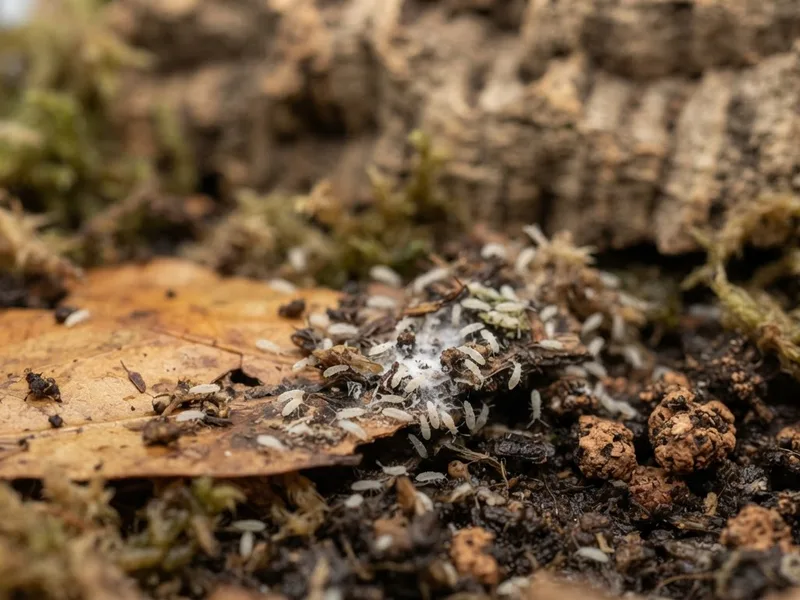
Springtails are a classic clean-up crew member for bioactive terrariums. They eat mold, algae, fungus, dead plant material, spider waste, leftover prey and shed skin. In a tarantula or jumping spider enclosure, that matters because the smallest problems often start as damp debris you cannot see easily. They reduce surface mess without turning the setup into a pest problem.
They are safe with tarantulas and jumping spiders. They do not bite, they do not deliver venom, they do not burrow into a healthy spider, and they are not a threat to people. A tarantula or jumper may eat them if it catches one, and that is fine. For a sling, a young tarantula, use a moderate population so the small spider is not chased by too many moving bodies.
They are not a substitute for basic husbandry. If you leave uneaten prey for days, if water sits stagnant, or if the enclosure is sealed with no ventilation, mold, bacteria and unpleasant odor can still grow. Springtails help, but the keeper still controls enclosure size, moisture, temperature and cleaning.
For most US keepers, springtails are a low-risk, useful addition to a jumping spider vivarium or a bioactive tarantula setup. They are less useful in a simple dry hide with no substrate, because the enclosure does not have the damp organic matter they need.
Seeding and stocking a terrarium
Start with a healthy culture
If the springtail culture has been dry, mist it lightly and wait a day before adding it to the terrarium. Dry cultures can arrive stressed, and a damp rest helps them wake up.
Add a practical starting amount
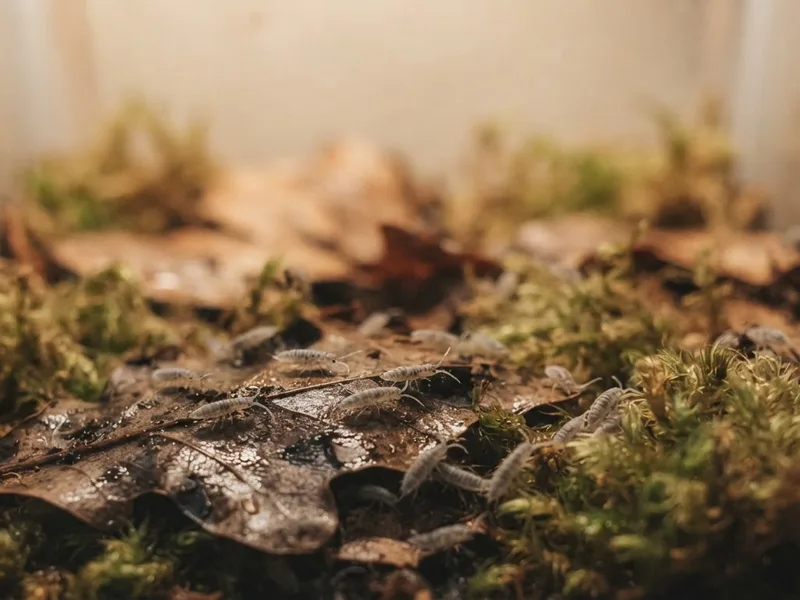
You do not need to count each animal. Cultures vary in density, so judge by volume and coverage. For a small 6 to 8 inch vivarium, use a pinch or 1 to 2 tablespoons of culture material. For a 12 inch vivarium, use about a quarter cup. For an 18 inch or larger bioactive tank, use half a cup to one cup, split across moist corners.
Place them where moisture and food exist
Add springtails around the water dish edge, on damp moss, under leaf litter, and near bark or charcoal. Do not dump them all into a dry hiding corner, because they will drift away or fade quickly there.
Give them undisturbed time
Leave the enclosure mostly closed for 24 to 48 hours so springtails can move into the substrate before the spider disturbs them. A little disturbance is normal, but constant tapping or rearranging can make it harder for the culture to settle.
Watch for activity
If you see tiny pale, gray or dark specks hopping or crawling along wet surfaces after a week, the culture is finding its footing. Springtails are small, so look closely near moisture and debris.
Restock if needed
If mold continues and you still see almost no springtails, add another small amount, but first check for dryness, heat and chemicals. More animals will not fix the same bad conditions.
Keeping springtails alive
Springtails live near moisture but not underwater. In a bioactive setup, keep a damp corner, a wet patch around a water dish, or a moist moss area. The substrate should feel damp when you touch it, not dripping or swampy. If water pools and becomes sour, the problem is usually enclosure hygiene, not lack of humidity.
Most common springtail cultures do well at typical US indoor temperatures, about 60 to 80°F. A jumping spider vivarium or tarantula enclosure at normal room temperature is usually fine. If you house a tarantula that needs a basking area at 85 to 90°F, give the springtails cooler moist spots away from the heat. Species differ, so the safest approach is to create zones, not one hot wet box.
Food is simple. In a spider terrarium, they eat mold, waste and leftovers. If the enclosure is very clean and you want the culture to multiply, add a tiny amount of fish food, a pinch of baker's yeast, or a small piece of plain uncooked rice to the damp substrate. Use just a flake, not a meal, because too much food encourages mold.
Ventilation matters. Springtails need humid air and surfaces, but many common cultures are not adapted to sealed wet conditions with no gas exchange. A mesh lid, partial screen top, or daily venting is safer than a fully sealed jar.
Do not use chemical pest killers, treated wood, or strong disinfectants in a springtail setup. These can crash a culture fast. A fresh springtail culture can handle normal mold and waste, but it cannot handle a pesticide residue.
If the springtail population crashes
Check for dryness first
If the moss is crisp, the soil is pale, or there is no water film near the dish, humidity is too low. Raise it with a light mist or a damp moss patch, not a flood.
Check temperature
If the enclosure sits in direct sun, near a heater, or over a heat mat with no cool side, the culture may be stressed. Move it away from the heat source or create a cooler moist corner.
Check for chemicals
New spray, treated wood, pesticide, or disinfectant can wipe out springtails. Remove the contaminated top layer if you can, add fresh substrate, and restock only after the source is gone.
Check food balance
A very clean setup may lack enough mold or waste for springtails to build numbers. Add a tiny food boost. A setup loaded with leftovers may need less food and more cleaning, because mold can outpace the crew.
Inspect the water dish
If springtails gather and then disappear, the water may be stagnant, oily, or contaminated. Rinse the dish, keep water shallow, and add small stones or cork bark edges so the animals can climb out.
Restock conservatively
Add a small amount from a healthy culture or get another starter, then wait two weeks before judging. If conditions are right, a modest culture will usually become visible again.
Common springtail questions
Do springtails harm tarantulas or jumping spiders?
No. They do not bite, they do not sting, and they are not parasites of healthy spiders. A spider may eat them, which is harmless. In a small sling, avoid overstocking so the young tarantula is not overwhelmed by constant movement.
Can springtails get too damp?
They need damp surfaces, but they do not want to live underwater. Keep a moist corner or shallow water with climbing edges. If the enclosure is swampy and smells sour, fix ventilation and remove standing debris before adding more springtails.
Will springtails eat my plants?
Usually no. Healthy plant leaves are not their main food. They are more likely to consume rotting leaf matter, mold on soil, and decaying plant parts, which is one reason they are useful in a bioactive build.
How do I tell springtails from mites?
Springtails are tiny and often move quickly, with a hopping or flicking motion when disturbed. Mites may be slower, rounder, and more likely to cluster as a pest problem. If you are unsure, add a small white card near moisture and watch what appears over a day or two.
Do I need springtails in every tarantula enclosure?
No. A simple dry hide with little organic matter may not support them. They are most useful in bioactive setups, moist vivariums, and enclosures where mold, waste or leftovers tend to build up.