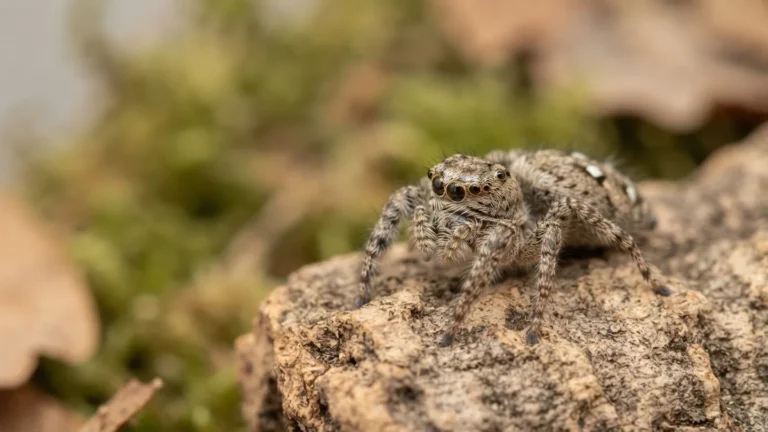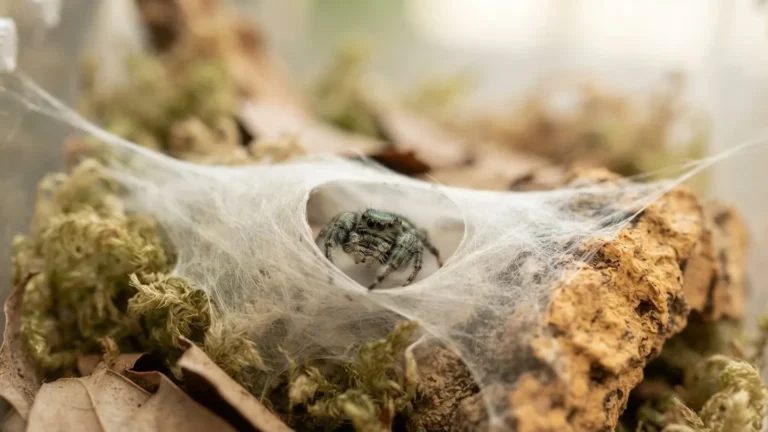
What Do Jumping Spiders Eat? A Prey Guide by Size
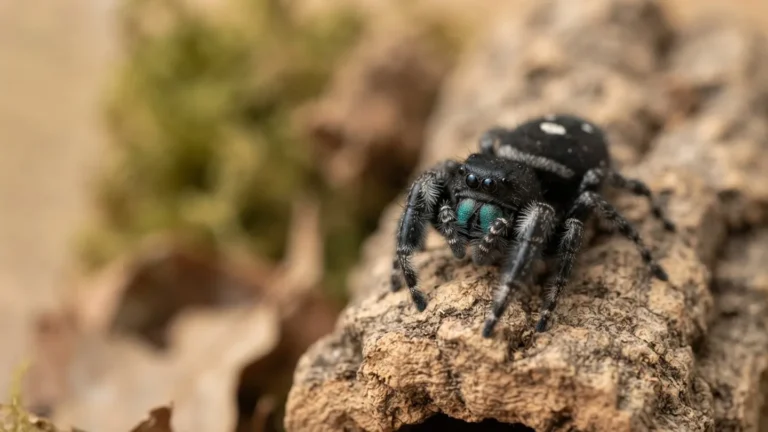
Jumping spiders eat live, small prey they can overpower, so the right feeder starts with size. If you brought home a small spider this week, use fruit flies from a clean culture rather than a handful of random bugs from the porch.
Most care guides for this family, Salticidae, vary because a tiny sling and a larger adult are effectively different animals in feeding terms. A sling may be 1/16 to 1/8 inch long, while an adult may be several times that length.
Match the feeder to the spider's abdomen, feed with tweezers or a small feeding tube, and stop feeding when the spider stops hunting. For the wider basics, see pet invertebrates for beginners.
On this page
Staple diet by life stage
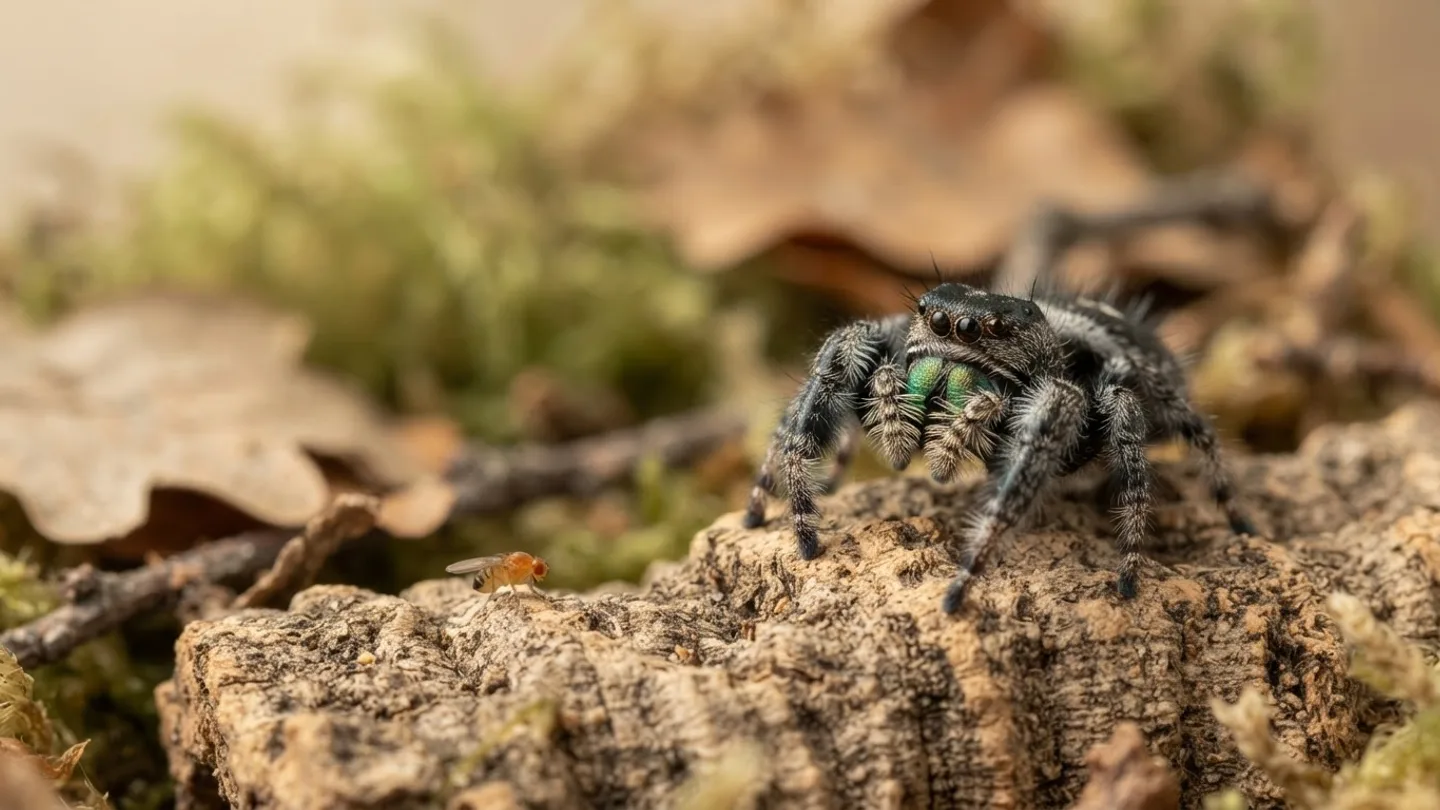
Fruit flies are the practical staple for slings. A sling is a young jumping spider, and its whole world can fit in a vial or small cup. Use flightless fruit flies, Drosophila species, because they are small, easy to handle, and unlikely to hurt a spider that has just been shipped or moved.
As the spider grows, fruit flies do not become useless, but they can become boring prey for a faster hunter. A young juvenile that is 1/8 to 3/16 inch long may take small house flies or a very small pinhead cricket. At this stage, a feeder that can outrun the spider is still a poor choice.
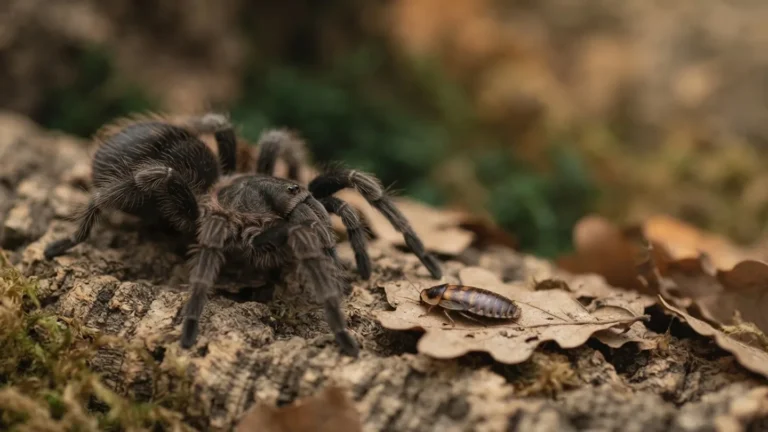
Mid-sized and adult jumping spiders can take house flies, small blue bottle flies, small crickets, or small roaches. Offer one or two feeders rather than a crowd. A single good feeder usually makes a better meal than several prey items competing for space.
Feeding frequency follows body fullness, not a rigid calendar. For slings, offer 1 to 2 fruit flies every 2 to 3 days. For younger juveniles, offer 2 to 3 small flies or one small feeder every 3 to 5 days. For adults, one appropriately sized feeder every 5 to 7 days is a conservative starting point. During premolt, the period before shedding, many spiders stop hunting. Remove food and leave the spider alone.
| Spider body length | Life stage | Preferred prey | Feeding amount and frequency | Safety notes |
|---|---|---|---|---|
| 1/16 to 1/8 inch | Sling | Flightless fruit flies | 1 to 2 flies every 2 to 3 days | Keep fruit flies out of the enclosure once the spider has eaten; a stray culture can become a nuisance. |
| 1/8 to 3/16 inch | Young juvenile | Small fruit flies, tiny house flies, pinhead crickets | 2 to 3 small flies every 2 to 3 days, or 1 small feeder every 3 to 4 days | Prey should move but not overpower the spider. Use tweezers for crickets. |
| 3/16 to 1/4 inch | Mid juvenile | Small house flies, pinhead crickets, very small roaches | 1 feeder every 3 to 5 days | Do not choose prey with strong legs or hard shells that can injure the front limbs. |
| 1/4 inch and larger | Large juvenile or adult | House flies, small blue bottles, small crickets, small roaches | 1 feeder every 4 to 7 days | If the feeder is longer than the abdomen, cut it down or choose a smaller feeder. |
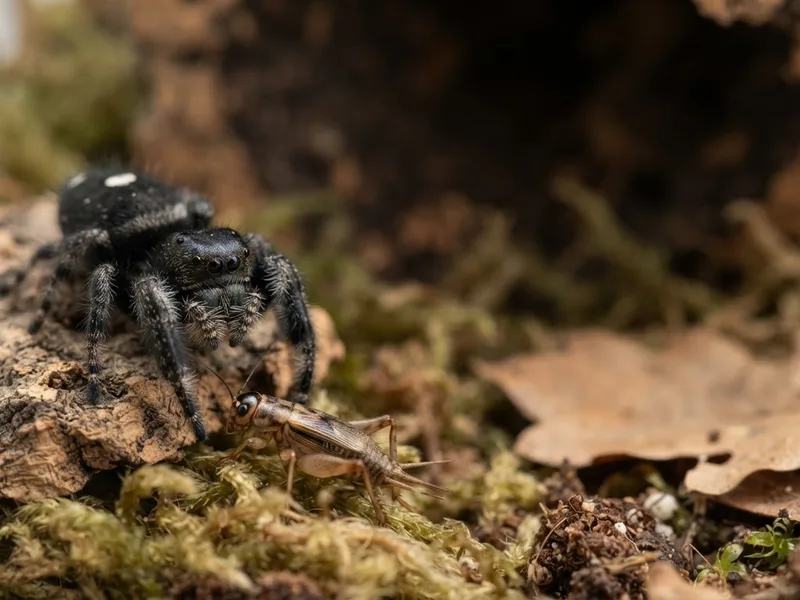
The prey size rule
Measure the spider's body length, not the leg span. Jumping spider legs can make an animal look larger than it is, while the abdomen is the part that must fit around prey.
Choose prey no longer than the abdomen, and for most feedings aim for half to three quarters of the abdomen length. A feeder with a body wider than the spider's abdomen is usually too much for a small spider to swallow cleanly.
If the spider turns away, if the feeder moves aggressively, or if the spider strikes and gives up, remove the prey. A refusal is information. It does not mean your spider will starve if you wait one day for a better feeder.
How to feed jumping spiders safely with tweezers
Start with a clean, appropriately sized feeder
Use a live feeder from a clean culture. For fruit flies, gently tip the container so one or two flies fall into the enclosure or a small feeding tube.
Use a tool, not your fingers
Use soft tipped tweezers, a cotton swab, or a small feeding tube for anything bigger than a fruit fly. Keep your fingers away from the feeding point.
Place prey in front of the spider
Put the feeder in front of the spider, not on top of it. The spider needs a few inches of space to stalk.
Step back and let it hunt
Give the spider a few minutes. Many jumping spiders will not strike while you are hovering.
Remove uneaten prey promptly
For fruit flies, remove them the same day. For house flies, crickets, or roaches, remove the feeder within a few hours if it has not been eaten.
Check the enclosure afterward
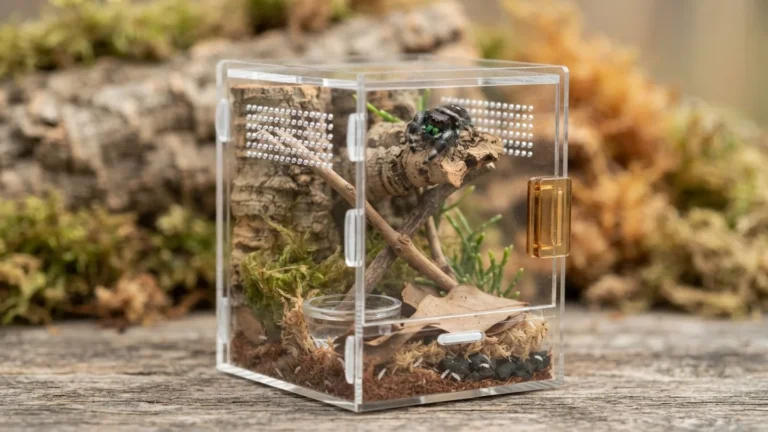
Remove damp prey remains, top off the water dish, and note whether the spider is active or hiding.
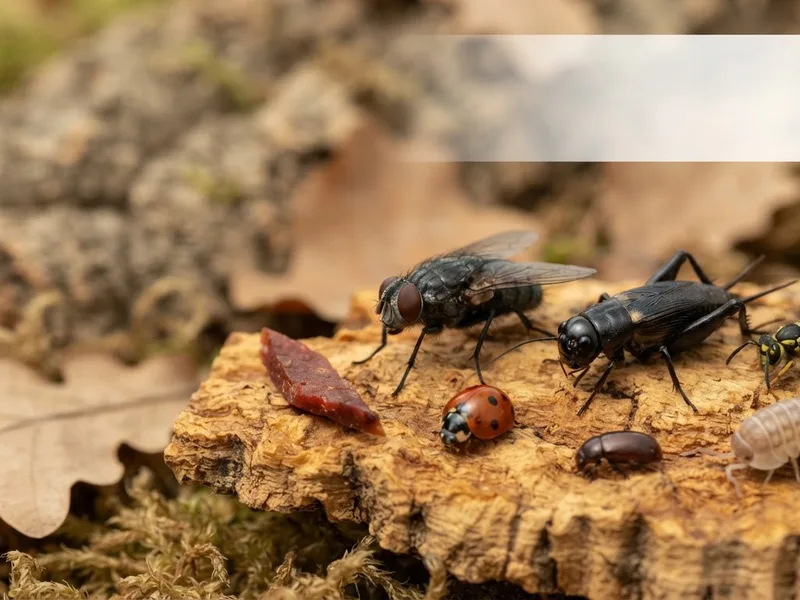
Wild caught insects and foods to avoid
Wild caught insects are not a good default feeder. An insect collected outside may carry pesticides, herbicides, parasite eggs, or pathogens that do not look harmful to you but can harm a small spider.
It may also be too dangerous. Bees and wasps can sting, ants can swarm and bite, some larvae can pinch, and crickets or roaches can harass a molting spider. A wild bee or large fly can also escape into the enclosure and stress the animal for hours.
Avoid dead prey left unattended, human food, honey, sugary treats, mealworms and superworms for small or mid sized spiders, and any feeder longer than the spider's abdomen. Avoid wild caught feeders unless you can verify the area was not treated and the insect is a species the spider can safely take.
Store bought feeders from a culture kept clean are still not guaranteed to be free of all risk, but they are predictable. If a feeder seems weak, foul, or covered in mold, do not feed it.
Common feeding questions
Can jumping spiders eat dead prey?
Most expect movement, so live prey is the reliable option. Some keepers manipulate prey with tweezers to trigger a strike, but a dead feeder left in the enclosure is not dependable.
How do I know my jumping spider has eaten?
Check for missing prey, remains near a hide, and a slightly plumper abdomen. Do not judge a meal only by how long ago you fed.
Can I leave fruit flies in the enclosure?
Short term, yes, if you keep the count small. Do not release a large culture into a small cage because flies can escape, crowd the spider, and make it harder to see what was eaten.
What should I do during molt?
Stop feeding before and during the molt. Many spiders stop eating in premolt. Remove live prey, keep the water dish, and do not disturb the enclosure until the spider has finished drying and can walk normally.
How often do jumping spiders need water?
Provide a very shallow water dish with small stones or clean gravel so the spider can stand safely. Prey gives some moisture, but a water source helps, especially when the room stays near 70 to 85°F.
When should I worry about a spider that is not eating?
If the abdomen is noticeably shrunken and the spider refuses several appropriate feeders over a week or two, review the enclosure for stress, dehydration, and prey size. A short pause after shipping or before molt can be normal.