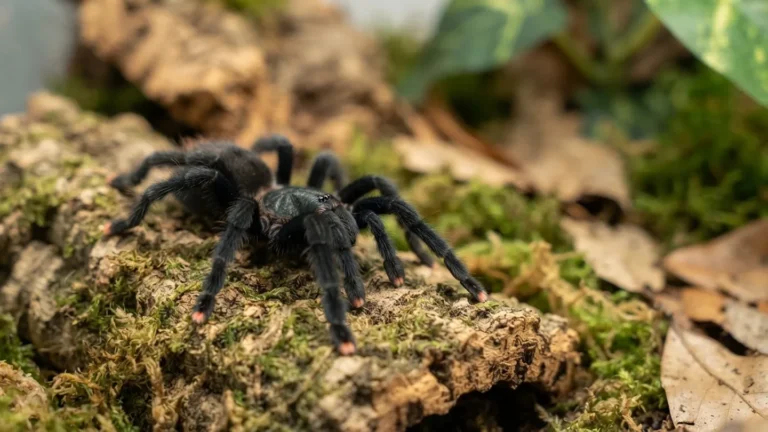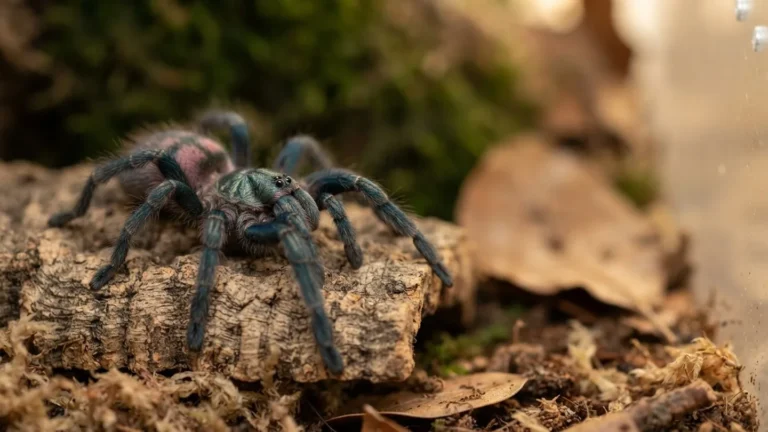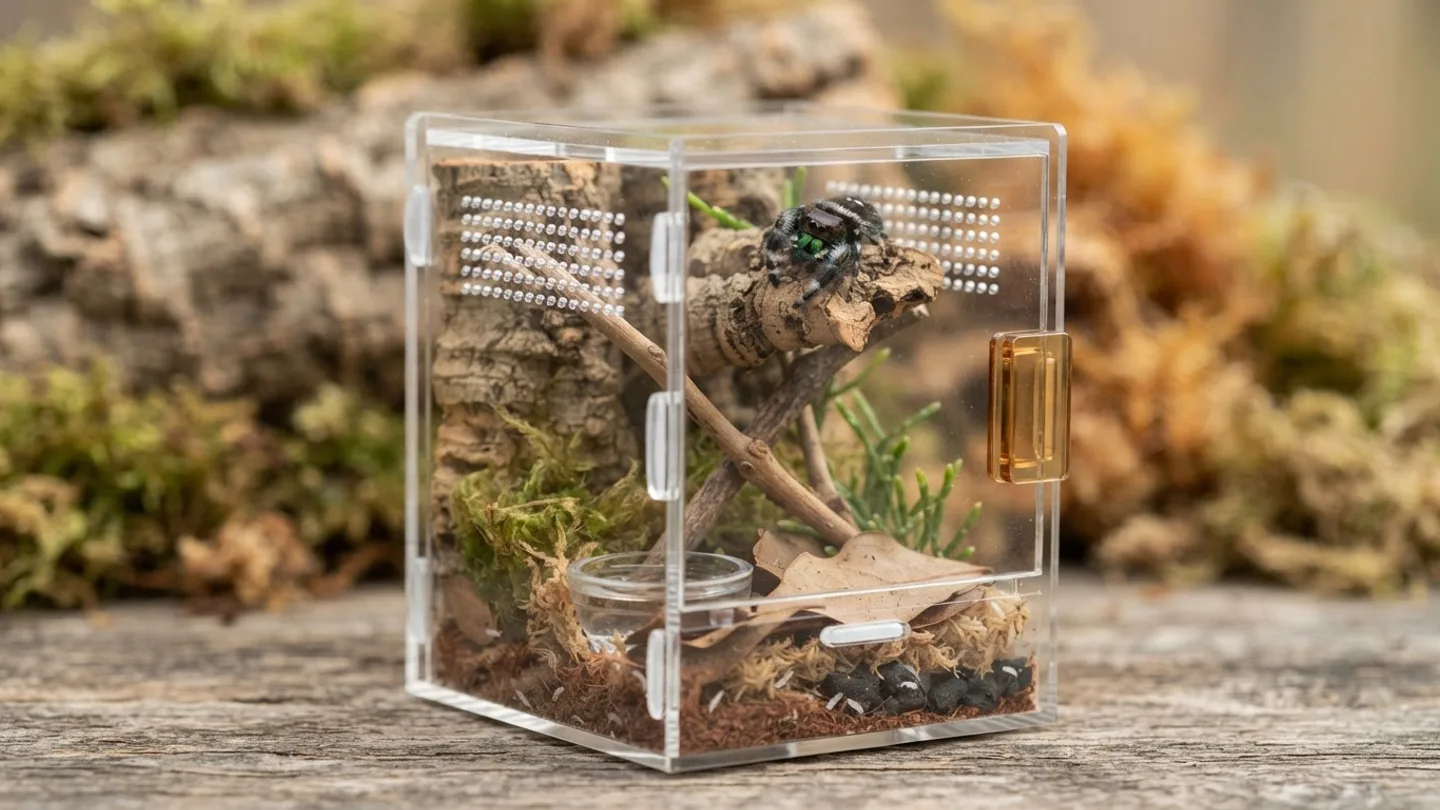
Jumping Spider Enclosure: Size, Ventilation and Setup
A good jumping spider enclosure gives the animal enough vertical space to build its top hammock, enough airflow to keep mold away, and a front or bottom opening so you can feed and check without disturbing that silk nest.
The size you choose matters most. A young spider, called a sling, in too tall a box can lose feeder flies for days, while an adult in a cramped cup can fail to molt well and show signs of stress.
This guide gives a simple setup: conservative enclosure sizes for slings and adults, cross ventilation options, climbing decor that works, and what to leave out if you want the enclosure to stay usable for months.
Key takeaways
- Choose a jumping spider enclosure taller than it is wide, with enough floor space for two to three leg spans.
- Use a front or bottom opening whenever possible so the spider can keep its silk hammock intact.
- Use small side or bottom vents so air moves through, not only through a screen lid.
- A sling often does well in a 3 to 4 inch tall enclosure, while many adults need 5 to 8 inches depending on body size.
- Keep the air around 70 to 78°F for most pet species, and avoid heat mats, deep substrate and unnecessary extras by default.
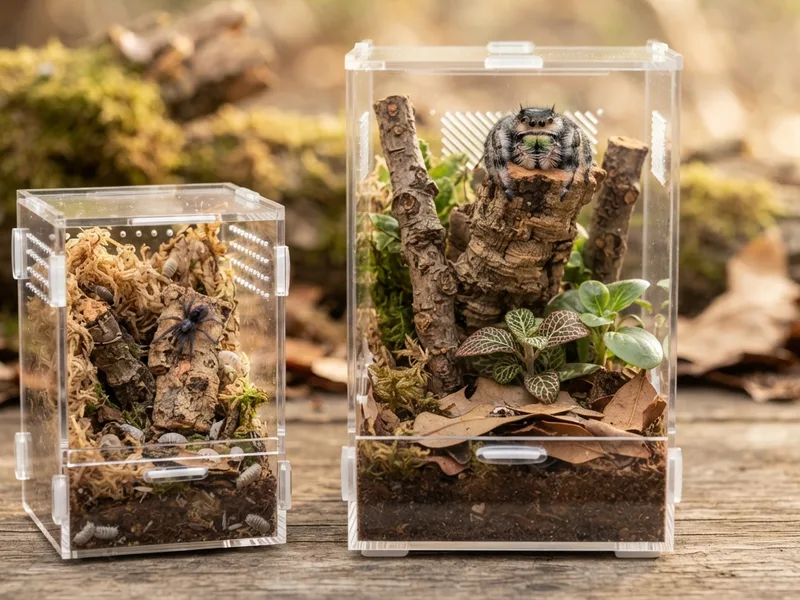
Enclosure size for slings and adults
Measure the spider by body length and leg span. Body length is from the front of the carapace, the hard upper shell, to the end of the abdomen. Leg span is the width when all eight legs are stretched out. The enclosure should give room to walk and hunt, not a field it must search for hours.
A young jumping spider, usually called a sling, is fragile and small. A 3 to 4 inch tall container with a 2 to 3 inch floor is a good conservative starting size for a sling of a small to medium species. If the sling is only 0.15 to 0.25 inch long, do not force it into a tall display box. You can give it height later after a few molts, when it can handle feeder flies and explore faster.
For an adult of a common medium species, a 5 to 6 inch tall enclosure with a 3 to 4 inch floor is a practical all purpose size. Floor width should give the spider two to three leg spans to move across. Height should be at least three times body length, because the spider uses vertical corners for its nest.
For a large adult, such as the regal jumper, Phidippus regius, with body length near 0.7 to 0.9 inch, use a 6 to 8 inch tall enclosure with a 4 inch floor. If your species is smaller, do not copy that size. A large box can make prey escape, dry the enclosure too fast and stress a spider that would rather sit near a corner. If your feeder flies are larger than the spider's body width, choose smaller prey and a more compact enclosure.
| Style | Best for | Opening | Ventilation | Notes |
|---|---|---|---|---|
| Acrylic or glass box | Adults or display | Front door | Side or bottom vents with fine mesh | Clear walls help the spider spot prey and help you see it. |
| Sliding front deli box | Slings or small adults | Front slide | A few top holes plus side holes covered with mesh | Cheap, light and easy to modify. |
| Top opening screen cage | Transport or short term | Top | Full mesh | Escape resistant for adults, but dries fast and disturbs the hammock. |
| Small deli cup | Temporary holding | Top | Small holes punched carefully, covered with mesh tape if needed | Use it as a hospital cup, not as a long term display. |
Opening, ventilation and the top hammock
The best opening for a jumping spider enclosure is a front door or a sliding front panel. That style lets you put in a fly, check a water bottle cap or inspect the spider without lifting the whole top off the animal's silk nest.
Jumping spiders often build a retreat near the top of the enclosure. That top hammock is not decoration. It is where the spider rests, molts and sometimes waits for prey. A bottom trap door can work if the spider is small and you can see whether it hides there, but it can trap heat and moisture if poorly made.
Cross ventilation means air enters from one opening and exits from another, not only through the top. Put vents on opposing sides, or one side and one bottom corner, and cover them with fine mesh. The openings must be smaller than the hard part of the spider's body. If the carapace can pass through the hole, the spider can escape.
Room air is usually enough. Most jumping spiders kept indoors in US homes do well at 70 to 78°F, with species differences. Do not point an enclosure toward a fan, an air vent or a sunny window. A strong draft can dry a sling in a day. Keep one corner lightly moist and leave the rest dry. If your enclosure stays wet everywhere, you have too much substrate, too little airflow or too much misting.
If your room stays below 65°F, move the enclosure to a warmer room, not to a heat mat, unless you know your species needs a specific cooler or warmer range.
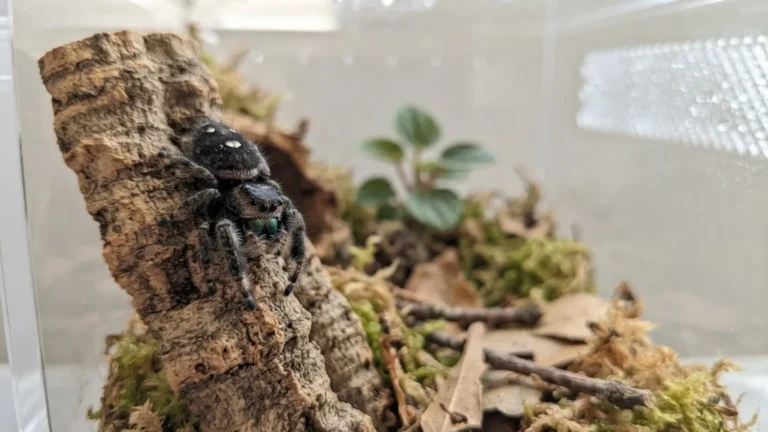
Add climbing decor that creates perches without blocking sightlines. A piece of cork bark, a thin branch, or a slanted bark chip can give the spider three heights: low, middle and top. Jumping spiders hunt by looking, so they need a few clear lines of sight.
Quick setup tonight
Choose the height
Pick 3 to 4 inches for a sling, or 5 to 8 inches for an adult, and keep the enclosure taller than it is wide.
Open access
Use a front door if you can. If you use a top opening, work gently and keep the spider away from the lid while feeding.
Vent
Cut small vents on two opposite sides, cover them with fine mesh and check that the spider cannot push its carapace through.
Anchor
Place cork bark or a small branch from mid level to the top so the spider has corner anchors for its hammock.
Moisture
Keep one corner lightly damp with paper towel or thin leaf litter, and keep the rest dry. Add a shallow bottle cap water source.
Check
Move the spider with a cup and card. Look for a silk retreat over the next day or two, but do not disturb it to force a molt.
What to leave out
Leave out heat mats in most cases. A jumping spider does not need a hot wall, a heat lamp or a tropical display unless you know your species needs more heat. Small enclosures can overheat quickly, and a warm box with poor airflow is a mold problem waiting to happen.
Leave out huge open floor space, deep substrate and dense fake plants. Jumping spiders are not burrowers, so deep soil is not useful. Fake plants can trap legs, hold dirt and make it hard to see whether a spider is molting, hungry or dehydrated.
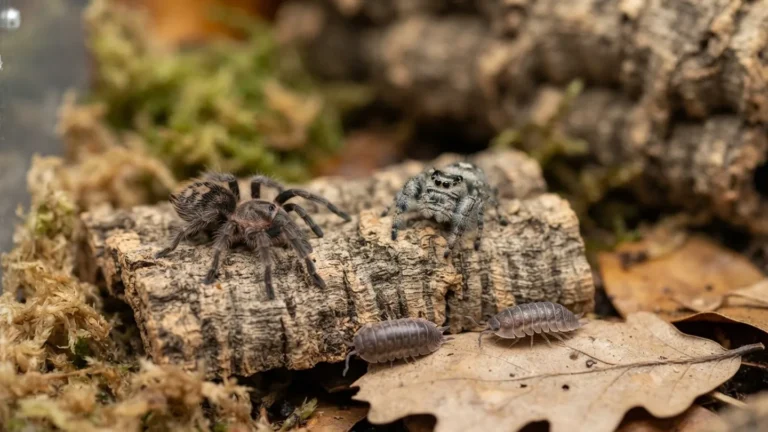
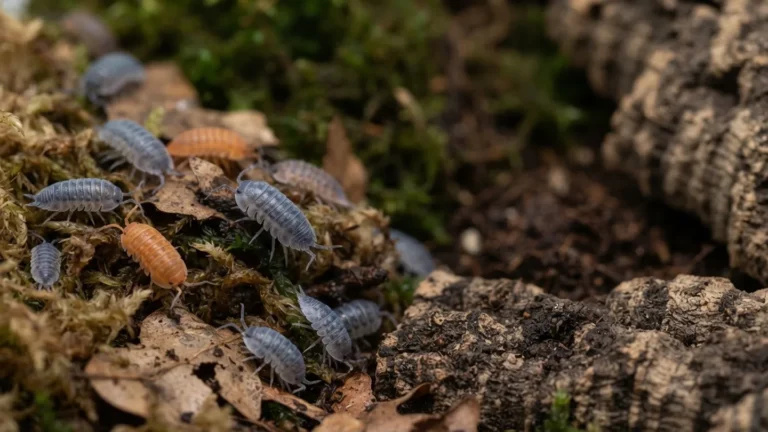
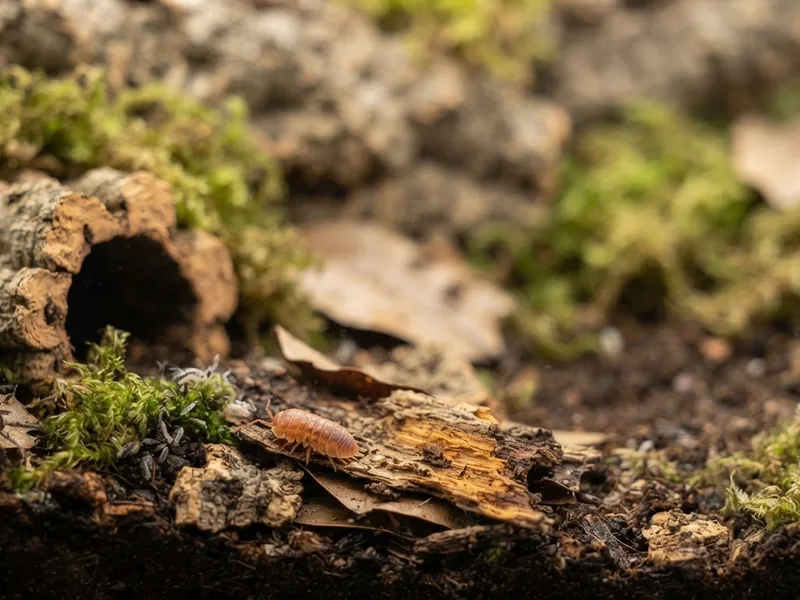
A bioactive setup, a living enclosure with plants, substrate and cleanup crew animals, can be attractive. It is usually unnecessary for a small jumping spider. If you use springtails as part of a cleanup crew, keep them in a moist corner, not everywhere, and do not expect them to fix poor ventilation.
Leave out handling. You can enjoy your spider through clear walls. If you must move it, use a cup and card, not your hand. A jumping spider bite is uncommon and usually mild, but stress can make it defensive.
Common jumping spider enclosure questions
Can I keep a jumping spider in a jar?
Only as a temporary container. A jar has poor cross ventilation, often too little floor space and no practical front opening. Move the spider to a proper enclosure before you try to feed and observe it for a week.
How many jumping spiders can share an enclosure?
None as a rule. They are not social. Separate slings, feed them separately, and keep adults apart unless you are an experienced breeder with a documented protocol for a specific species.
Does a jumping spider enclosure need a screen top?
Not always. A screen top can work for air exchange if the spider cannot climb it, but it disturbs the top hammock and can let small flies out. A front opening with fine mesh side vents is better for a permanent setup.
What substrate is best for a jumping spider?
For slings, paper towel is safe and easy to replace. For adults, a thin layer of coconut coir or leaf litter, about 0.25 to 0.5 inch deep, is enough. The spider needs dry space, a moist corner and a water dish, not a thick substrate bed.
Can I add plants to the enclosure?
You can, but they are optional. Choose a tough plant, keep the pot or roots manageable and do not block sightlines. If your goal is a reliable setup for a new spider, clean walls and simple cork bark are easier.