Mexican Red Knee Tarantula (Brachypelma hamorii) Care Sheet
You bought a Mexican red knee tarantula, or someone gave you one, and the label already has a problem. In the US pet trade, many animals sold as Brachypelma smithi are actually Brachypelma hamorii, or they are sold under the older name while they are hamorii-type. This care sheet follows the name that best fits what most US keepers are buying tonight.
Use this guide to set up the enclosure, get the temperature right, choose a sensible feeding plan and understand the hair kicking that comes with keeping this species well.
Key takeaways
- Most pet red knees are Brachypelma hamorii, even when sold under B. smithi.
- The species is a good beginner tarantula if you skip regular handling.
- Growth is slow, and females can live decades, so plan for a long commitment.
- Keep it at 70 to 78°F with a dry side, a small moist hide and a shallow water dish.
- Feed slings every 5 to 10 days, juveniles every 1 to 2 weeks and adults every 2 to 4 weeks.
- Expect urticating hairs, not tame behavior. This species is a display animal.
- Buying legally matters because the genus is listed under CITES.
Which red knee is in the jar
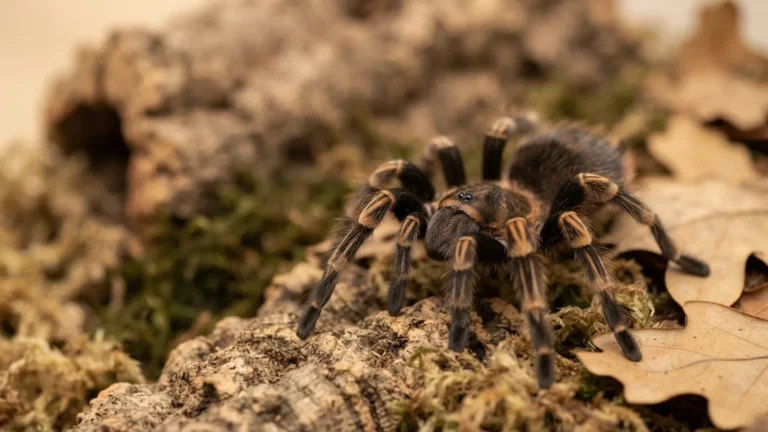
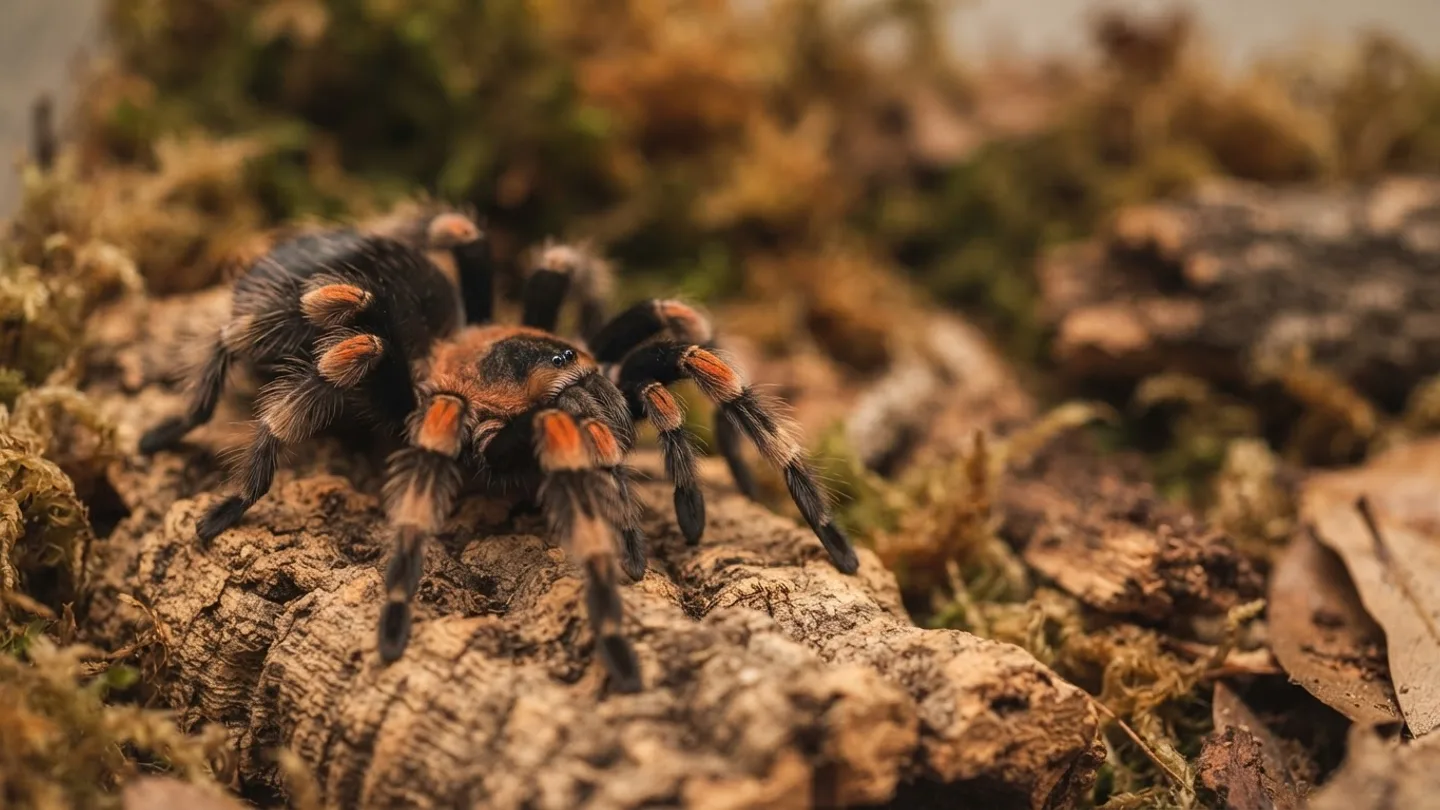
Brachypelma hamorii and B. smithi are closely related, and the pet trade has mixed the names for years. If a Mexican red knee comes from a US reptile expo, pet store or breeder, ask what the seller really has. Many red knees sold as B. smithi are better treated as B. hamorii, and that label gives the safer care answer for common captive stock.
For a casual keeper, this is mostly a naming and sourcing issue, not a care crisis. Both species come from Mexico and have similar needs, but B. hamorii is the name most US keepers should expect on a captive bred red knee. If you compare starter species later, see beginner tarantula options.
| Feature | B. hamorii in the pet trade | B. smithi notes |
|---|---|---|
| Common label | Often sold as Mexican red knee, sometimes under the older B. smithi name | Can appear in older care sheets or imported stock |
| Visual habit | Warm orange or red femur patches are commonly expected | May show less orange and more black on the legs |
| Care takeaway | Treat as the standard beginner red knee | Use the same conservative care unless sourcing notes say otherwise |
Pros
- It tolerates normal room temperatures well.
- It is slow growing, so you feed less often than fast species.
- It is bold enough to eat visibly in many setups.
- It can be kept in a simple enclosure without plants, lights or live substrate.
Cons
- It kicks urticating hairs when stressed, and a small sling can do it before you notice.
- It is not a handling pet, and repeated handling increases stress rather than tameness.
- Females can live decades, so the commitment is long.
- Slings are small and need careful moisture management.
At a glance setup labels
Species: Brachypelma hamorii, commonly sold as Mexican red knee. Many pet animals are B. hamorii rather than B. smithi.
Beginner rating: Good, with caveats. It is hardy but not a handling pet.
Growth and lifespan: Slow growth. Females can live decades, often into their 20s. Males usually live fewer years after becoming a mature male.
Enclosure: 4 inches by 6 inches for a sling, 10 inches by 10 inches or larger for an adult with 5 to 7 inches leg span.
Temperature: 70 to 78°F.
Humidity: Provide a dry side, a small moist hide, and a shallow water dish.
Feeding: Slings every 5 to 10 days. Juveniles every 1 to 2 weeks. Adults every 2 to 4 weeks.
Handling: Not recommended. This species kicks urticating hairs.
CITES note: The genus is listed under CITES. Ask about legal sourcing and keep paperwork.
Enclosure and substrate
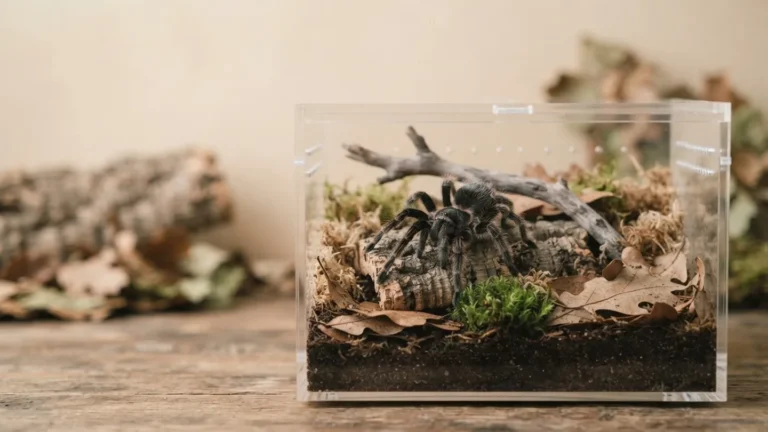
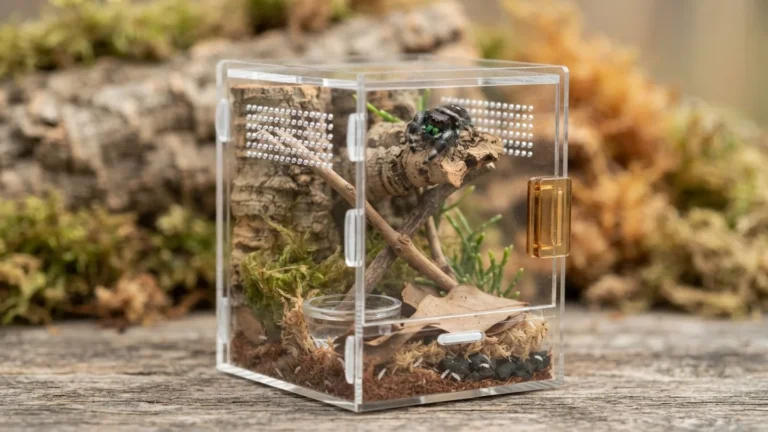
Mexican red knees are terrestrial spiders that live on the ground, so floor space matters more than height. A good enclosure gives enough floor area for the spider to walk about while keeping the environment easy to check. For a sling, a 4 inch by 4 inch to 6 inch by 6 inch tub is enough. For an adult with a 5 inch to 7 inch leg span, choose at least 10 inches by 10 inches floor area and 8 inches to 12 inches height.
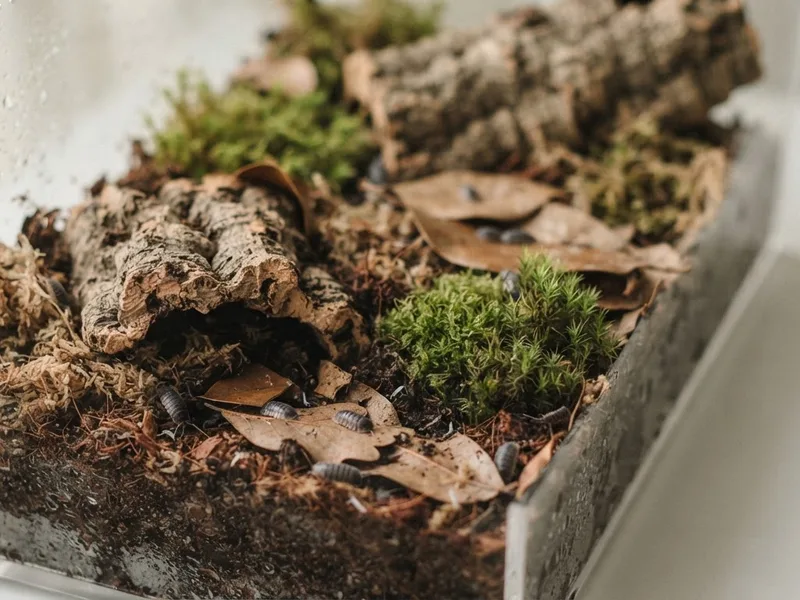
Use a 2 inch to 3 inch layer of plain coconut coir, peat or soil without pesticides. Make one side dry and keep a small damp corner or moist hide. Add a hide sized to the spider and a shallow water dish. For slings, use a bottle cap with pebbles inside, a damp paper towel corner or a very shallow dish so the spider cannot fall in and get wet.
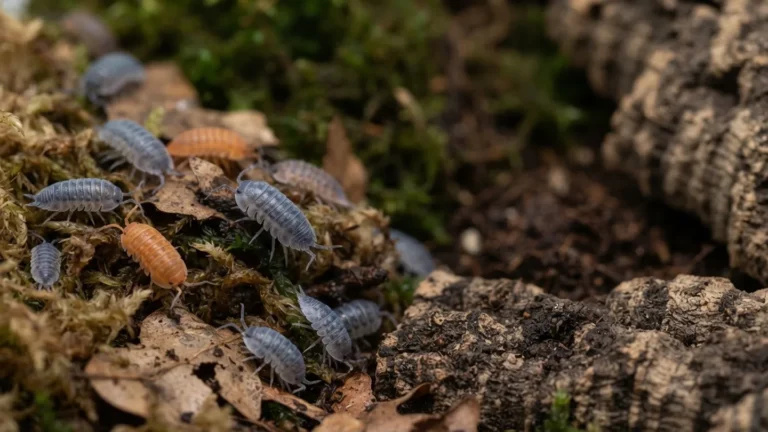
A bioactive setup, meaning a living substrate with plants and a clean up crew of isopods or springtails that break down waste, is optional. It is not necessary for most red knees, and it can make moisture, feeding and molting harder to watch. For a first setup, keep the system simple.
Set up the enclosure tonight
Choose size by life stage
Use a 4 inch to 6 inch container for a sling and at least 10 inches by 10 inches floor area for an adult with a 5 inch to 7 inch leg span.
Add substrate
Fill with 2 inches to 3 inches of plain coconut coir, peat or soil without pesticides.
Create dry and moist zones
Keep one side dry, add a small damp corner or moist hide, and place a shallow water dish.
Add a hide
Use a cave, bark or inverted cup that gives the spider more than one way to hide.
Check temperature
Make sure the enclosure sits at 70°F to 78°F before the spider is added.
Introduce and wait
Place the spider in the enclosure, leave it alone for several days and check for a settled animal before the first feeding.
Temperature and humidity
Normal US room temperature is usually enough. Aim for 70°F to 78°F. A brief dip to 65°F is not a panic, but cold slows digestion and can push a spider toward a long resting period. If your home is genuinely cold, use a thermostat controlled heat pad against one side of the enclosure, not under it, and keep the other side unheated.
Humidity should be practical, not saturated. Aim for room humidity around 50 to 60 percent, with a dry side, a small moist hide and a clean water dish. Do not soak the whole substrate. If the spider is preparing to molt, a bit more moisture in the hide area can help, but do not mist the spider directly.
Skip misting systems and oversized glass terrariums unless you can keep them clean, stable and not an escape risk. A simple plastic tub is usually better for a first red knee.
| Life stage | Prey size | Frequency | When to back off |
|---|---|---|---|
| Sling, also called spiderling | Small crickets or roach nymphs no longer than the spider's body length | Every 5 to 10 days | Remove uneaten food within 24 hours and stop if the abdomen looks swollen. |
| Juvenile | Crickets or dubia roaches about half the leg span | Every 1 to 2 weeks | Skip a meal after a successful molt for 7 to 14 days. |
| Adult | Larger roaches about half the leg span, or 1 to 3 smaller items | Every 2 to 4 weeks | Reduce frequency if it refuses repeatedly or the abdomen stays large. |
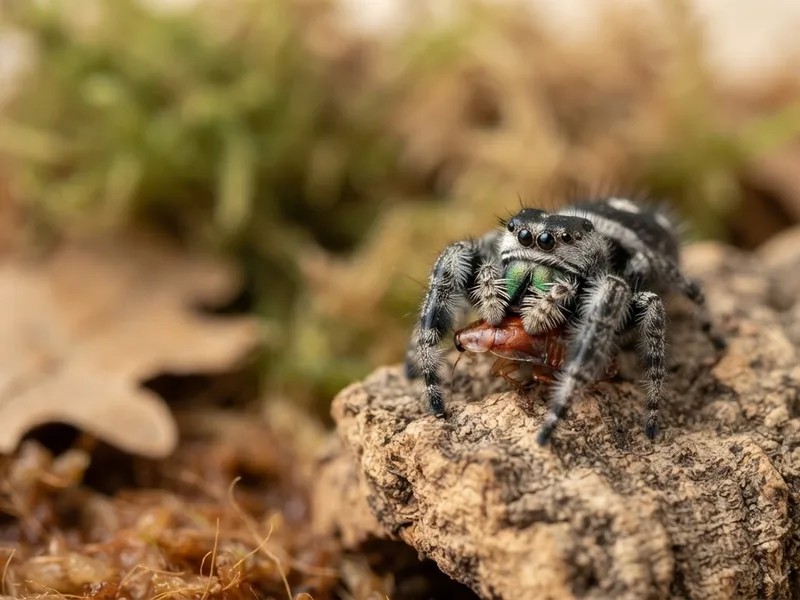
Feeding without chasing growth
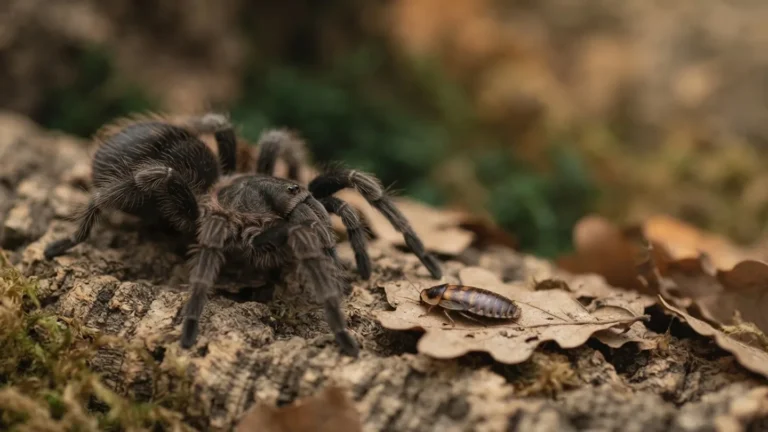
Slow growth is a feature of this species, not a problem to fix by overfeeding. A red knee can refuse food for weeks during a premolt, the pause before shedding, and still be healthy. Offer food at the frequencies above, remove uneaten prey, and skip a week if the spider already has a fat abdomen.
Do not use wild insects as a shortcut. Pesticides, heavy metals and parasites are not worth the risk to your spider. If a prey item is larger than the spider's body, it can stress the animal or cause injury.
What a molt looks like
- Premolt stageSigns before the moltThe spider may stop eating, web a small area, become darker or seem sluggish. This can last weeks.
- MoltingThe shed itselfIt usually curls on its back or side while the old exoskeleton splits. Leave it alone, keep the moist hide slightly damp and do not feed.
- After molt recoverySoft and ready to settleThe new exoskeleton is pale and soft. Wait 7 to 14 days before offering food, and do not handle during recovery.
Handling, lifespan and CITES notes
This species is a display animal. A calm spider is safer than a trained one, and repeated handling does not make it tame. Use a cup or a piece of cardboard to nudge it into a transfer container. Keep handling brief and only when necessary, such as enclosure cleaning.
Mexican red knees kick urticating hairs, which are tiny barbed abdominal hairs used for defense. They can irritate skin, eyes and airways. Wash your hands after cleaning the enclosure. If hairs get in the eyes, flush gently with lukewarm water for 15 minutes and seek medical care if pain, redness or vision changes persist. Bites are uncommon, but possible if the spider is cornered.
Lifespan is the real commitment. Females can live decades, often into their 20s, because growth is slow. A mature male, an adult male with visibly enlarged pedipalp bulbs, usually lives fewer years after maturity. Do not buy this species expecting a pet with a short life.
Because the genus is listed under CITES, international movement is regulated. For US keepers, the practical rule is simple: buy animals bred in captivity from a source that can discuss provenance, keep any paperwork, and do not import wild collected animals without checking legal requirements.
Frequently asked questions
How do I know if mine is B. hamorii or B. smithi?
Most US pet red knees should be treated as B. hamorii unless the seller has clear documentation. The care in this guide works for common captive stock.
Do I need a heat mat?
Usually no. Normal US room temperature is fine. If the room is cold, use a thermostat and heat only part of the enclosure.
Why is my red knee not eating?
It may be premolting, resting, or too full. Stop feeding, remove live prey and check the moist hide. Resume after 7 to 14 days if it is a fresh molt.
Is it aggressive?
It is generally calm but can defend itself with urticating hairs. That is normal stress behavior, not a personality flaw.
How big does the enclosure need to be?
For a sling, 4 to 6 inches by 4 to 6 inches. For an adult with a 5 to 7 inch leg span, at least 10 inches by 10 inches floor area.
Can I add springtails and isopods?
Small clean up crew members can help with waste, but they are not required. Slings may find them too busy, and a simple tub is easier to manage.
What should I do before buying?
Confirm the seller can talk about legal sourcing, because the genus is listed under CITES.