Tarantula Enclosure Guide: Size, Type and Ventilation
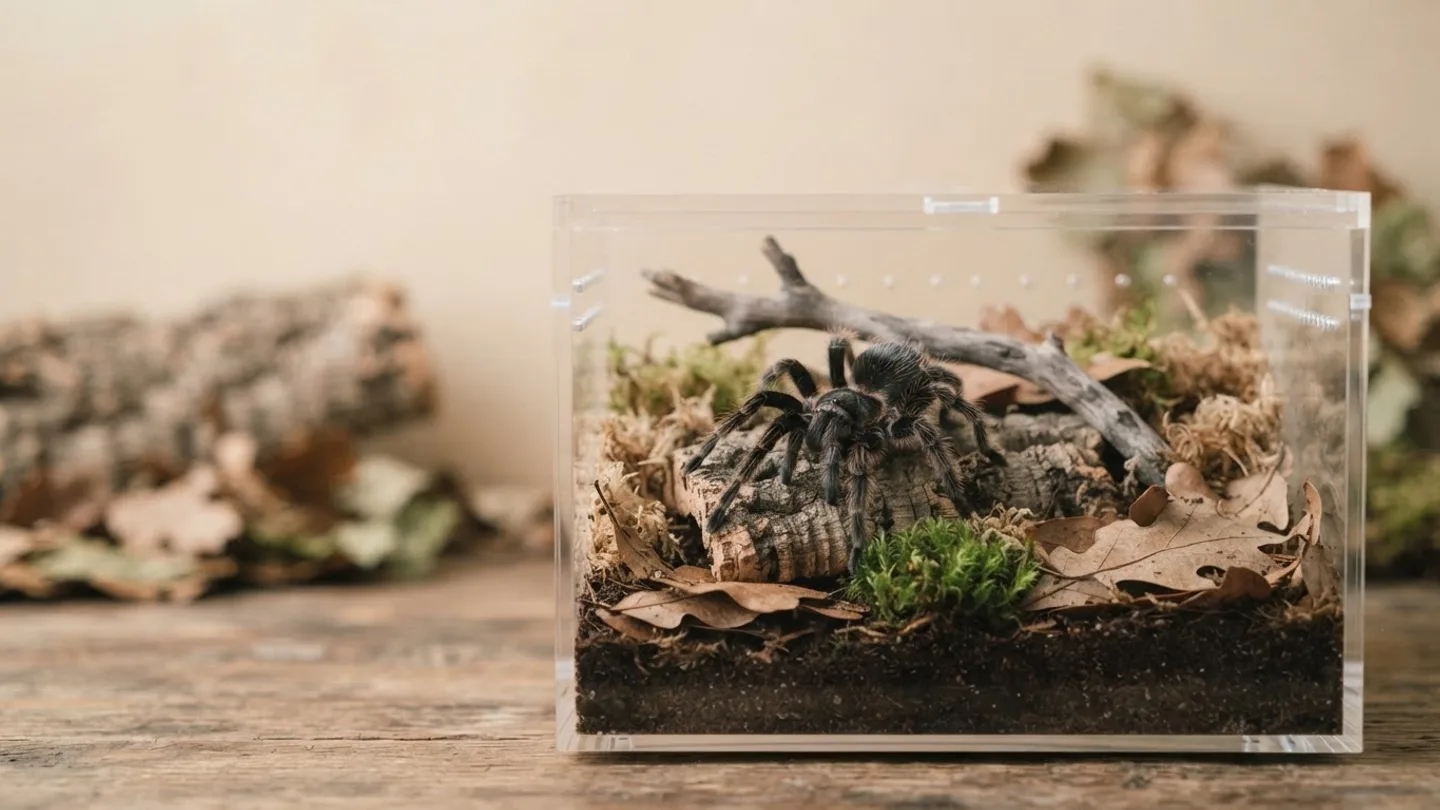
A tarantula enclosure should match how the animal lives: on the ground, in the canopy, or underground. Pick the shape before you buy the tank, then match the size to the spider's leg span.
The wrong size is not only a welfare issue. It affects feeding, humidity, cleaning and how much disturbance the spider can take. A well chosen enclosure lets you set it up tonight and keep it stable for weeks.
These rules are conservative. If your species care sheet gives a tighter requirement, follow the species guide.
Key takeaways
- Measure leg span tip to tip before choosing length, width and height.
- Terrestrial and fossorial species need floor area, soft substrate and limited fall height.
- Arboreal species need more height and secure climbing space.
- Ventilation should create airflow without drying out the whole substrate.
- Front access is safer for large, fast or defensive species; top access suits tall arboreal setups.
Choose the enclosure by lifestyle
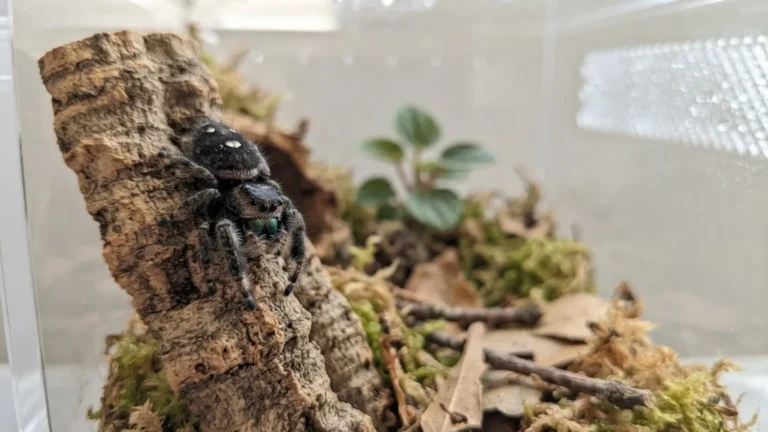
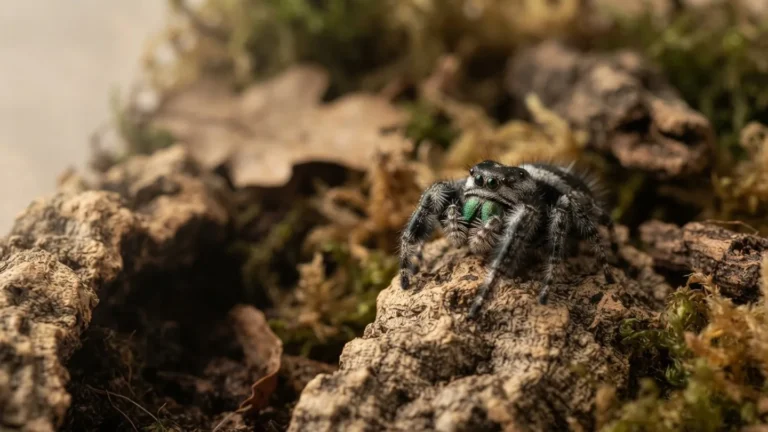
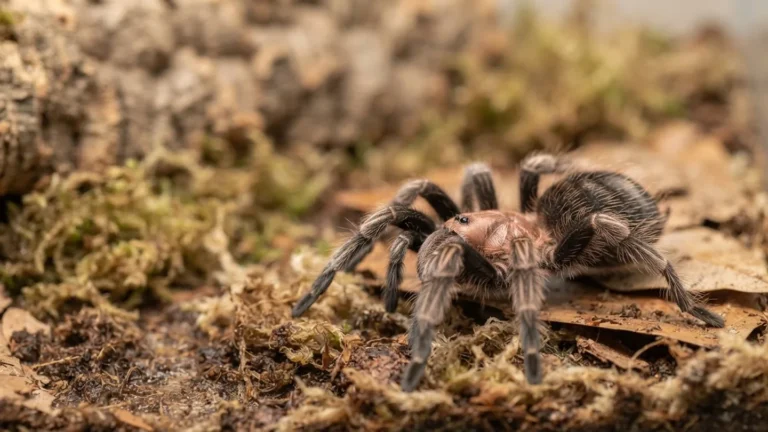
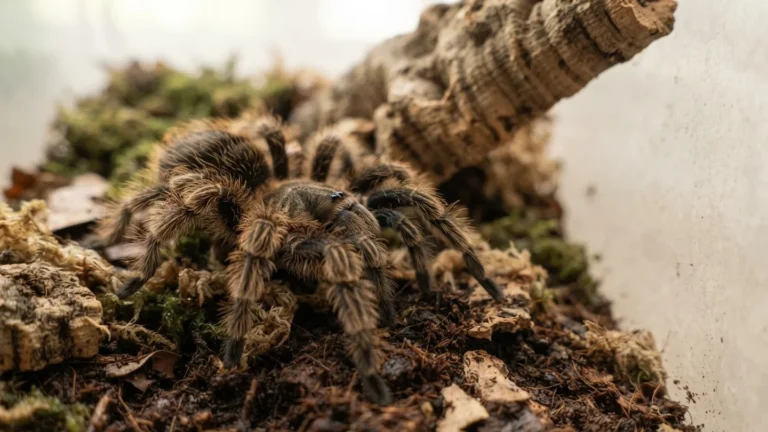
Terrestrial means ground dwelling. These tarantulas walk across the substrate, hide under cork bark, and may build a shallow burrow. The important space is floor area.
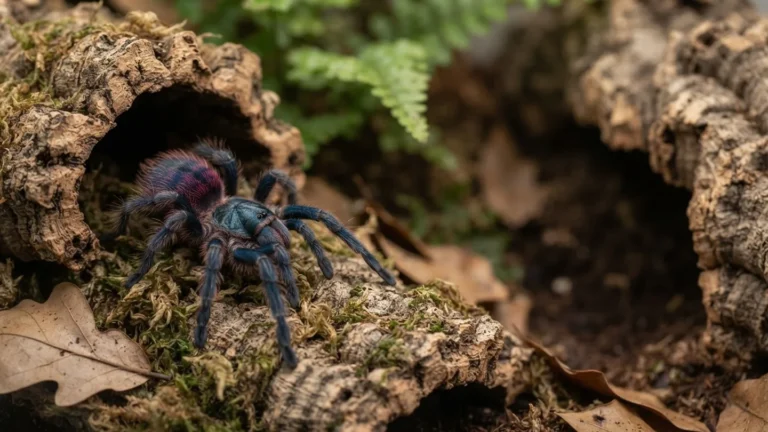
Arboreal means tree dwelling. These species climb cork bark, branches or tank walls and rest in webbing or a hide. They use vertical space more than horizontal space.
Fossorial means burrowing. These tarantulas spend much of their life underground. They need a stable substrate column, not just a thin layer over glass.
Many species fit between categories. A semi-terrestrial may dig when unsettled but still hide under bark. Choose the shape for the animal's default behavior, not one dramatic molt or escape attempt.
| Lifestyle | Floor area | Height | Substrate and décor | Ventilation |
|---|---|---|---|---|
| Terrestrial | At least 1.5 times leg span long and 1.5 times leg span wide | Low to moderate height. Keep climbable ledges lower than the full tank height. | 1 to 2 inches of substrate for many species, plus cork bark or a shallow hide | Cross ventilation: lower intake, upper exhaust |
| Arboreal | About 1 to 1.5 times leg span on the floor | At least 1.5 to 2 times leg span tall | A climbing surface such as cork bark, plus a hide at height | Good top and side ventilation so the whole height gets air movement |
| Fossorial | At least 1.5 times leg span long and wide | Tall enough for deep substrate plus an air gap | Deep, moldable substrate, often 1.5 to 2 times body length | Ventilation above substrate; do not seal a deep moist tank |
Size rules tied to leg span
Measure the leg span
Put a ruler on a flat surface and stretch the opposite legs from front to rear. Do this gently. If the tarantula is defensive, estimate from photos or the seller's size instead.
Choose the minimum floor
For a terrestrial or fossorial, multiply the leg span by 1.5. That gives a useful minimum for length and width. For an arboreal, use 1 to 1.5 times leg span on the floor and put the extra space in height.
Set the height by lifestyle
Terrestrial: short to moderate. Arboreal: taller, with cork bark or branches. Fossorial: total height must fit substrate plus an air gap above it.
Check the fall risk
For a terrestrial or fossorial species, make sure any hard ledge, cork ramp or tank wall is low enough that the spider will not fall far onto a hard floor.
Start slings small
A sling, a young tarantula, often does better in a small ventilated container than in an adult tank. Use enough space for its leg span, cover, webbing and prey, then move up gradually.
Ventilation patterns that keep the setup stable
Tarantulas need airflow, but airflow is not the same as a desert. A useful pattern is cross ventilation: fresh air enters through a lower mesh panel, side vent or front opening, and stale air leaves through a higher panel.
This gives you control. The tank does not turn into a sealed humid box, and the moisture you add can stay where the spider needs it. Use a moist corner, a water dish, or a damp hide, not wet substrate everywhere.
Top-only ventilation is common on glass tanks. It works, but it can dry the surface quickly and may leave humid air trapped near the substrate if there is no lower intake. Add a side vent, front vent or a slightly raised lid to improve movement.
For fossorial species, the substrate depth can trap humidity at the bottom. Leave an air gap above the top substrate layer and keep vents clear. Do not pack wet substrate so tightly that it smells sour; that often means airflow is poor.
If you keep a premolt tarantula, the animal is preparing to molt and may look fat, dark or unbalanced. Avoid rearranging the enclosure. Keep ventilation stable instead of guessing with new décor.
Pros
- Front access lets you feed, clean and move a terrestrial or fossorial spider with less handling from above.
- It is calmer for species that flick urticating hairs, irritating defensive hairs, because the spider is less likely to be cornered under your hand.
- A front door usually gives a better view of the spider at ground level.
Cons
- A top opening is often better if your arboreal tarantula needs easy access to high cork bark and a mesh lid.
- Front doors and sliding panels can reduce mesh area, so add lower or side vents when needed.
- Some tall setups are cheaper and simpler with a secure top lid than with a fitted front opening.
Glass versus acrylic and shelf plan
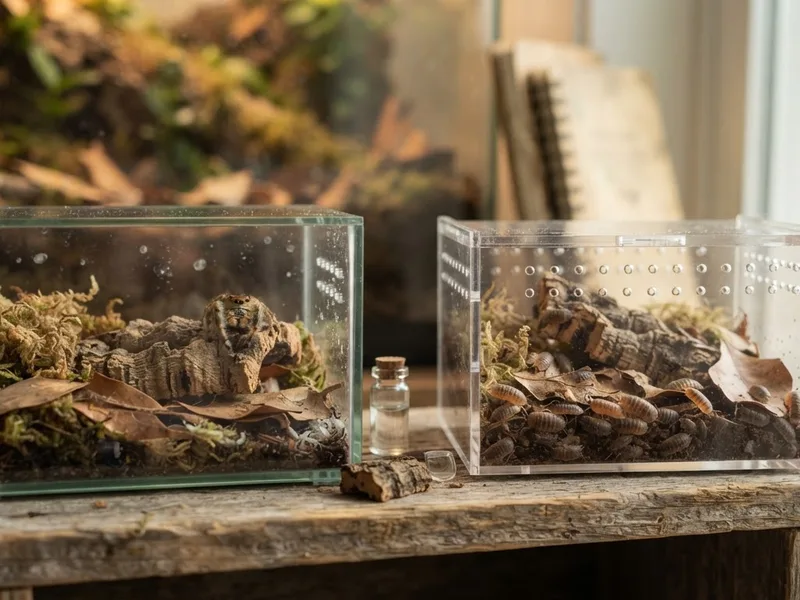
Glass and acrylic both work. The choice is mostly about weight, scratch resistance and how you use the tank.
Glass is usually cheaper, stiffer and easier to keep clear. It is heavier, which matters on a wall shelf or with a tall display cage.
Acrylic is lighter and less likely to chip into glass shards. It scratches more easily, and some cleaners can damage it. Do not use solvents, ammonia-heavy products or abrasive pads.
Plastic tanks and storage bins are also options. If you use one, add ventilation, keep the lid secure, and do not place any heating device on it unless the rating says it is safe.
Pros
- Glass: lower cost, good rigidity, and a clear surface over time if cleaned gently.
- Acrylic: lighter, less likely to break into sharp glass, and useful for larger setups on shelves.
- Plastic: easy to modify, affordable for starters, and lightweight for temporary enclosures.
Cons
- Glass: heavy, can chip, and a tall tank may need a sturdy stand.
- Acrylic: scratches, can haze, and strong cleaners or heat mats can damage it.
- Plastic: flexes, can lose clarity, and needs careful ventilation and lid security.
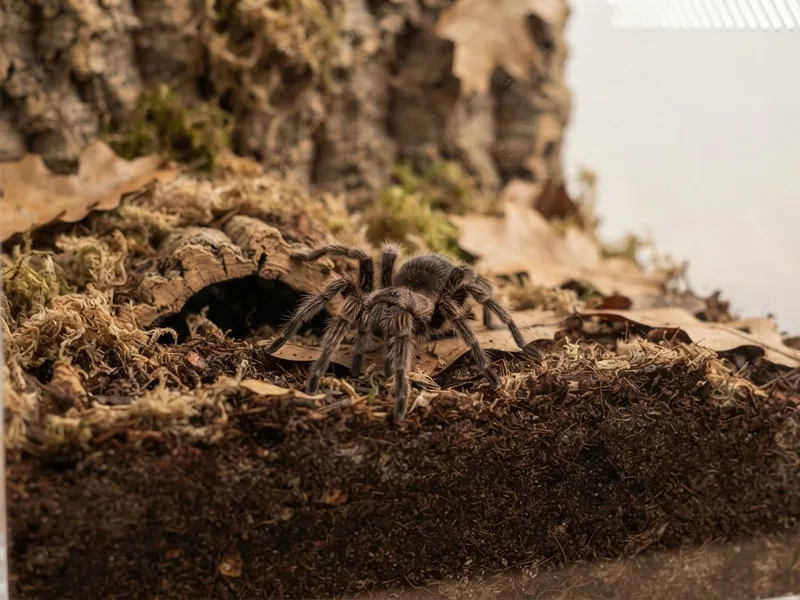
The fall height rule for terrestrials and fossorials
A fall onto a hard floor can rupture the abdomen, especially in a large terrestrial. Arboreal species can often climb back, but ground dwellers can be injured on a single drop.
Keep the climbable height low. A conservative starting rule is to limit the top of any hard ledge, cork ramp or tank wall to about half the spider's leg span above the floor, especially for large adults.
Give a soft landing. Substrate alone is not always enough if the top is high. Cork bark pieces, bark strips or low hides can break the fall and give the spider a route to the floor.
If a terrestrial is at the top of the enclosure, cover the gap with mesh, remove the climbable item, or gently lower the animal with a cup and lid. Do not let the spider decide the safe height by falling.
Frequently asked questions
How big should a tarantula enclosure be?
Use leg span. A useful minimum floor is 1.5 times leg span in length and 1.5 times leg span in width for terrestrial and fossorial species. Arboreal species may use less floor space and more height.
Can I keep a tarantula in a plastic bin?
Yes, if it is ventilated, sized correctly, and has a secure lid. Do not use a sealed bin. Add lower and upper vents, and keep the substrate area stable.
Do tarantulas need a lid?
Arboreal species usually need a secure lid because they can climb mesh. Terrestrial and fossorial species need a lid or barrier if they can reach an escape height. A lid also keeps prey in and dust out.
Should the substrate be wet?
Not everywhere. Many species do better with one moist corner, a water dish, or a damp hide. Wet substrate across the whole tank can suffocate the spider, damage roots or hides, and invite mold.
Do slings need an adult tank?
No. A sling, a young tarantula, often starts in a small ventilated cup with enough space for its leg span, cover and food. Move it up gradually after growth and molts.
Does a tarantula need a heat mat?
Usually no for normal US room temperature setups. Many beginner species do fine near 70 to 80 °F if the room is stable. Check a species guide before adding heat, use a thermometer, and never put a heat mat on plastic unless it is rated for it.
Can two tarantulas share an enclosure?
No. Keep tarantulas alone. They are not social pets. Two individuals can fight, especially with size differences, unequal feeding or one entering molt.