Jumping Spider Care Guide: Enclosure, Feeding and Molting
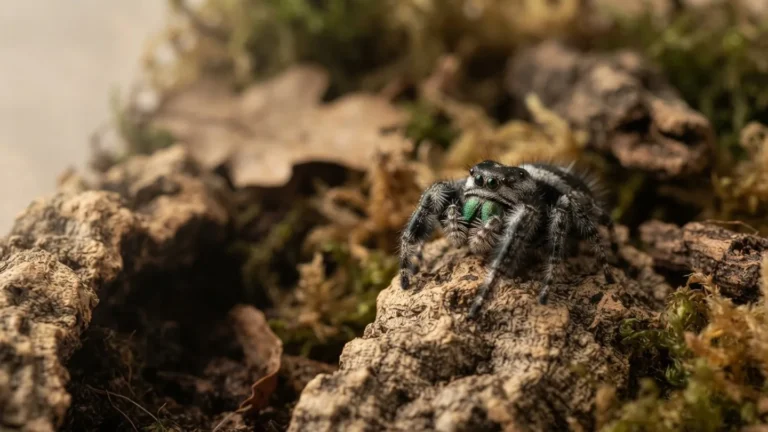
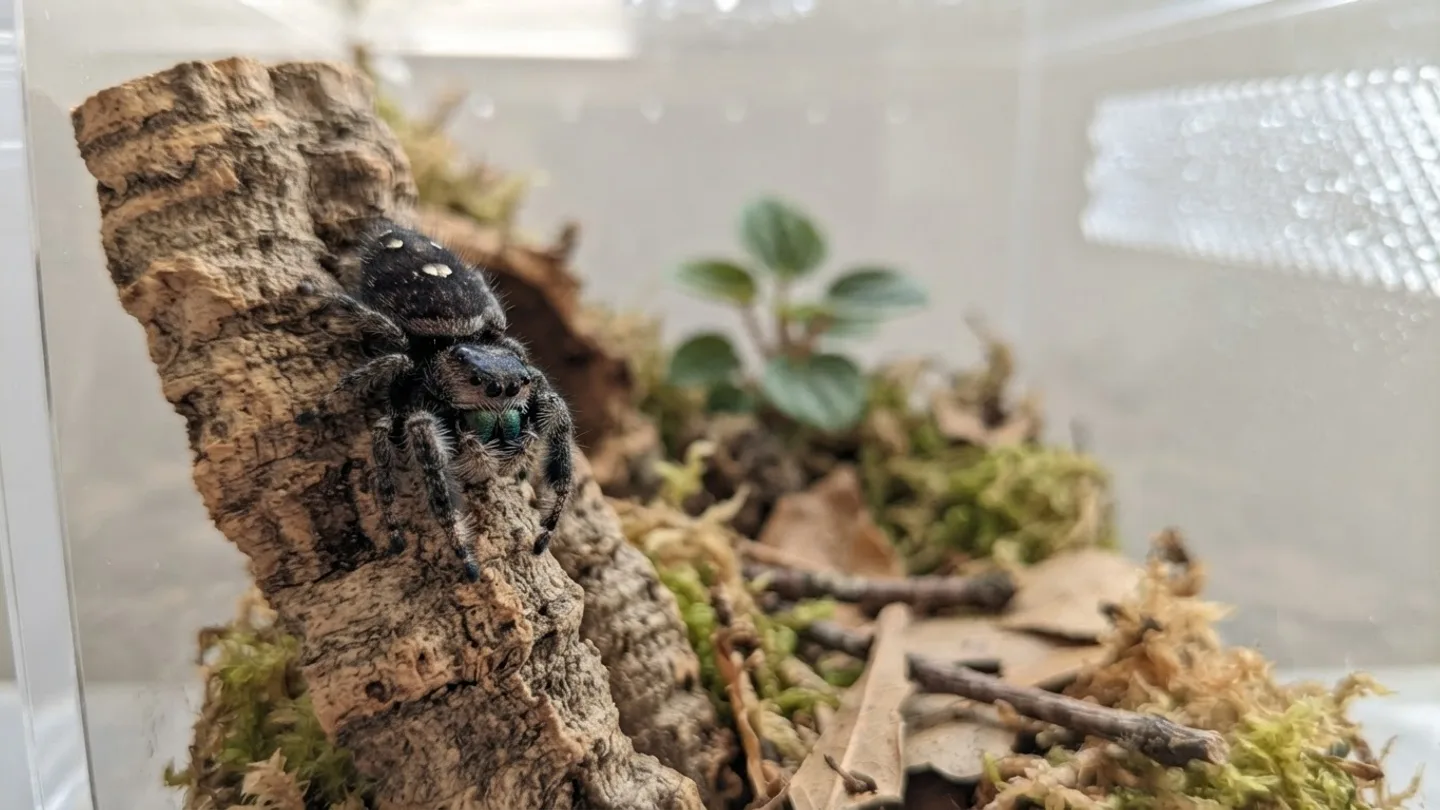
You just brought home a jumping spider. It may be Phidippus regius, the regal jumping spider, sometimes still sold under the former name Plexippus regius. It may be Phidippus audax, the bold jumping spider. A good jumping spider care setup tonight is not hard: a vented front or bottom opening enclosure, a hide it can web into, room temperature, and live prey small enough to catch.
Keep it out of direct sun. Most common pet jumping spiders do best between 70 and 80°F. If your room runs cold, aim for a warm side near 80°F and a cooler side near 70°F.
Skip the extras for now. Most commonly kept jumping spiders do not need a heat mat, a fogger, or a planted bioactive build (a small living setup with plants and cleanup organisms). If you are new to pet invertebrates for beginners, start simple and learn the animal's normal rhythm first.
Contents of this jumping spider care guide
Key takeaways
- Use a front or bottom opening enclosure, not a top opening tub, to cut escape risk when the spider climbs to the lid.
- Keep most common pet species at 70 to 80°F, with no heat mat needed unless the room stays below 65°F.
- Ventilation matters more than humidity: mesh on opposite sides, a dry side, and a light mist in one corner.
- Feed prey no longer than the spider's body; a young spider, called a sling, usually needs fruit flies, while adults can take crickets or roach nymphs every few days.
- During a molt, leave the spider alone, remove live prey if it is not eating, and do not poke the old skin.
| Type | Best for | Main problem | Use it when |
|---|---|---|---|
| Top opening | Temporary observation or transport | The spider may sprint to the lid and get caught, stuck, or out when you open it | Only as a short term cup with a mesh lid, then move to a better enclosure |
| Front opening | Spiderlings and adults that need handling | Needs secure hinges or magnets or the spider may push out | Use a 4 by 4 by 6 inch or 6 by 6 by 6 inch front vented container |
| Bottom opening | Easy substrate changes and low escape risk | Needs a solid base and good side vents | Use for adults that dig or need frequent substrate work |
Why enclosure doors matter
Jumping spiders hunt and climb. They are not burrowers, so they use vertical space for perches, retreats, and webbing. A top opening tub can look easy until the spider walks to the lid while you feed. Then the lid becomes a trap: you may crush the spider, miss it, or let it run out.
A front opening or bottom opening enclosure gives you a clear door away from the climbing surface. It also keeps you from lifting the spider's favorite perch with the lid. A small mesh vent in the door or wall is enough for daily checks. When you can see the animal, give at least two body lengths of clear wall space for the hide; if you cannot measure leg span, choose the next larger height.
If the spider is very small, a 4 by 4 by 6 inch front opening container is safer than a large top opening jar. If it is an adult Phidippus regius, use at least 6 by 6 by 6 inches, and consider 8 by 8 by 8 inches for a large female. For Phidippus audax, 6 by 6 by 6 inches is usually a good start.
If you are choosing a first species, captive bred Phidippus regius or Phidippus audax are better than tiny wild caught jumping spiders. Wild caught animals are not always poor pets, but for a beginner they are often hard to feed, easy to lose, and more stressful to handle.
Setup for tonight
Choose the container
Choose a front or bottom opening container with mesh ventilation.
Add substrate
Add 1 to 2 inches of dry coconut coir, peat, or paper towel.
Add a hide
Place one cork strip, bark piece, or broad leaf against a wall so the spider can web into a hide.
Add water safely
Add a shallow water bottle cap with marbles or a very small dish so it cannot drown.
Find a shelf
Set the enclosure on a stable shelf away from direct sun, drafts, and speakers.
Wait
Wait 24 hours before offering prey. Do not handle it while it settles.
Ventilation, temperature, and moisture
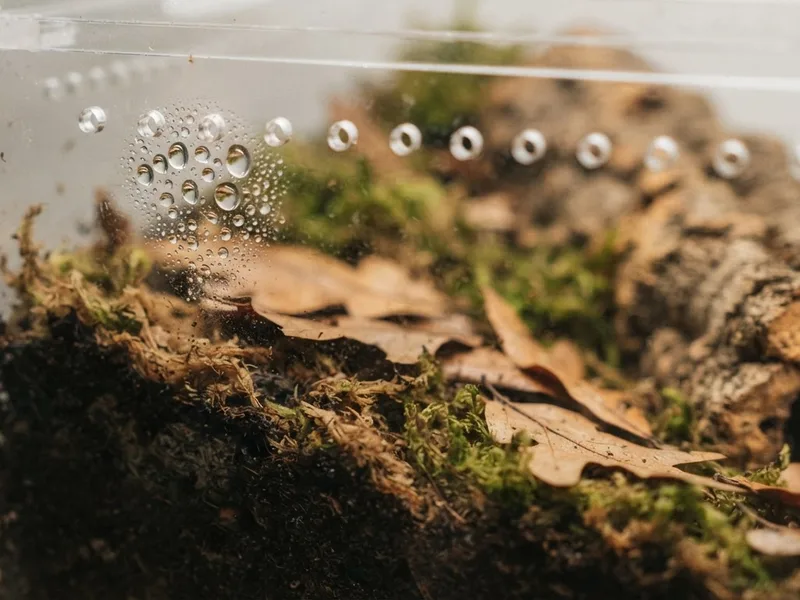
Cross ventilation is the cheapest safety feature in jumping spider care. Put mesh on one upper side and another mesh opening on the opposite lower side, or use a front door with mesh panels. Stale air traps moisture near the hide and invites mold.
Temperature should be a range, not a single number. Most common pet species are comfortable at 70 to 80°F. Direct sun can push a small enclosure above 90°F fast. Heat mats are usually unnecessary; if the room is below 65°F, use a gentle warm side with a thermostat, not heat on the whole enclosure.
Humidity is best handled with zones. Keep one side dry and mist the opposite side lightly. A light mist every 3 to 5 days for an adult, or every 2 to 3 days for a sling, is a conservative starting point. Adjust only if the substrate stays wet for more than 24 hours or the spider looks dehydrated. The idea that a jumping spider needs constant tropical humidity is wrong for most common pet species.
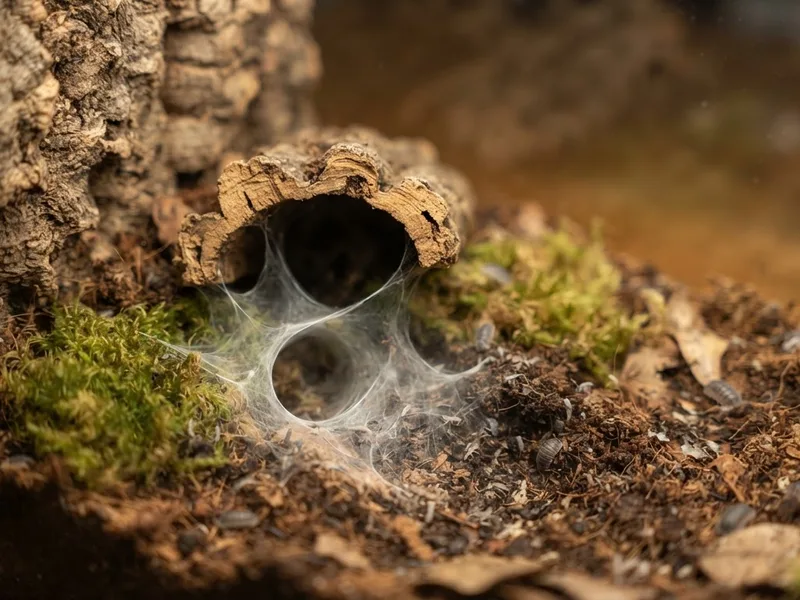
Substrate, hides, and a molting hammock
Substrate is not the main feature. A thin layer of coconut coir, peat, or paper towel is enough. For a sling, paper towel is often easiest because you can see waste and mist without drowning a small spider.
A molting hammock is not a special product. It is a retreat where the spider can attach silk underneath and around a perch, bark, leaf, or a piece of mesh held in place. The webbing holds the spider during premolt, which is the stage before a molt when appetite drops and the spider becomes more still.
Do not use loose cotton or fussy artificial plants. Fibers can trap a soft spiderling. A simple cork strip is better. If you want a starter bioactive set, wait until you can manage moisture and mold in a room without checking every hour.
| Life stage | Prey | Typical frequency | Watch out |
|---|---|---|---|
| Sling | Flightless fruit flies, smaller than the spider's body | 2 to 4 flies, 3 to 5 times per week | Do not use pinhead crickets as the only food for very small slings |
| Juvenile | Small fruit flies, pinhead crickets, roach nymphs | 1 to 2 small prey, 2 to 3 times per week | Prey should be shorter than the spider's body |
| Adult female | Crickets, roach nymphs, small mealworm pieces | 1 to 3 prey, every 3 to 7 days | Many adults eat less often in winter |
| Mature male | Crickets or roach nymphs | 1 to 2 prey, every 4 to 7 days | A mature male is an adult male after the final molt; some feed poorly near the end |
How to handle a molt
A molt is normal. The spider will stop eating, web itself to a hide, and become still. If a live prey item is still walking near it, remove it gently with feeding tweezers. Do not poke the spider to check if it is alive.
Leave the hide undisturbed until the spider moves normally. Exact molt duration varies by size and room temperature, so do not rely on a single calendar number. Do not remove old skin unless it is stuck and blocking movement; if it is stuck, wait for the spider to pull free on its own before calling for advice.
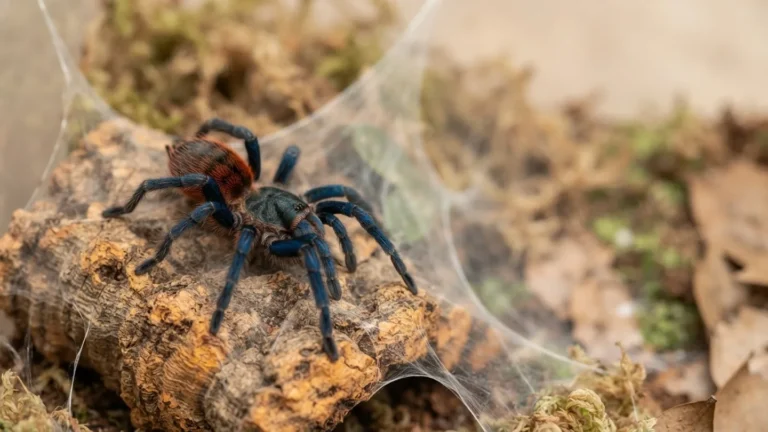
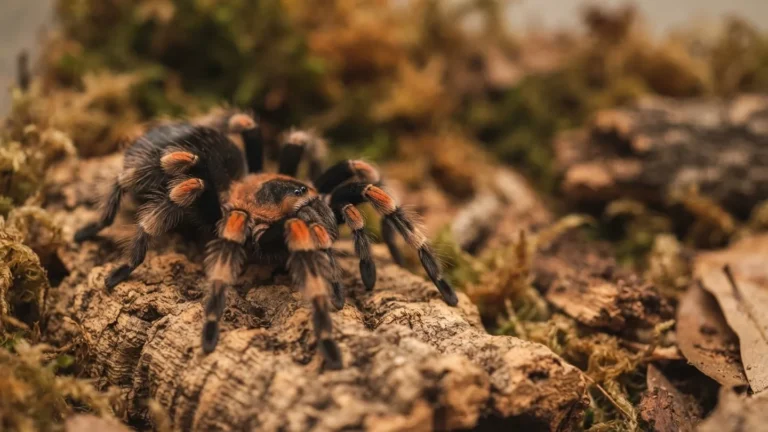
If you keep tarantulas too, you may know urticating hairs (irritating bristles some tarantulas flick). Common pet jumping spiders are not usually a concern for that, but they can still bite if crushed. Most bites are defensive and rare. If bitten, wash the area and watch for any unusual reaction.
Molt checklist
Stop feeding
Stop feeding when the spider ignores prey and rests in its web.
Remove live prey
Remove live prey if it remains moving near the hide.
Mist gently
Mist only the dry side, not the spider.
Keep warmth steady
Keep temperature at 70 to 80°F and avoid moving the enclosure.
Wait for movement
Wait until the spider moves normally, then offer one small prey item.
Delay handling
Do not handle for 3 to 5 days after a molt.
Jumping spider care FAQ
How big does a jumping spider enclosure need to be?
For a sling, 4 by 4 by 4 inches is workable. For most adults, use 6 by 6 by 6 inches minimum. Large Phidippus females can do better in 8 by 8 by 8 inches.
Do jumping spiders need a heat mat?
Usually no. Room temperature is enough. Use heat only if the room stays below 65°F, and keep it off the main hide.
How often should I mist?
Mist lightly every 2 to 3 days for a sling and every 3 to 5 days for an adult. Hobby guides disagree, so err dry and provide a water dish.
Why is my jumping spider webbing up?
It is normal. They web retreats for hiding, molting, and catching small prey. Webbing is not a sign of disease by itself.
Can I feed springtails?
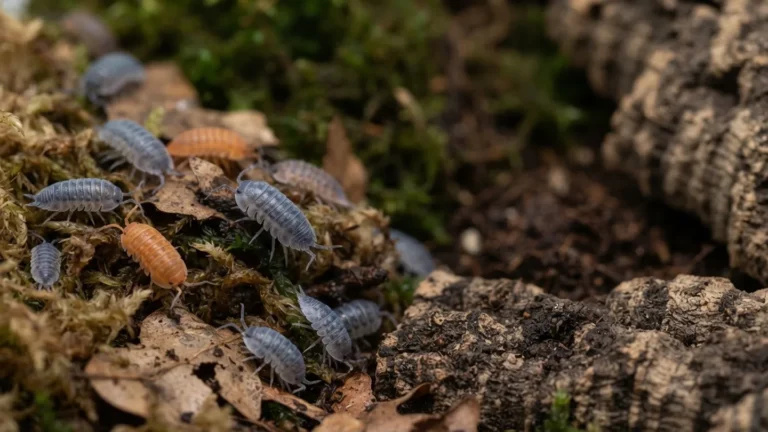
Springtails (tiny cleanup organisms) can be a snack for some spiders, but they are not a reliable main meal for most jumping spider care plans. Use fruit flies or crickets sized to the spider.
When should I worry?
Worry if the spider stays trapped in old skin after it has been moving for 2 days, collapses, or has clear injury or prolonged dehydration with a shriveled abdomen.