Greenbottle Blue Tarantula (Chromatopelma cyaneopubescens) Care Sheet
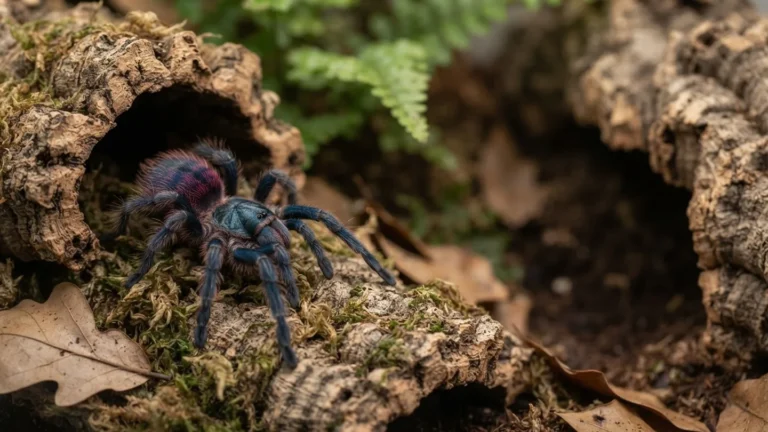
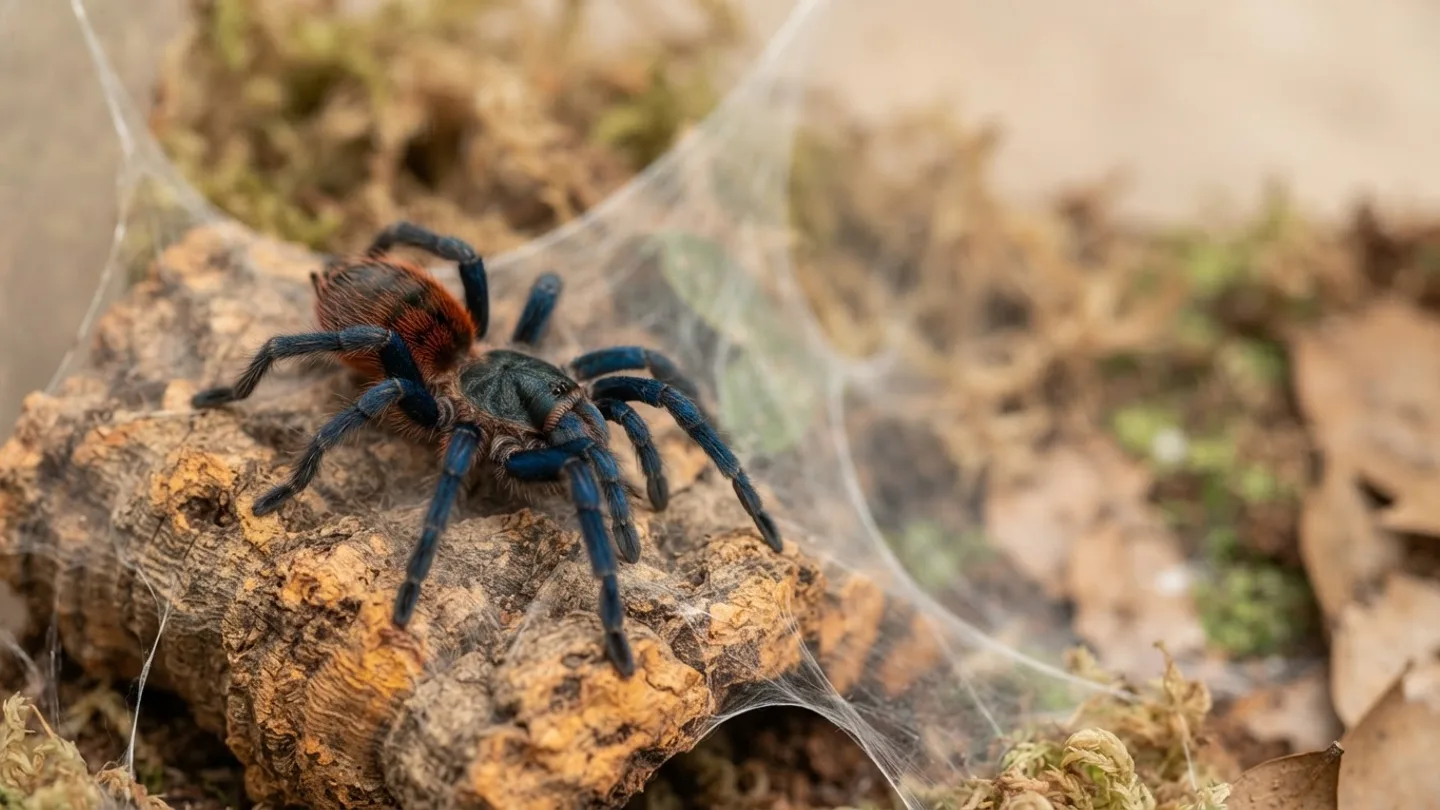
The greenbottle blue tarantula is a beginner species with a specific job. It is called a webber because it covers much of its enclosure with silk, including a tube-like retreat. It is beginner rated because it eats well, grows fast, and tolerates ordinary room conditions, but it is skittish. Handle it only when you must.
This care sheet keeps the parameters conservative. You can set this species up tonight with a small ventilated container, a shallow water dish, dry substrate, and anchor points. If the enclosure is too wet, the animal may reject it. If it is too cramped, the webber has no room to build a normal web.
Table of contents
At a glance specimen label
- Species: Greenbottle blue tarantula, Chromatopelma cyaneopubescens.
- Origin: dry northern Venezuela, not a humid rainforest species.
- Beginner rating: beginner but skittish.
- Adult size: about 4.5 to 6 inches leg span.
- Adult enclosure: 12 by 12 by 12 inches.
- Temperature: 72 to 78 °F in a stable room.
- Substrate: mostly dry, with a water dish.
- Web anchors: corners, cork bark, sticks, or mesh.
Where it comes from and how it behaves
The greenbottle blue comes from dry, shrubby habitat in northern Venezuela. In the wild it is known for heavy webbing, so it does not need a thick, constantly moist substrate the way some burrowing species do. That origin is the reason for the simplest setup rule: dry enough to stay mold free, with a water dish and enough anchors for webbing.
It is a New World tarantula. New World tarantulas can kick urticating hairs from their abdomen. The hairs are barbed and can irritate skin, eyes, and the inside of the nose and lungs. A greenbottle blue is not known as an aggressive biter, but it is fast and defensive. If it kicks hairs, stay calm. Rinse skin with soap and water, flush eyes with clean water, and wash clothing. If symptoms are severe or persistent, seek medical care.
It is beginner appropriate because it is hardy, feeds readily, and grows fast. A sling, meaning a juvenile tarantula, can put on visible growth over a few months. The tradeoff is that the animal may bolt, drop, or kick hairs if disturbed.
If you want a display tarantula, this is a good choice. If you want a calm handling pet, compare other species in beginner invertebrates.
Set up the enclosure tonight
Choose container size
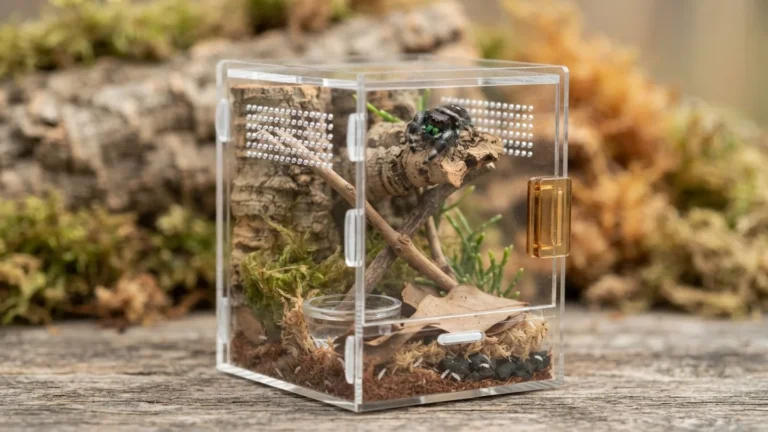
For a small sling, use a deli cup or 3 by 3 by 3 inch enclosure. For a larger sling, use 4 by 4 by 5 inches. For an adult, use 12 by 12 by 12 inches. Keep small spiders in a space small enough that they can reach substrate, water, and web anchors.
Add substrate
Add 1 to 2 inches of dry coconut fiber, peat-free potting soil, or plain topsoil with no fertilizer or pesticides. Avoid cedar and scented soil.
Add web anchors
Place cork bark in one or two corners. Add a small stick, a corner of mesh, or a thin branch. This species web between corners and edges, not only inside a hide.
Add a water dish
Use a shallow dish with marbles or a cork piece so the spider can drink and climb. Fill it just enough to cover the bottom. Avoid deep water that a small spider cannot exit.
Place the enclosure
Keep it in a room from 72 to 78 °F, away from direct sun and drafts. A heat mat is not needed for most US rooms. If your room is below 70 °F, raise the room temperature instead of cooking the enclosure from below.
Introduce the spider
Transfer the tarantula with a cup, tube, or cork. Leave it alone for 2 to 3 days. Then check the webbing, water dish, and appetite before disturbing it again.
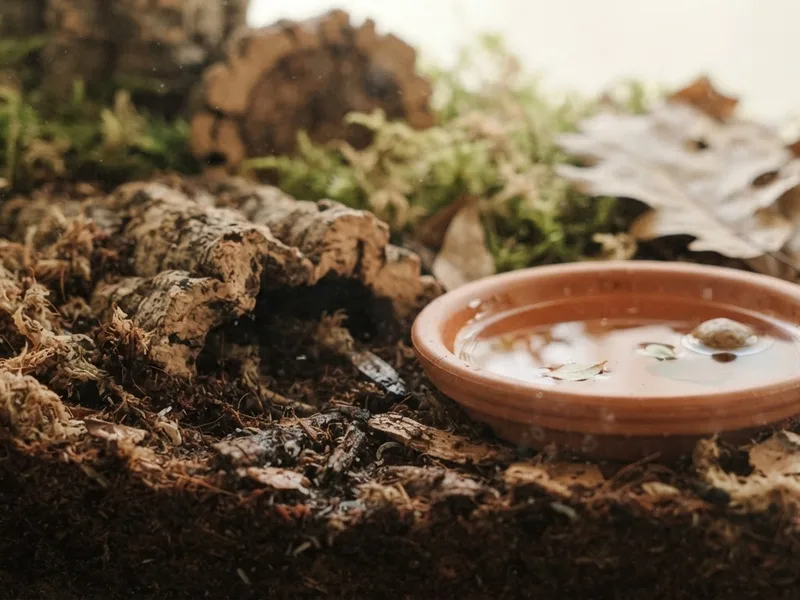
Enclosure, substrate, and water
Your greenbottle blue will build a lot of silk. This is normal, not a sign of distress. The webbing helps it feel secure and may line corners, the substrate surface, and the top edges. If you give it only a smooth container with no anchors, it will web wherever it can and may stress itself.
Keep the substrate mostly dry. Some keepers prefer a slightly moist corner because it makes drinking easier. Start with dry substrate and a water dish. If the spider stays near water but does not enter it, do not soak the enclosure. Mist lightly on one side if needed, then let the surface dry within a day or two. Standing moisture invites mold and mites.
Ventilation matters because the species does not thrive in a damp, stagnant container. Cross ventilation through opposite sides is best. A mesh lid plus small ventilation holes works for juveniles. For large adults, use a secure lid with enough gaps. Pinhead spiders can escape through surprisingly small openings.
Pros
- A ventilated enclosure
- A shallow water dish
- Cork bark and corner anchors
- Stable room temperature
- Prey sized to body length
- Dry substrate with light surface moisture if needed
Cons
- A heat mat in an already warm room
- Constantly soggy substrate
- A large standing water dish
- Frequent handling
- Leaving live prey in the enclosure for days
- Assuming webbing means stress
Feeding and molting
Feed prey that is shorter than the tarantula body length. Do not use leg span as the measurement. A 1 inch prey item may be fine for a 2 inch spider, but it can be too big for a small sling. Gut load feeder insects with fruit, oats, or leafy greens for a day before offering. Do not rely on calcium powder as a routine product for this species.
Slings and juveniles often eat every 5 to 7 days during fast growth. Offer one or two pinhead or small crickets, fruit flies, or very small roaches for tiny slings. Remove uneaten prey after 24 hours. A sling that refuses food is often premolt, not dying.
Adults slow down. Feed one or two roaches or crickets every 10 to 14 days during active feeding. A mature male, meaning a sexually mature adult male, may eat very little. This is normal. Do not keep pushing food, because it can stress or injure the tarantula.
A premolt is the preparation stage before a tarantula sheds. In a greenbottle blue, look for reduced appetite, dull color, slowed movement, and extra webbing around the entrance. Keep the enclosure stable. Do not feed during premolt. Keep a water dish available.
After a molt, wait 5 to 7 days for a small animal and 10 to 14 days for a larger adult before offering prey. The fangs and shell need to harden. If your tarantula is still curled, soft, or refusing movement, wait longer.
Common questions
Is the greenbottle blue a good first tarantula?
Yes, for display. It is beginner appropriate because it grows fast, feeds well, and tolerates a simple dry enclosure. It is skittish, so it is not a good handling pet.
Why does my greenbottle blue web over everything?
That is normal. It is a heavy webber. Provide corners, cork, sticks, or mesh so it can build a secure retreat. If you constantly remove the web, you may stress the animal.
Should I keep the substrate moist?
No, not as a rule. Keep it mostly dry and give a shallow water dish. A slightly moist corner is optional if the spider seems to prefer it, but a soaking wet enclosure is the wrong idea for this species.
My tarantula is not eating. Is it dying?
Not necessarily. Check whether it is premolt, whether prey size is too large, and whether the water dish is available. Tarantulas can go weeks or months between meals. Remove uneaten prey and try again later.
How do I clean the enclosure?
Spot clean feces, shed skins, and dead prey. Replace substrate when it is soiled or moldy. If possible, wait until after a molt for a full substrate change, because disturbed webbing can stress the spider.
What if it kicks hairs?
Rinse the skin with soap and water, flush eyes with clean water, and wash clothing. If symptoms are severe or persistent, seek medical care. Avoid handling the species if you are sensitive to dust or hairs.