Tarantula Care for Beginners: Your First Month
Your first month with a tarantula is about stability. The animal came from a shop, expo or breeder, and it needs a calm box before it will eat, grow or look active.
Use conservative numbers, not hobby folklore. If you are still choosing a species, start with Pet Invertebrates for Beginners.
If you already have the spider, follow the first month plan below, then check the care sheet for your species when you find it on this site.
Table of Contents
Key takeaways
- Keep most beginner tarantulas at 70 to 80 °F.
- Use a shallow water dish and one hide from day one.
- Offer prey no longer than the spider body, and remove leftovers after 24 hours.
- Premolt signs are inactivity, a glossy or darker abdomen and webbing. Leave the spider alone.
- Most beginner tarantulas do not need a heat mat, and none should be moved for size alone.
First Month Plan
Days 1 to 2: Let it settle
Leave the spider alone. Provide a stable room temperature spot, one hide and shallow water. Do not feed on day one unless the spider is clearly active and accepting food.
Days 3 to 7: First feeding trial
If the spider is active and not showing premolt signs, offer one small prey item no longer than its body. Remove uneaten food after 24 hours.
Week 2: Check the setup
Confirm the enclosure is not cramped, the substrate is damp not wet, and the water dish is shallow enough to climb out of.
Weeks 3 and 4: Watch for molting
If feeding becomes difficult, look for premolt signs. Premolt means the resting stage before molting. Do not disturb the animal.
Enclosure and Substrate
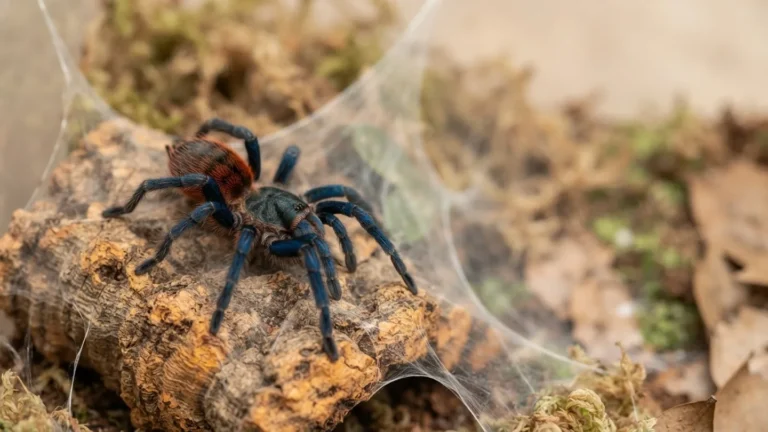
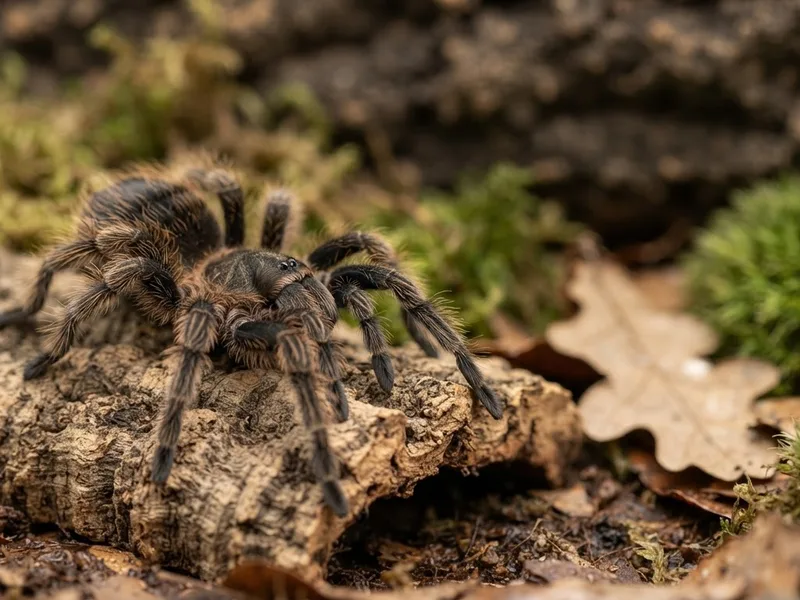
Choose size by the spider, not by the shelf. For a terrestrial tarantula, use floor space about 1.5 to 2 times the leg span across. For many small slings, a 2 to 4 inch footprint is enough. Move only when the spider looks cramped, not when you want a nicer display.
Substrate depth matters more than substrate brand. For burrowers, use 2 to 3 inches for small species and 3 to 4 inches for larger species. For surface dwellers, 1 to 2 inches is enough. Use plain, pesticide-free soil, coco coir or a mix without fertilizer. If you know the species name, check the Blog pages for a species care sheet.
Add one hide and one water dish. For slings, use a bottle cap, jar lid or very shallow dish with small pebbles. Tarantulas can struggle in deep water, so keep the edge low enough to climb out.
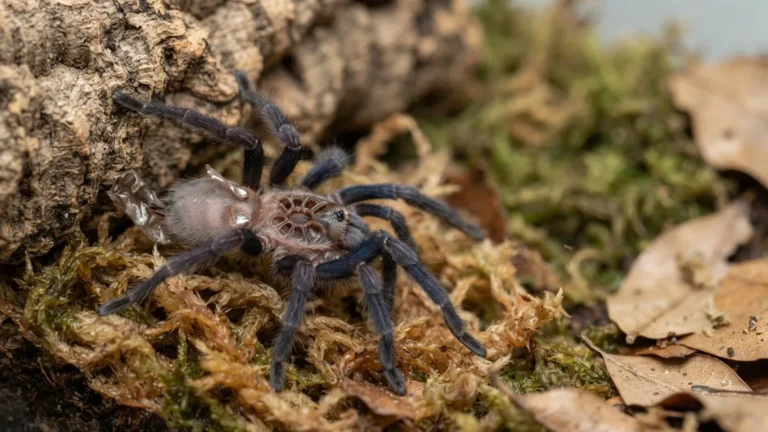
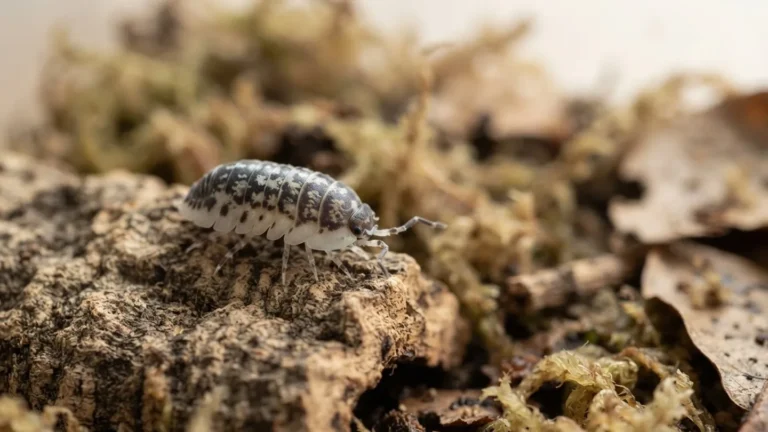
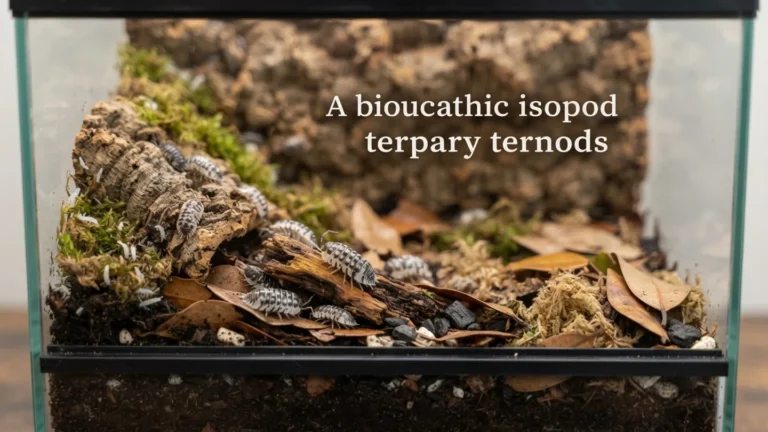
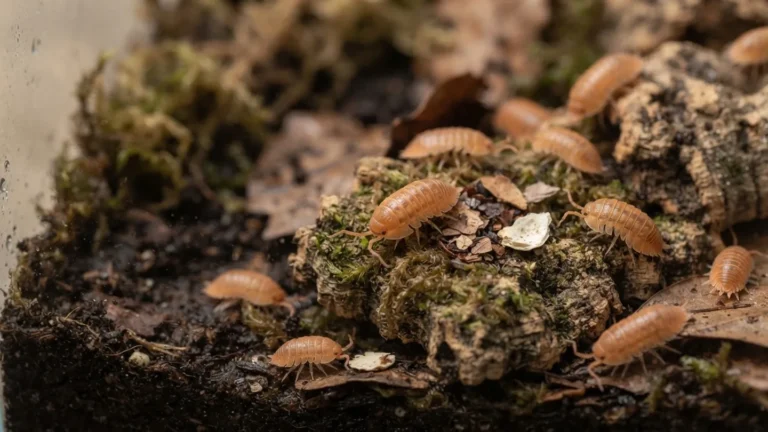
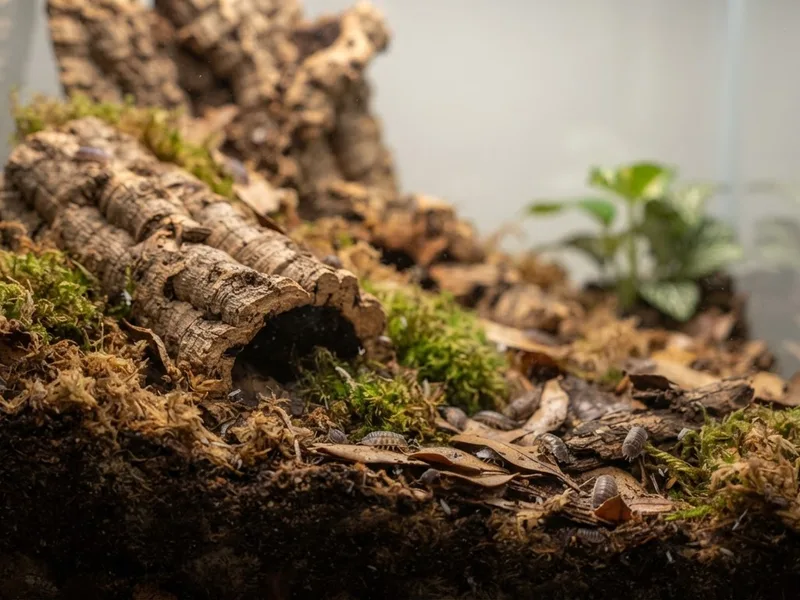
You do not need a bioactive build for the first month. A bioactive enclosure uses a living clean-up crew, often springtails and isopods, to process mold and waste. That can wait until the spider is settled.
| Habit type | What it usually wants | First month caution |
|---|---|---|
| Terrestrial burrower | A damp corner with 2 to 3 inches of substrate, plus a dry side | Do not soak the substrate. Wet burrow walls can collapse and invite mold. |
| Desert terrestrial | A mostly dry setup with a shallow water dish and occasional light moisture in one corner | Many hobby myths overrate humidity. Keep it dry unless a species guide says otherwise. |
| Arboreal species | Vertical space, bark or rough climbing surface, and misted sides or bark, not standing water | Mist the enclosure wall, not the spider. Standing water on a sloped hide can trap a sling. |
Temperature, Feeding and Molting
Keep most beginner tarantulas at 70 to 80 °F. Use a digital thermometer placed inside the enclosure, not a strip on the glass. If your room runs warm, move the enclosure to a cooler interior shelf before adding any heat.
If you know the animal is a tropical species that needs the warmer end, hold it at 75 to 80 °F, not 65 to 70 °F. The point is stability, not a hot box.
Most commonly kept tarantulas do not need a heat mat. A heat mat can overheat one side, push the spider into a bad molting condition and make it hard to tell whether the animal is cold, too hot or molting.
If a species page recommends heat, use a thermostat and place the mat under or beside the enclosure, never directly under a burrow.
Feeding should be simple. A sling is a small young tarantula. For most slings, offer prey every 5 to 7 days. For older tarantulas, offer prey every 10 to 14 days. The prey size should be no longer than the spider body.
Do not feed mice to a first-month tarantula, and do not use wild caught insects unless you are certain the area is pesticide-free. Pesticides can transfer to the spider and harm it.
If your tarantula refuses food, check the basics before assuming illness. It may be premolt, too hot, too cold, stressed, or the prey may be too large. A mature male is an adult male tarantula that has completed its final molt, and mature males can stop eating for long periods near the end of their natural life.
Premolt signs vary by species, but often include inactivity, a glossy or darker abdomen, retracted legs, webbing over the entrance and refusal of food. Do not disturb a tarantula you think is molting, and do not spray the animal. Keep shallow water unless the species page says otherwise.
If a molt looks stuck and the old skin is trapped near the legs or fangs, get advice from an experienced species guide. Do not pull the old exoskeleton.
Handling is a later skill, not a first week activity. Most bites cause local pain and redness, but watch for breathing trouble, throat tightness, face swelling or severe symptoms and seek urgent care if they occur. Urticating hairs are barbed body hairs that some New World tarantulas flick when stressed. They can irritate skin and eyes. Wash your hands after working with the substrate.
The beginner mistakes that kill tarantulas are usually overfeeding, overheating, wet substrate, too much space and handling before the animal is calm. If you are unsure whether your species is a good beginner tarantula, check its species page. Some popular species are fast, defensive or need humidity precision that a first month plan cannot guarantee.
Frequently asked questions
Is my tarantula dead if it looks curled up?
It may be molting. A tarantula in premolt can fold its legs under its body and look like death. Leave it undisturbed with shallow water, and check daily for days or weeks before deciding. Do not freeze or throw it away.
How often should I feed my tarantula?
Most slings need prey every 5 to 7 days. Older tarantulas often need prey every 10 to 14 days. Remove uneaten food after 24 hours, and do not leave food in the enclosure overnight if the spider is not interested.
Why will my tarantula not eat?
It may be premolt, stressed, too cold, too hot, or the prey may be too large. A mature male may also refuse food for long periods. Check the setup first, then leave it alone rather than forcing feedings.
Do I need a heat mat?
Usually not. Most commonly kept beginner tarantulas do best with stable room temperature between 70 and 80 °F. Use a thermostat if a species guide says heat is needed.
When should I move to a bigger enclosure?
When the spider looks cramped in its current box. For a terrestrial, use floor space about 1.5 to 2 times the leg span across. Do not put a new tarantula into a huge display enclosure right away.
Is it safe to handle my tarantula?
Not during the first month. Most bites cause local pain, but severe symptoms need urgent care. Urticating hairs can irritate skin and eyes. Photograph through glass instead.