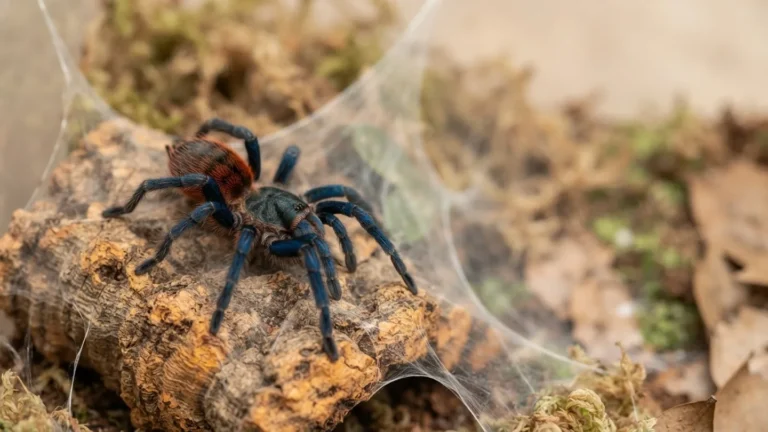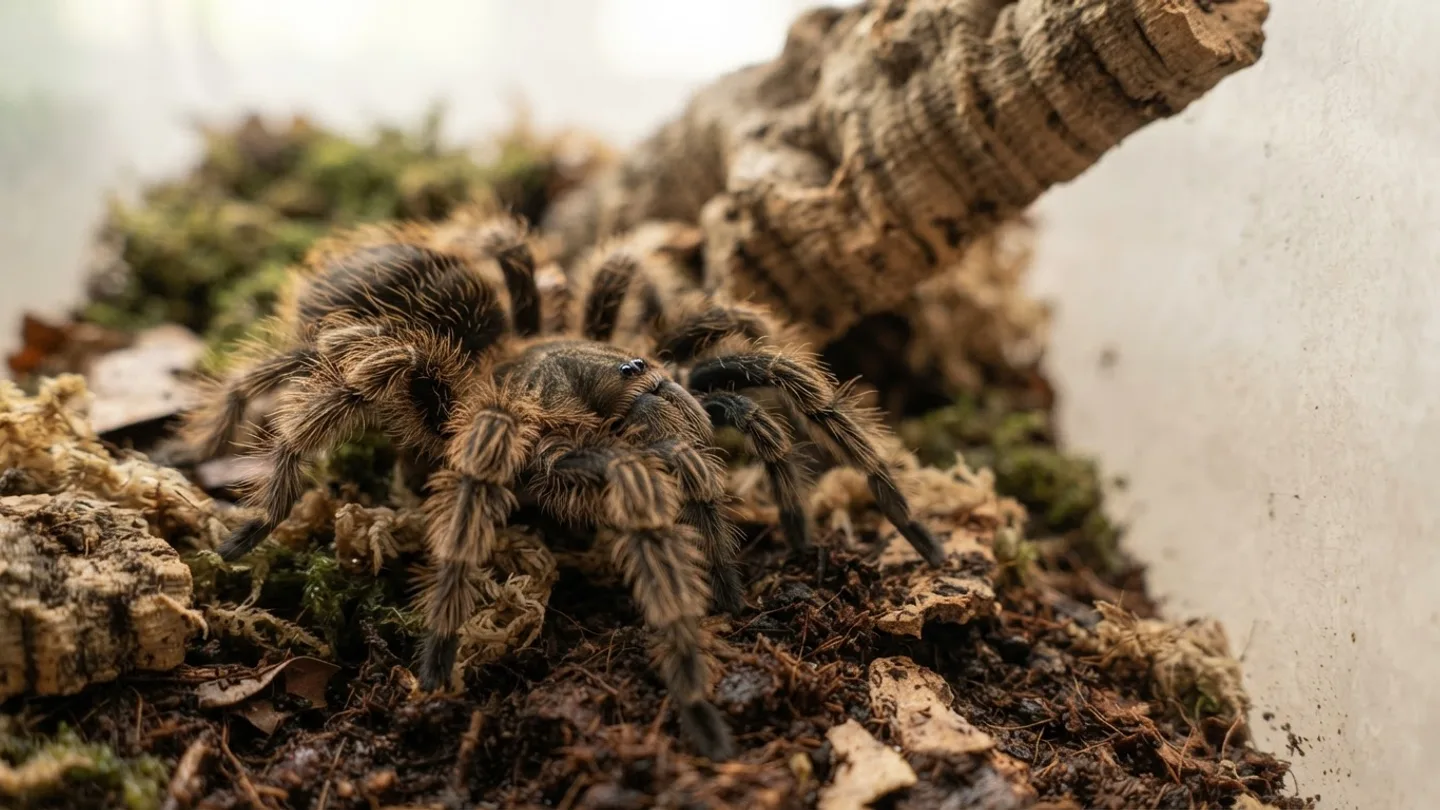
Curly Hair Tarantula (Tliltocatl albopilosus) Care Sheet
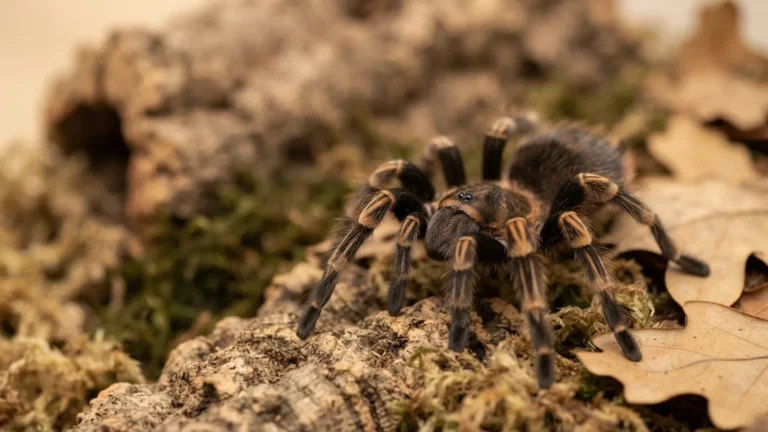
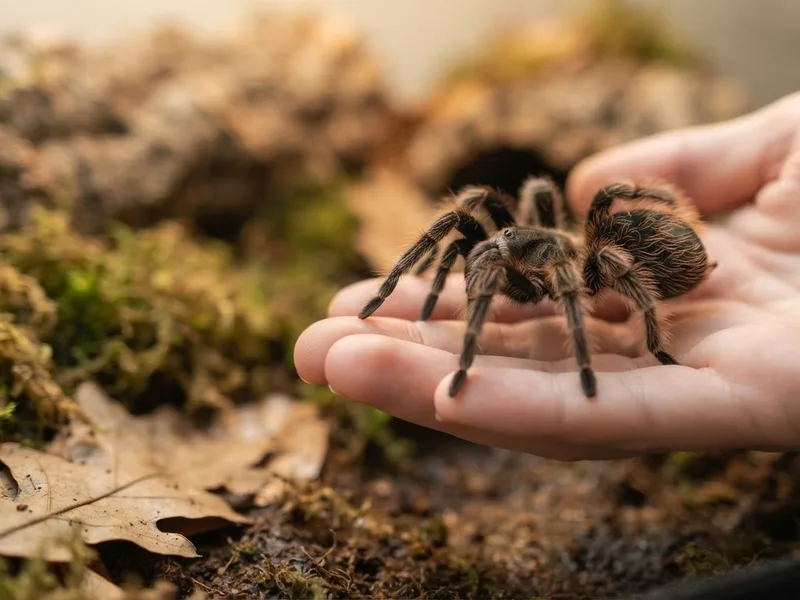
At a glance, the Curly Hair Tarantula (Tliltocatl albopilosus, formerly Brachypelma albopilosum) is a beginner friendly tarantula because it is hardy, slow moving and usually calm. It burrows, so substrate depth matters more than a tall tank.
For a US keeper setting up tonight, the safest numbers are 72 to 80 °F, an adult enclosure about 12 inches long, one damp corner, one dry side, a shallow water dish and prey smaller than the spider's body.
This sheet also covers the Honduran and Nicaraguan forms sold in the hobby, feeding frequency by life stage, molting and kicked hairs, also called urticating hairs.
At a glance specimen label
Common name: Curly Hair Tarantula.
Scientific name: Tliltocatl albopilosus, formerly Brachypelma albopilosum.
Beginner difficulty: Yes. This species is hardy, slow moving and usually calm.
Adult leg span: Often 4 to 5 inches, with some adults reaching about 5.5 inches.
Adult enclosure: At least 12 inches long, 6 inches wide and 8 to 9 inches tall.
Sling enclosure: A small vented tub, 4 to 6 inches on each side, is enough for a very young tarantula.
Substrate: 2.5 to 4 inches of burrowing substrate for adults, 0.5 to 1 inch for slings.
Temperature: 72 to 80 °F, kept stable.
Moisture: One damp corner, one dry side and a shallow water dish.
Feeding: Offer prey smaller than the body. Slings every 4 to 7 days, adults every 10 to 14 days.
Hairs: Can kick urticating hairs when stressed. Handle rarely.
Key takeaways
- Curly Hair Tarantula is a good first tarantula because it is usually calm, but it is still a display animal, not a lap pet.
- House it in a burrow friendly enclosure with deep substrate, not just a shallow tank.
- Keep temperatures modest, usually 72 to 80 °F, without relying on a heat mat.
- Give one moist corner and one dry side instead of soaking the whole enclosure.
- Pause feeding during premolt and wait several days after a molt before offering food again.
Enclosure, temperature and moisture
Use a secure, vented enclosure. For an adult with a 4 to 5 inch leg span, a floor of at least 12 by 6 inches works. The height matters less than the floor area, because this tarantula burrows.
Pack the substrate lightly but firmly enough that tunnels hold. Coconut fiber, peat free topsoil without pesticides or fertilizers and a small amount of leaf litter are reasonable starts.
A cleanup crew of isopods or springtails is optional, not required. If you add one, keep the culture small so it does not crowd the spider during a molt.
Keep the room temperature at 72 to 80 °F. Where hobby sheets list warmer numbers, the conservative choice is to stay in a stable mid range rather than pushing the animal hot.
A heat mat is usually unnecessary for a kept Curly Hair Tarantula. If the room is cool, move the enclosure to a warmer, draft free spot before adding heat.
Moisture should be practical, not a soaked mess. Make one corner damp and leave the other side dry.
For a small sling, keep the damp side a little moister because tiny tubs dry fast. For an adult, lightly water one corner once every few days, or when the surface looks pale.
Provide a shallow water dish. A small bottle cap is enough for many slings. Make sure the tarantula can reach the water without drowning risk.
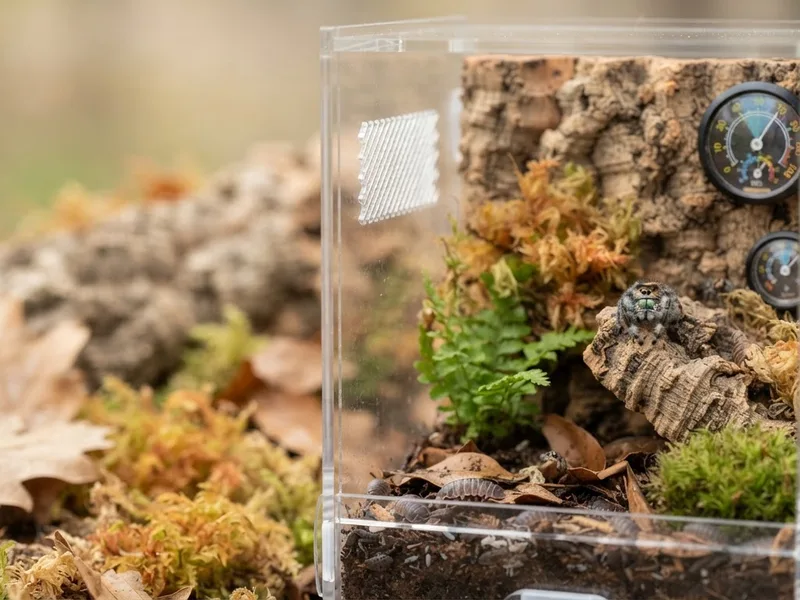
Set up a Curly Hair Tarantula tonight
Choose the right enclosure
For an adult, use at least 12 inches long, 6 inches wide and 8 to 9 inches tall. For a sling, use a 4 to 6 inch vented tub.
Add substrate for burrowing
For an adult, add 2.5 to 4 inches of substrate. Lightly tamp it so it holds shape.
Make one damp corner
Water only one side until damp, not swimming. Leave the other side dry.
Add hide and water
Place a cork bark hide near the damp side. Add a shallow dish that is no deeper than the tarantula's body.
Let the enclosure settle
Check for condensation, strong odors or a dry tub. Adjust moisture before adding the spider.
Introduce the tarantula and leave it alone
Move it gently into the enclosure, then give it several days to settle. Do not feed right away if it is stressed or likely premolt.
Feeding, premolt and molting
Feeding is simplest when the prey is smaller than the tarantula's body. For a very small sling, use flightless fruit flies. For a 1 to 2 inch sling, pinhead or small crickets are better. For a juvenile or adult, offer one or two crickets, mealworms or dubia roaches sized to the body.
Feed slings about every 4 to 7 days. Feed adults about every 10 to 14 days, then adjust to body condition and appetite. A slightly plump abdomen is fine, but a very large abdomen is a signal to skip food.
Remove uneaten prey after 24 hours. Live prey can bite a stressed tarantula, especially during premolt or after a molt.
Premolt signs include hiding, appetite loss, a darker or glossy abdomen, a balding abdomen and curled legs. Do not feed live prey during premolt.
During molt, the tarantula usually lies on its back and sheds the old skin. The process can take hours. Do not disturb it.
After a molt, the legs and body are soft. Wait 3 to 5 days before offering food, and wait longer if the tarantula is still curled, pale or hiding. Remove the old shed.
Good feeding is also observation. A healthy Curly Hair Tarantula usually hunts, plumps up and molts on its own schedule.
Honduran and Nicaraguan forms
Honduran form
The hobby often uses this label for animals described as slightly larger and more robust. Keepers may report denser, curly body hair and an adult size at the upper end of the normal range. Care is the same: conservative temperature, deep substrate and a moist corner.
Nicaraguan form
The hobby often uses this label for animals described as slightly smaller or lighter in build, with fine, tightly curled hairs. Reports vary, and localities can be mixed or mislabeled. Treat it as the same species for care unless you have a trusted supply record.
Handling, bites and kicked hairs
The Curly Hair Tarantula earns its beginner reputation by being hardy and slow, not by being safe to hold.
Handle rarely. If you must move it, cup a clear container over it, slide a card underneath and carry it gently.
This species can kick urticating hairs from the abdomen when stressed. Some keepers call this kicked hairs. The hairs can irritate skin, eyes and airways.
Do not rub your eyes after touching the spider, substrate or water dish. Wash your hands.
If hairs land on skin, wash with soap and water. If they contact eyes, rinse with clean water and seek care if irritation continues.
Bites are rare and often cause local pain, redness or soreness. Allergy is possible. If swelling spreads, breathing becomes difficult or a person feels faint, seek urgent care.
Keep the enclosure secure. A calm species can still bolt, and a fast escape is harder to fix than a careful transfer.
Frequently asked questions
Is a Curly Hair Tarantula good for a beginner?
Yes. It is hardy, slow moving and usually calm. Still, keep it in its enclosure. Handling is not needed for care.
What temperature should I keep?
A stable room range of 72 to 80 °F is conservative. Most kept tarantulas do not need a heat mat.
How often should I feed?
Offer prey smaller than the body. Slings usually need food every 4 to 7 days. Adults often need food every 10 to 14 days.
Should the substrate be wet?
No. Keep one corner damp, leave the rest dry and add a shallow water dish. Small slings need slightly more moisture than adults.
Why is my tarantula not eating?
It may be premolt, too cold or simply full. If it is hiding, stop offering live prey and leave water.
Are Curly Hair Tarantulas dangerous?
They can kick urticating hairs and bite. The species is usually calm, but hairs can irritate skin and eyes. Avoid handling and wash hands after enclosure work.