Bold Jumping Spider (Phidippus audax) Care Sheet
If you just brought home a bold jumping spider, set up a small clear container tonight before you worry about fancy gear. The species is Phidippus audax, a widespread North American jumper. This care sheet uses US inches and °F, so you can measure with a tape and a room thermometer.
Bold jumping spiders are curious, fast, and easier to watch than to hold. They are a good beginner invertebrate if you want a small setup and daily observation. If you want a pet you handle often, adjust expectations now.
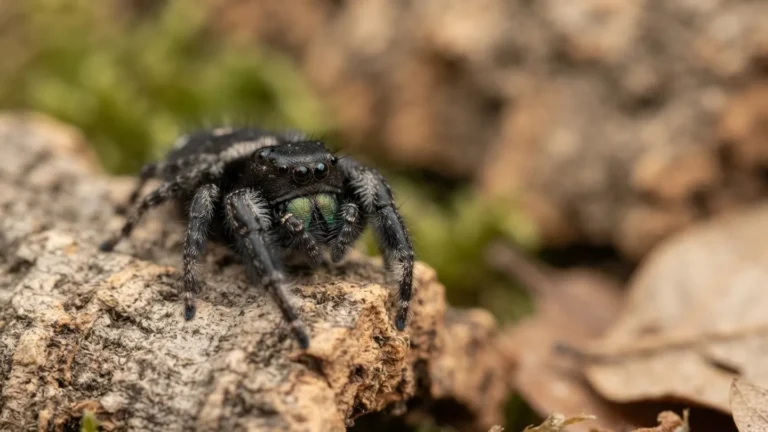
The bright green chelicerae, which are the jaw-like mouthparts, are normal. Keep the spider out of direct sun, away from air vents, and away from live prey that is larger than the spider.
What this page covers
At a glance
- Common name: Bold jumping spider
- Scientific name: Phidippus audax
- Beginner rating: Good first jumper for viewing, not for frequent handling
- Adult size: Females often 0.5 to 0.75 inch body length, males smaller, and leg span often under 2 inches
- Enclosure: 3 to 5 inches by 3 to 5 inches floor, 5 to 8 inches height, with cross ventilation
- Temperature: 68 to 80°F, and keep below 85°F
- Humidity: One damp corner, one dry side, and shallow water
- Feeding by instar: Fruit flies for small spiders, pinhead to adult crickets for larger spiders, every 2 to 5 days by size
What the bold jumping spider looks like
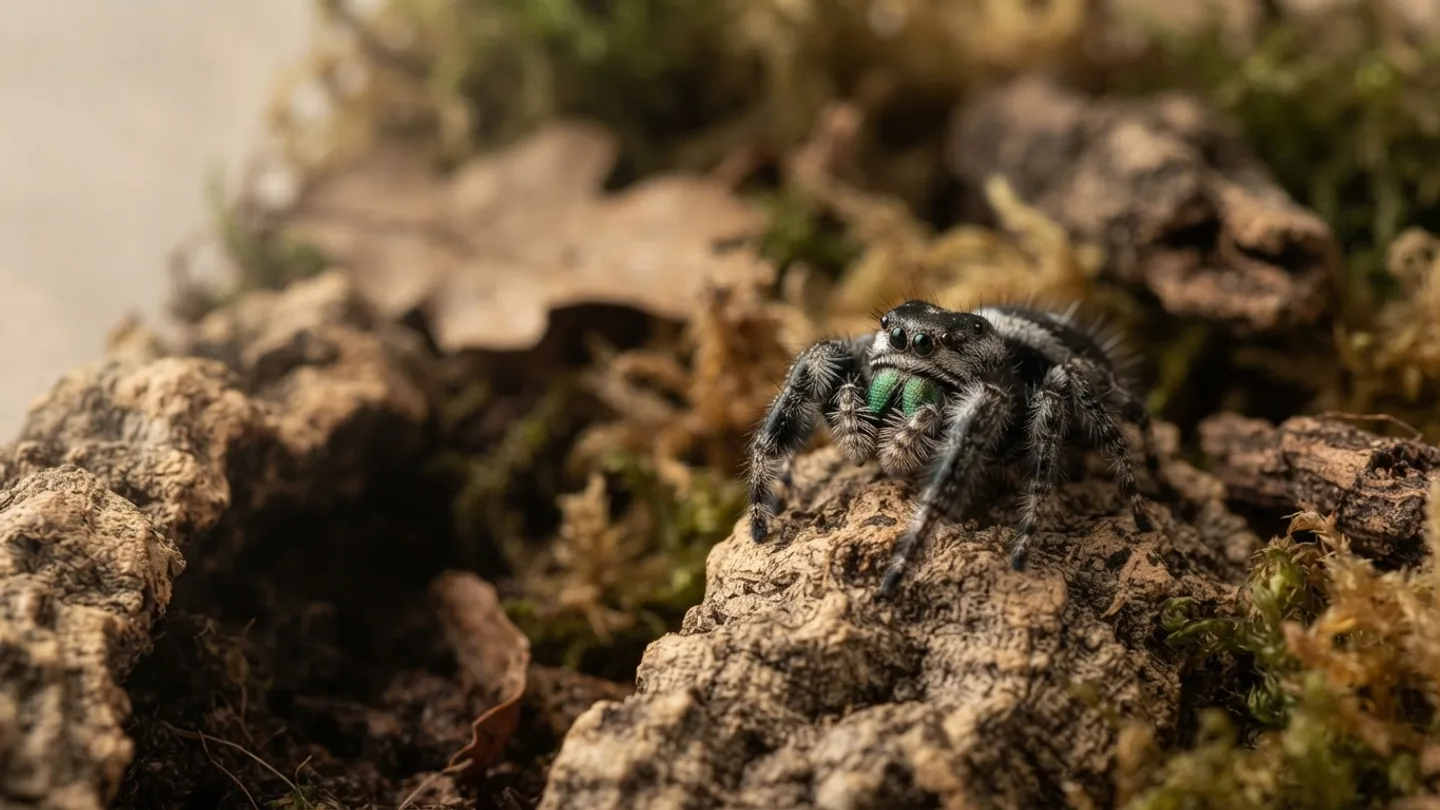
The bold jumping spider is easy to spot once you know what to look for. It has a black to dark brown body, often with white or orange spots on the abdomen. The face is broad, and the large front eyes give it a very alert look. The chelicerae are the jaw-like mouthparts, and in Phidippus audax they often shine an iridescent green. That color is normal, not a sign of injury.
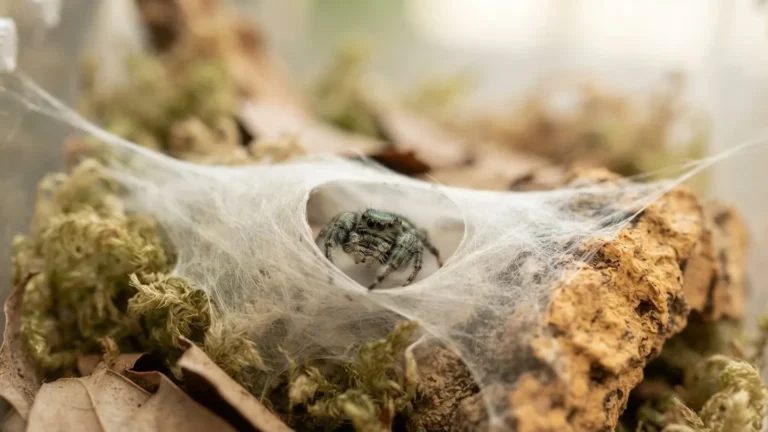
They are active visual hunters. A bold jumper stalks, pounces, and uses silk for a retreat, not for a web to trap flies. You may see a small silken hideout behind a leaf or on a corner. That behavior is normal. It also means the spider will use vertical space, so height matters.
For a first-time invertebrate owner, the main care question is not what color it is, but what size prey and what airflow it gets. Keep those two simple.
| Question | Captive-bred | Wild-caught |
|---|---|---|
| How it was obtained | Sold by a US breeder or seller with a known holding history | Collected near your home, often from a yard, fence, or leaf litter |
| Stress and transport | Usually handled through shipping or pickup, but the animal may already be feeding well | May be stressed by heat, cold, or rough handling before you ever see it |
| Parasite and pesticide risk | Lower, not zero. A good seller can tell you how the spiders were kept | Higher. Collect from lawns or roadsides can expose spiders to pesticides, and wild animals may carry mites |
| Known age | Often sold near a specific life stage, so feeding is easier to match | Age unknown, so it may be near a molt or near the end of its life |
| Best fit | Best for a keeper who wants a starter spider and a stable setup | Useful for short observation if the spider is healthy and legal to collect |
Adult size and sex differences
Adult females are usually the larger spider in the pair. A common keeper range for adult female body length is about 0.5 to 0.75 inch, while males are smaller. A mature male is an adult male that has finished molting and may show modified pedipalps, the small hand-like feelers near the mouth.
Leg span can look larger because of the stance, but many adult bold jumpers stay under 2 inches in leg span. That number is still not the best basis for enclosure choice. A large bold jumper can be comfortable in a 4 to 6 inch enclosure if it has climbable surfaces. A very small spider should stay in a smaller container so prey and humidity are easy to manage.
If you bought a spider the size of a pea, keep it in a sling-sized setup until it grows. A sling is a very young spider.
Enclosure setup tonight
Choose the container
Use a clear plastic or glass tub with a floor of 3 to 5 inches by 3 to 5 inches for most small keepers. For adults, add height: 5 to 8 inches is enough. Avoid large terrariums at first.
Add cross ventilation
Put mesh or ventilation holes on two opposite sides, not just one top hole. Cross ventilation means air moves across the enclosure. This helps prevent mold and stale humidity.
Make the substrate simple
Use peat moss, coco coir, or leaf litter. Keep one side damp, not wet, and leave the other side dry. Avoid garden soil with fertilizer.
Add climbing and hiding
Use cork bark, artificial plants, a strip of paper, or small branches. The spider needs surfaces to touch so it can rest and stalk safely.
Add water carefully
Offer a shallow bottle cap with small stones, or add a few drops to the damp side. Do not leave a large open water dish where a small spider can struggle.
Place and observe
Keep the enclosure at room temperature, away from sun and vents. Check daily for uneaten prey and water. Handle less for the first week.
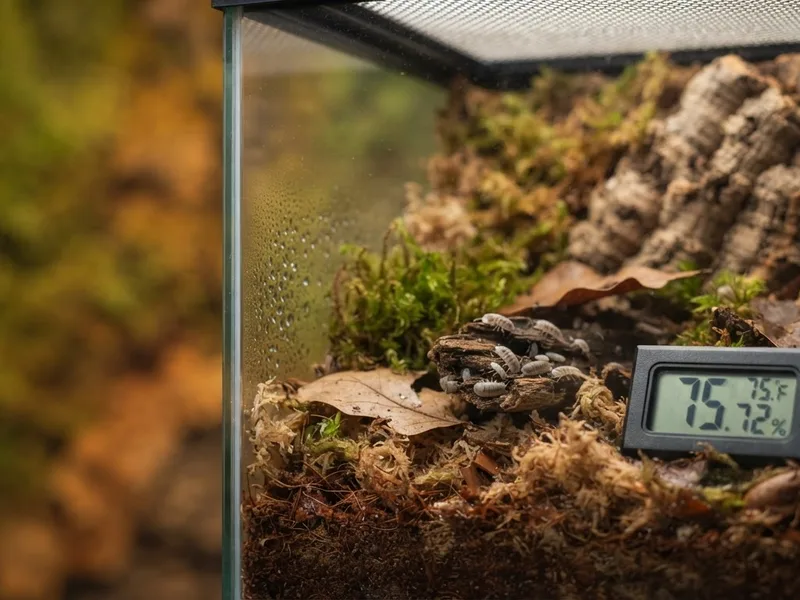
Temperature, moisture, and airflow
Room temperature is enough for most keepers. Aim for 68 to 80°F. If your house stays near 65°F, the spider may feed more slowly, but it is usually okay. Keep the enclosure below 85°F and never near a hot window in summer.
Most bold jumping spiders do not need a heat mat. A heat mat can dry the enclosure and create a hot spot that is hard to measure. If the room is genuinely cold, use a small heating pad under one corner with a thermometer, not under the whole tub. Stop if the substrate gets hot to your touch.
Humidity is best as a practical instruction. Keep one side damp, one side dry, and add water with a cap or light misting. If the substrate is soggy, let it dry. A dry corner gives the spider an escape, and it reduces mold.
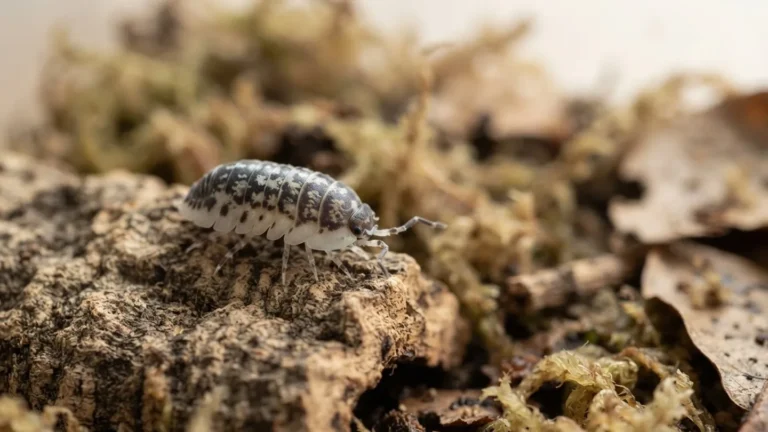
If you later move to a bioactive setup, meaning a living setup with plants and a clean-up crew such as springtails, still check airflow. Jumping spiders need fresh air more than a foggy box.
| Life stage | Prey size | Feeding pattern | Watch for |
|---|---|---|---|
| Sling or first instars | Fruit flies or micro prey | 1 to 2 prey daily or every other day | A very small abdomen and fast feeding response |
| Small juvenile | Pinhead crickets or larger fruit flies | 1 to 3 small prey every other day | Uneaten prey left in the enclosure for more than 24 hours |
| Larger juvenile | Pinhead to small adult crickets | 1 to 3 prey twice per week | Prey that is larger than the spider's body |
| Adult | Small crickets or small cockroach nymphs | 1 to 2 prey every 3 to 5 days | Reduced feeding, which may mean the spider is not hungry |
| After a molt | Small, easily caught prey | Wait until it sheds and looks alert, often 24 hours or more after | Do not offer live prey during molting |
Molting, handling, and bite risk
Jumping spiders grow by molting, shedding their old skin and taking in air to expand before the new skin hardens. The period before the shed is often called premolt. During premolt, a spider may stop eating, hide in its silk retreat, look dull, or seem clumsy. This can look alarming, but it is normal.
Do not feed live prey during molting. Do not move the spider. Keep the damp side available so the old skin can separate cleanly. After the molt, wait until the spider is alert and the old skin is gone. Then offer small prey.
If you must move a bold jumper, let it walk onto your hand or a soft brush. Do not chase it with tweezers. Bites are rare and usually mild, but the spider is small and fragile.
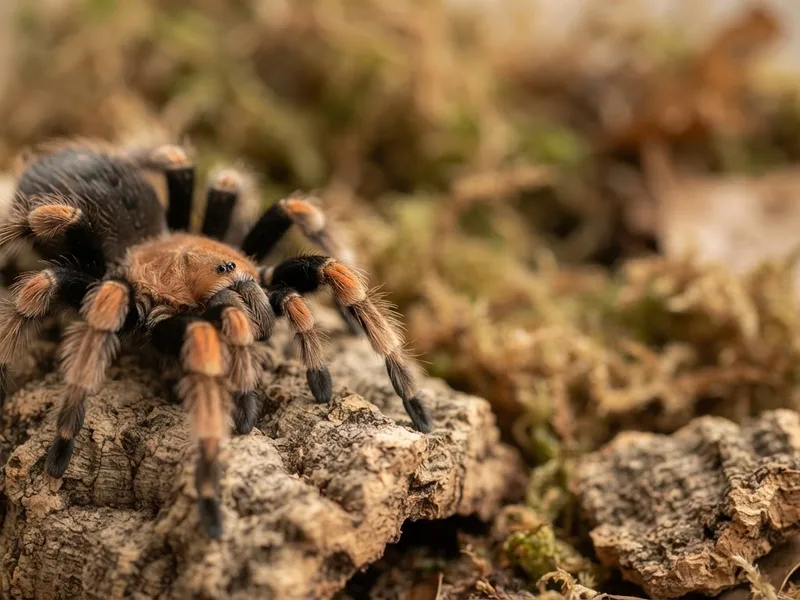
Unlike many tarantulas, jumping spiders do not throw urticating hairs, the barbed hairs that some tarantulas flick for defense. That is good news for your hands and your face. Still, wash your hands after handling substrate and do not put your face over the enclosure.
Common questions
Can I keep a bold jumping spider I found indoors?
Yes, for a short time. Give it a small ventilated container, a damp corner, a hide, and small prey. If it is not feeding, or you cannot keep it safe, release it where you found it and check local collecting rules.
Do jumping spiders need humidity?
They need a moist corner and water, not a soaked box. One damp side and one dry side works well for a bold jumping spider.
Why is my spider not eating?
It may be in premolt, stressed, too cold, or simply not hungry. Check temperature, reduce disturbance, and remove uneaten prey after 24 hours. Do not offer live food during a molt.
How do I feed a very small spider?
Use fruit flies or pinhead prey. Pick one fly out with a small brush or tweezers if needed. Do not use large crickets because they can harm the spider.
Is the green chelicerae normal?
Yes. Phidippus audax commonly has bright, shiny green chelicerae. If the spider is active and feeding, do not assume the color means illness.