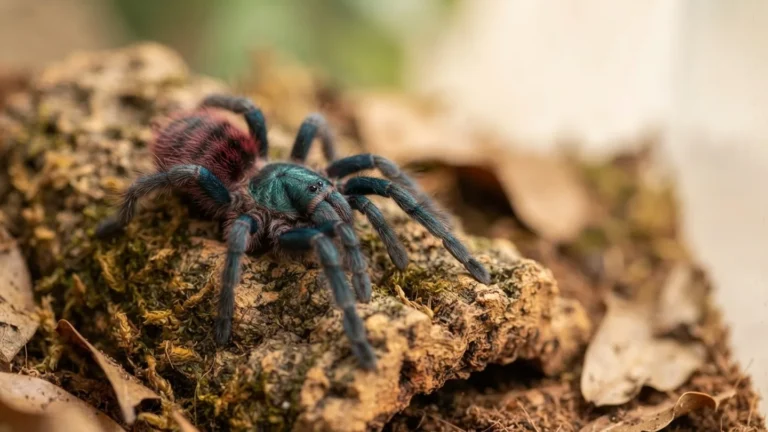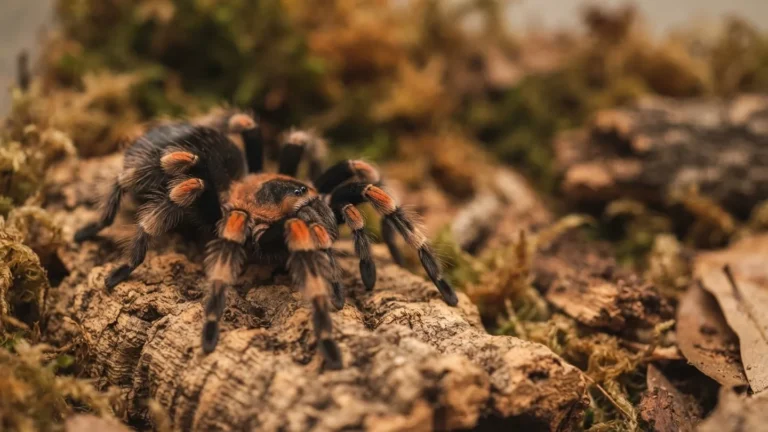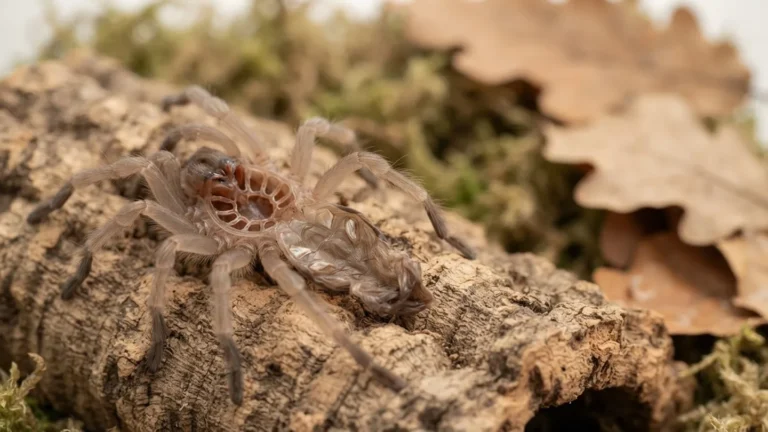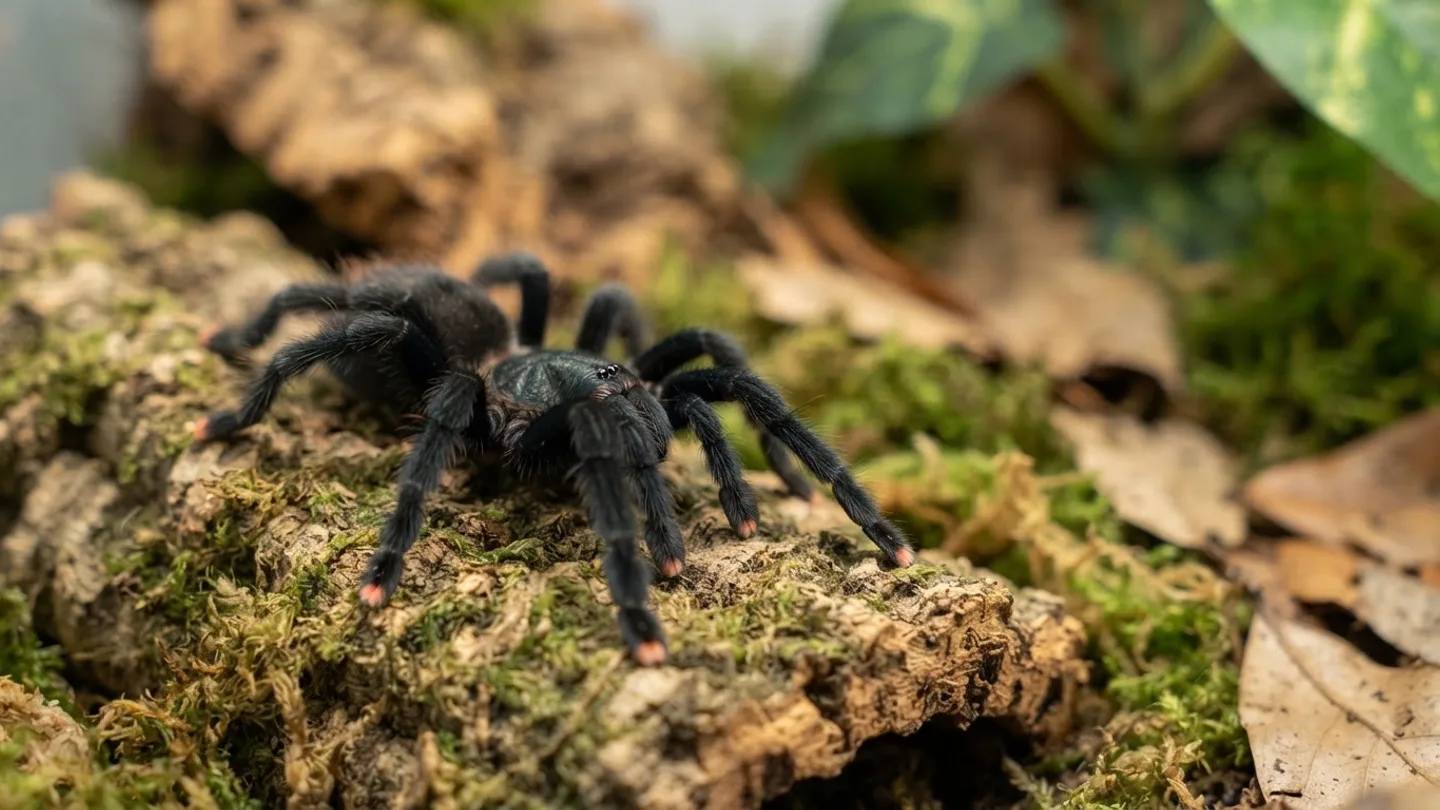
Pink Toe Tarantula (Avicularia avicularia) Care Sheet
The pink toed tarantula (Avicularia avicularia) is one of the species a US beginner may find at an expo: a webbed hide, pinkish toes, and a small adult that fits on a shelf. The old hobby advice, keep it wet, warm, and left alone, is the reason many pink toes died before their first year. It can still be a beginner species, but only on one condition: cross ventilation, a dry enclosure floor, and a water dish.
You do not need a fogger, a huge terrarium, or a bioactive build. You need an arboreal setup with vertical space, enough screen area for air flow, a dry place to perch, and a feeding plan that fits the animal stage. A sling is a juvenile tarantula, and it can bolt from a loose lid or a big cup of crickets.
What this care sheet covers
Key takeaways
- The pink toed tarantula can be a beginner species only with cross ventilation, a dry floor, and a shallow water dish.
- Adult leg span is usually 4 to 5 inches. Use a vertical enclosure: 8 to 12 inches tall for an adult.
- Keep it at 75 to 82 °F. A heat mat is unnecessary for most US rooms.
- Provide a water dish and a lightly misted hide. Do not keep the substrate wet.
- Feed prey no wider than the body. Slings eat every 3 to 5 days; adults often every 5 to 10 days.
- Expect webbing, speed, and a spider that hides instead of sitting in the open.
Why air flow matters before humidity does
Avicularia avicularia comes from humid forests, but that does not mean a wet jar. In the hobby, humid often became soggy. Poor air flow then turns the substrate into a moldy mess and gives the tarantula no reason to leave a dark corner. The fix starts with ventilation: a screened top, a lower side vent, and air moving across the box.
Aim for a moist hide and a dry branch. If you have cork bark, a branch, or an artificial plant near the top, that perch should stay dry. Mist one small corner or one hide every few days, then let the surface dry before you mist again. A water dish keeps the box from becoming a guessing game.
When to worry: if the substrate smells sour, the spider is sitting in water, or the lid is covered in condensation, increase air flow and reduce misting. A dry hide plus a water dish is safer than a misted box that never dries.
Set the enclosure up tonight
Choose the size
For a sling with a 0.5 to 1 inch body or leg span, use a 4 to 6 inch tall cup, glass jar, or small enclosure with a secure lid. For a 1 to 3 inch juvenile, use 6 to 8 inches tall. For a 4 to 5 inch adult, use 8 to 12 inches tall and at least a 6 by 6 inch floor.
Build the floor
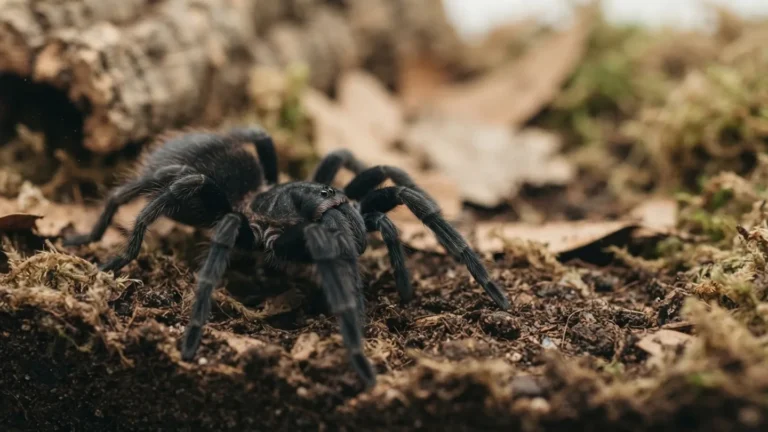
Add 1 to 2 inches of a loose, well drained mix such as coir, leaf litter, and bark chips. Do not flood it. Place cork bark or a half log against a side wall or back wall so it can web between surfaces.
Add air flow
Screen the top and add a side vent or a screened strip near the lower half of the wall. The goal is cross ventilation, not a sealed rainforest box.
Add water
Set a shallow dish in the lower third of the enclosure. Add pebbles for slings or tiny juveniles so they can drink without risk.
Let it settle
Leave the enclosure for 24 hours before offering food, especially if the animal traveled from a store or expo.
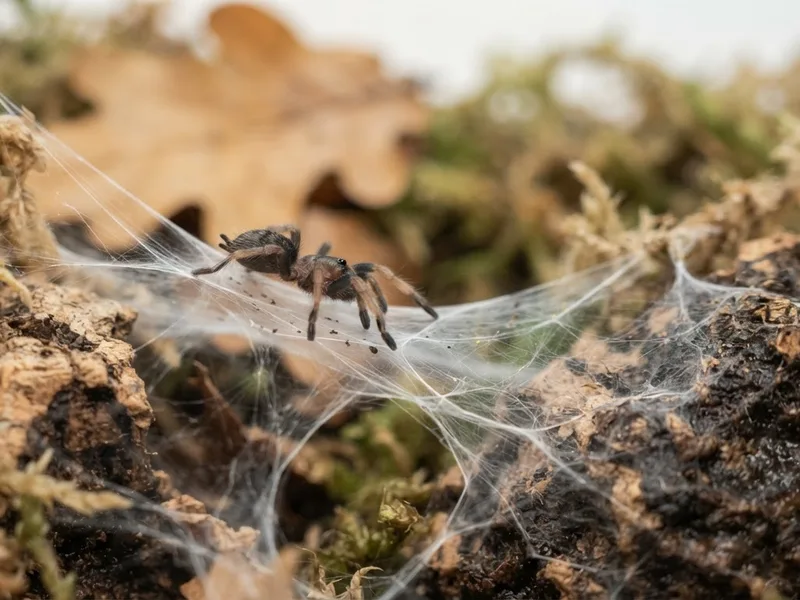
Webbing, speed and slings
Pink toed tarantulas are webbers. They spin silk across corners, on bark, and over the substrate, and that webbing is a sign the setup is working. A healthy animal often waits in a webbed hide rather than sitting in the open. If you want a tarantula that stays visible all day, pick a different species.
Speed is the real beginner trap. A sling is tiny, quick, and can bolt when the lid comes off. Do not handle it. If it escapes, use a wide cup and a stiff card to guide it in, then wash your hands before touching your face.
Pink toes also have urticating hairs, which are barbed abdominal hairs they can flick when threatened. These hairs can irritate skin and eyes. Keep your face away, use long feeding tweezers, and move calmly.
Bites are possible, but this species is usually defensive rather than aggressive. If a bite happens, wash the area, use a cold compress, and seek medical care if symptoms worsen.
Pros
- Adult size is manageable at 4 to 5 inch leg span.
- Webbing gives a natural hide in a vertical setup.
- No heat mat is needed in a normal US room.
- Beginner suitability is honest if you can provide cross ventilation, a dry floor, and a water dish.
Cons
- Slings are fast, small, and easy to stress during handling or feeding.
- Old wet and stuffy advice kills many pink toes.
- Display can be less obvious than a terrestrial species.
- The enclosure needs functional vent space, not just a decorative top.
Feed by life stage, not by eagerness
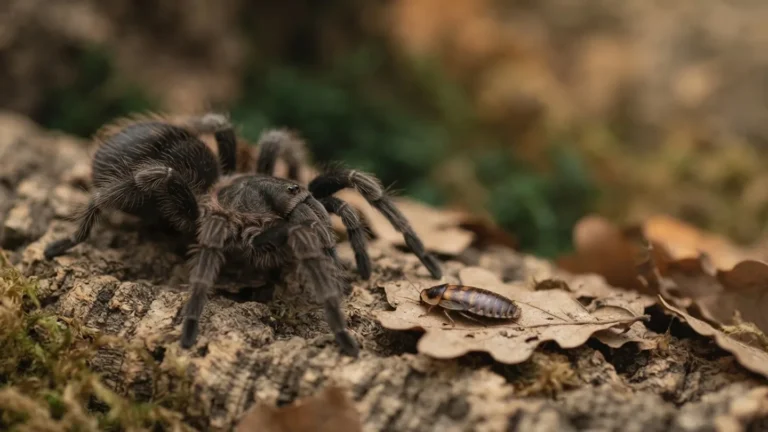
Feeding is easier to manage when you judge prey by body width. A pink toed tarantula can take prey no wider than its body. Remove uneaten crickets after 24 hours so a fast spider is not disturbed by a large cricket overnight.
For a sling, offer one or two micro crickets or small crickets measuring 1/8 to 1/4 inch every 3 to 5 days. For a juvenile, offer 1/4 to 1/2 inch crickets or small dubia roaches every 4 to 7 days. For a subadult or adult, offer one to two crickets measuring 1/2 to 3/4 inch, or one medium dubia, every 5 to 10 days.
Growth is not a reason to overfeed. If the abdomen looks very plump, extend the interval and keep the water dish full. If the abdomen is thin and the spider still wants to eat, return to the normal schedule.
A premolt is the preparation stage before shedding. It often shows as a stop in feeding, a darker or dull body, a bald patch of urticating hairs, and tight webbing in a hide. During premolt, remove live prey and do not disturb the enclosure.
After a molt, the body is soft and vulnerable. Wait 5 to 10 days before offering food, choosing the longer wait for a smaller animal if the molt was difficult. When it moves with normal posture and the color looks back to normal, feed a small prey item and see if appetite returns.
Common pink toed tarantula questions
Is the pink toed tarantula a beginner species?
Yes, on one condition. It is beginner friendly when you can keep cross ventilation, a dry floor, and a shallow water dish. It is a poor first tarantula if you will keep it sealed, mist the whole substrate, or handle it.
Does it need a heat mat?
Most US keepers do not need one. Aim for 75 to 82 °F. If the room drops below 65 °F at night, move the enclosure to a warmer indoor spot. If you must add heat, use a thermostat and keep one side cooler.
Do I need to mist every day?
No. Mist lightly one hide or one small area every few days and let it dry. A water dish is the safer tool. If the substrate feels wet after two days, reduce misting.
Why is it not eating?
It may be in a premolt, too cold, too hot, or simply not hungry. Remove live prey, keep the water dish clean, and do not force feed. If it has stopped eating and is webbing a hide, leave it alone.
When should I worry about molting?
Worry if it has been in a premolt-like state for many weeks with no molt, or if it looks dehydrated with a severely sunken abdomen. A stuck molt is stressful; if you are unsure, seek help from an experienced keeper or a vet familiar with arthropods.