How to Sex a Tarantula: Molts, Hooks and Ventral Sexing
You may want to know whether your tarantula is a long-lived female or a mature male. That answer changes expectations, but it should not change how you care for the animal tonight.
If the spider is young, the best news is often boring news: most keepers wait for a clean molt or adult male signs before calling a sex. This guide explains how to sex a tarantula through three common methods: spermathecae on a molt, ventral checks near the epigastric furrow, and mature male marks such as tibial hooks and palpal bulbs.
Use conservative judgment. If the mark is faint, the molt is small, or the spider is stressed, stop and wait.
Key takeaways
- A fresh, complete molt gives you the safest place to look for sexing clues.
- Treat about 2.5 to 3 inches in leg span as a conservative starting size for molt sexing in many common species, not a guarantee.
- Female molt sexing depends on paired spermathecae, the sperm storage structures, being visible near the ventral abdomen.
- Live ventral sexing can work, but the anatomy is subtle and the stress risk is real.
- Mature male signs are easier to read once present: tibial hooks and palpal bulbs, not just bigger legs or longer pedipalps.
What Sexing Means Before You Start
Sexing a tarantula is not like measuring body length on a lizard. The structures are small, they are sometimes hidden by molt timing, and they can be damaged. Hobby sellers often use the word sexed loosely, so a claim without a photo of a molt or adult male anatomy should not carry much weight.
The two main anatomy landmarks are the epigastric furrow, a shallow groove on the underside of the abdomen near the front of the belly area, and the spermathecae, paired sperm storage structures that appear in females. In very young tarantulas, often called slings, those structures are usually not developed enough to inspect safely.
A mature male means an adult male that has completed the final molt into sexual maturity. After that molt, some species develop visible mating structures. A male that has not reached that molt may look unsexable, so a negative sign is not proof of sex.
How to Sex a Tarantula from a Fresh Molt
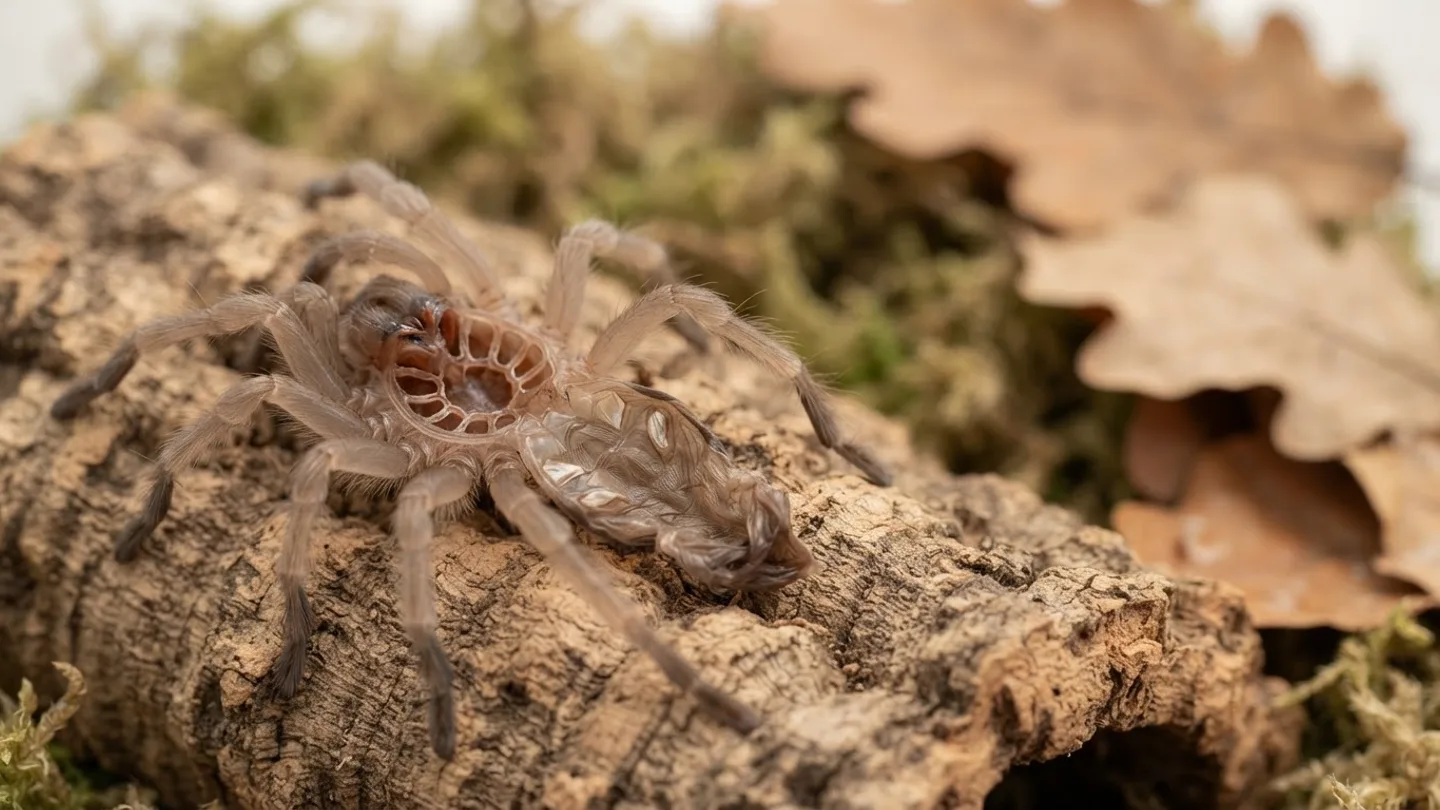
Keep the molt
As soon as the spider emerges, leave the shed in a dry, well-lit place or gently move it to a tray. Do not let it soak, crumble, or get torn.
Confirm the size and freshness
The best molt is recent, complete, and from a spider large enough to show detail. For many common pet tarantulas, about 2.5 to 3 inches in leg span is a conservative size below which molt sexing is often unreliable. For smaller species, use the species guide and expect the detail to be harder.
Position the shed
Lay the molt with the underside facing you. Use a dark or white background, bright even light, and a magnifier if you have one.
Look for spermathecae
Check the ventral abdomen near the sperm pore area. A female may show small pouch-like or raised structures. If you can see paired spermathecae clearly, that is a strong female sign.
Check the legs and pedipalps
In a mature male molt, look for tibial hooks, which are small hardened spurs on the front leg segments, and enlarged palpal bulbs at the tips of the pedipalps. Those bulbs may have a pointed embolus, the sperm transfer tip.
Read absences carefully
No clear spermathecae does not prove a male. It may mean the spider is too young, the molt is too small, the abdomen shed poorly, or the structures are just not visible. Try again at a larger, cleaner molt.
Mature Male Signs You Can Actually See
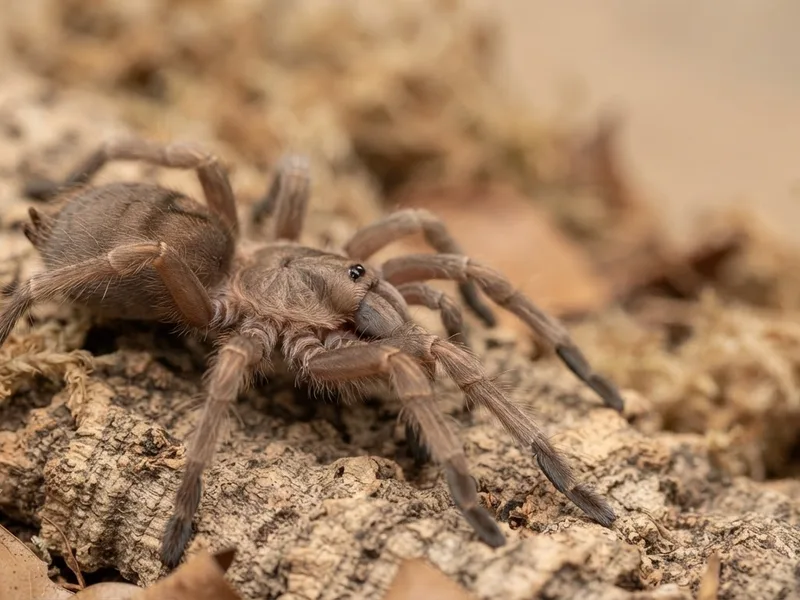
A mature male has completed the final molt that makes him sexually adult. After that molt, experienced keepers can often tell without opening or handling anything delicate. The abdomen may look slimmer and less heavy. The pedipalps, the short appendages near the front, may have swollen tips called palpal bulbs. Those bulbs may have a pointed, curved embolus used to move sperm.
Many species also show tibial hooks on the front legs. These are small, hardened spurs on the tibia segments. They are mating aids, not damage. Some species show them only after maturity, and some have weak hooks, so absence does not prove female.
Another male clue is behavior. A mature male may spin a sperm web, lose appetite, or live a shorter time after maturity. These signs are helpful, but they are not as clean as anatomy.
| Method | Best when | Key clue | Main weakness |
|---|---|---|---|
| Molt sexing | You have a recent, complete molt from about 2.5 to 3 inches across or larger | Paired spermathecae, or tibial hooks and palpal bulbs from a mature male molt | Small or damaged molts can mislead |
| Ventral sexing on a live spider | The spider is calm, you know the species well, and handling will not startle it | Structure of the epigastric furrow and sperm pore area, plus adult male signs | Stress, urticating hairs, and subtle anatomy can produce false reads |
| Mature male signs | The spider has completed the final adult molt | Tibial hooks, enlarged palpal bulbs, sometimes a slimmer abdomen | Immature males and species with weak hooks can look unsexable |
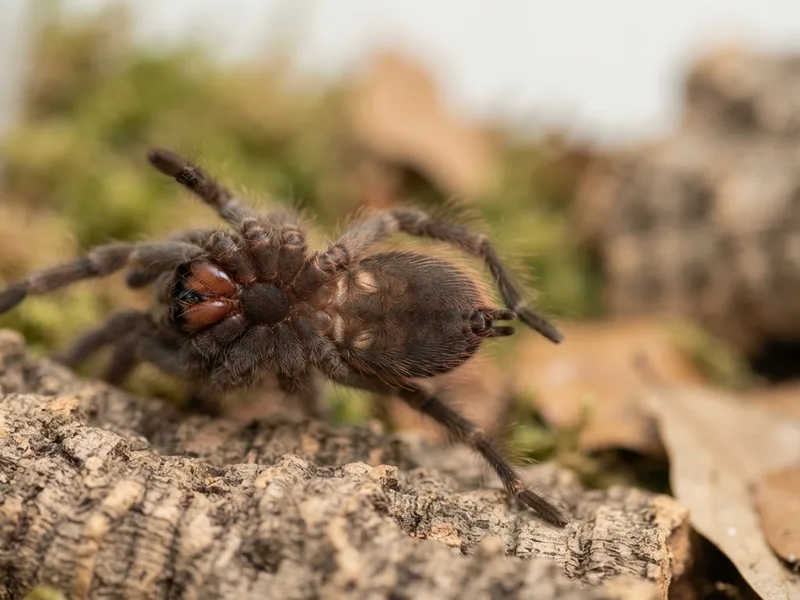
Ventral Sexing on a Live Spider
Ventral sexing means inspecting the underside of a live tarantula, usually the epigastric furrow and nearby sperm pore area. The same female structures, spermathecae, may appear as paired bulges or ridges, while a male may lack them. A mature male may also show palpal bulbs or tibial hooks if you can see the front legs clearly.
This method can work, but it is not beginner-friendly. A stressed tarantula can move fast, kick urticating hairs, or bite. Urticating hairs are tiny defensive hairs that can irritate skin and eyes. A bite is usually a defensive warning, not a hunt, but it can still be painful and frightening. Do not attempt this with a large, defensive, gravid spider that is holding an egg sac, or a recently molted spider with soft joints.
If you do try, work from a clear container, use gentle light, and do not force the animal. If the view is poor, stop. You can gain more from the next molt than from a risky five seconds of live handling.
Frequently asked questions
Can I sex a tarantula without handling it?
Often, yes. A fresh molt is ideal. A close ventral photo can help if the epigastric furrow, sperm pore area, front legs, and pedipalps are sharp. Blurry top photos are usually not enough.
How big should the spider be for molt sexing?
For many common species, a conservative working size is about 2.5 to 3 inches in leg span. Below that, spermathecae may be too small or absent because the spider is not yet at the molt stage that shows them. Smaller adult species may mature below that, so use the species guide as a check.
If no spermathecae are visible, is it male?
No. It may be too young, too small, molting poorly, or the shed may be damaged. A male is usually called only when you see male anatomy, not when you fail to see female anatomy.
Do mature males always have tibial hooks?
Many do, but not all. Hook size and presence vary by species and by how mature the molt is. Absence does not prove female. If you see clear hooks and enlarged palpal bulbs, that is a strong mature male sign.
Is live ventral sexing safe for beginners?
It is not the first method for a beginner. A tarantula can kick urticating hairs, run away, or bite if stressed. The visible difference between a normal furrow and a sexing marker can be subtle, so a beginner is more likely to make a mistake with a live spider than with a fresh molt.
A Practical Rule for Beginners
Start with care, not sexing. Your first job tonight is a secure enclosure, a stable temperature in the species' °F range, appropriate humidity for the species, a water dish, and prey that matches the spider's body size. Those choices do more for survival than knowing whether the abdomen will produce an egg sac in year four.
If you still want a sexed tarantula, ask for proof: a clean molt photo, a ventral photo with the epigastric furrow visible, or unmistakable mature male anatomy. If the proof is vague, treat the animal as sex unknown.
If you are choosing your first pet, look at beginner options that are more about temperament and hardiness than sex.