Brazilian Black Tarantula (Grammostola pulchra) Care Sheet
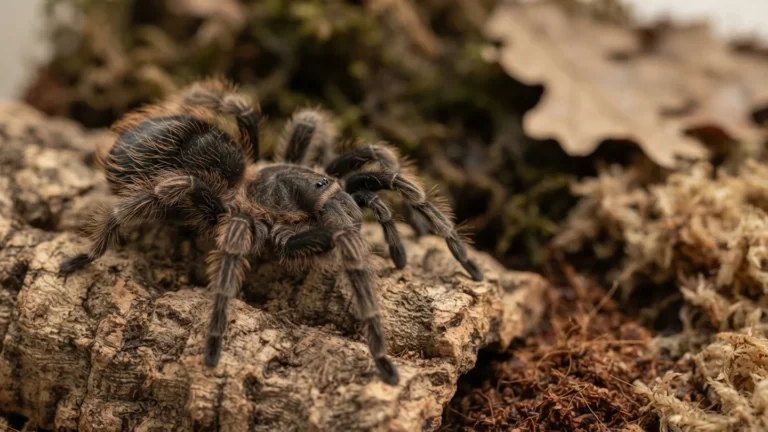
For a first tarantula, the useful question is whether the animal will live quietly in a setup you can manage tonight. Grammostola pulchra, the Brazilian black tarantula, is often a yes. It is a large terrestrial species from Brazil and nearby regions, and adult leg span is commonly 5 to 6.5 inches, though some females grow larger.
It earns a beginner label because it is often calm, feeds readily, and tolerates simple setups. Calm is not the same as tame. A calm tarantula can still flick urticating hairs or bite if it is trapped, squeezed, or startled.
The tradeoff is time. This species grows slowly, may take years to reach adult size, and females can live for decades. Plan for a long-term setup, not a season.
Key takeaways
- Calm is a husbandry clue, not an invitation to handle.
- Use a small cup for slings, then a 12 by 12 inch floor area for an adult.
- Keep 3 to 4 inches of substrate for adult burrowing, and 1 to 2 inches for slings.
- Aim for 75 to 80°F, and most setups do not need a heat mat.
- Feed appropriately sized prey 2 to 4 times weekly for slings, and every 1 to 2 weeks for adults.
- During premolt, stop feeding, leave water available, and do not disturb the spider.
Beginner fit and limits
Brazilian black tarantula earns a beginner label because it usually does not bolt the moment the lid comes off. That can make maintenance feel safer. It is still a New World tarantula, and New World species can use urticating hairs, the abdominal hairs many tarantulas flick when they feel threatened. A calm animal can still flick hairs if it is trapped, squeezed, or startled.
The species is slower than some common first tarantulas. It may grow slowly even with good food and stable warmth. Do not chase growth with heat, oversized prey, or a large enclosure that stresses a sling.
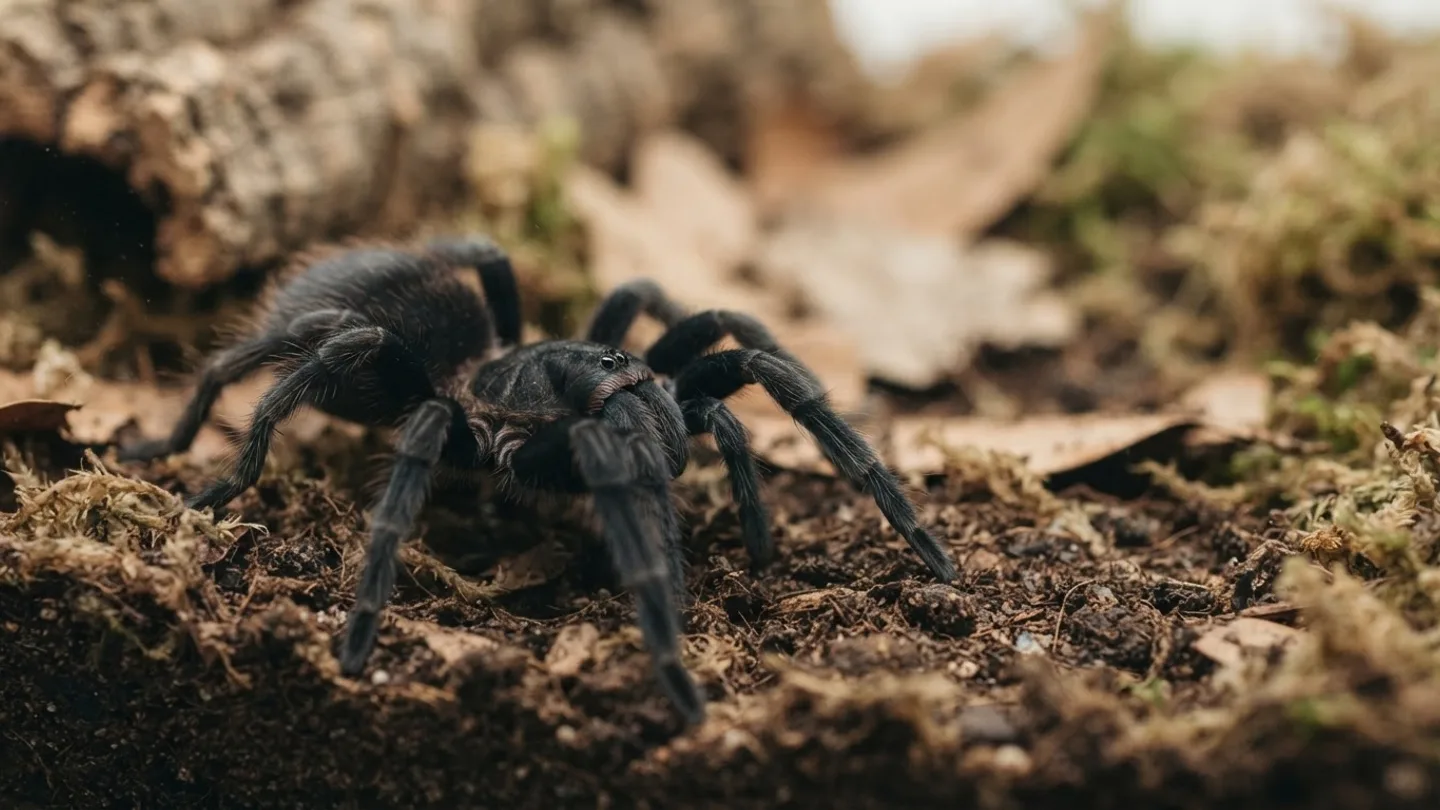
The adult color is a reason people pay more. Many slings are not uniformly black at first; darkness often develops through molts. If a dealer calls a tiny sling jet black, treat that as a sales description, not a husbandry requirement. If this is your first invertebrate, start with the beginner invertebrate guide and only add a long-lived tarantula when you are ready.
Pros
- Often calm and easy to observe
- Good feeder in most life stages
- Tolerates simple, low-tech setups
- Long-lived females reward patient keepers
- Adult color is distinctive
Cons
- Grows slowly, so results take years
- Often priced higher than faster beginner species
- Burrowing species that can remodel its substrate
- Not suitable for handling
- Males mature and die much faster than females
- Can kick urticating hairs if stressed
Enclosure size and layout
For a sling, use a small ventilated cup that is only a few inches wide and deep. A 4 inch tall deli cup is a practical start for many slings. The idea is simple: a young tarantula needs enough room to make a burrow, but too much floor area can make it hard to find food and water.
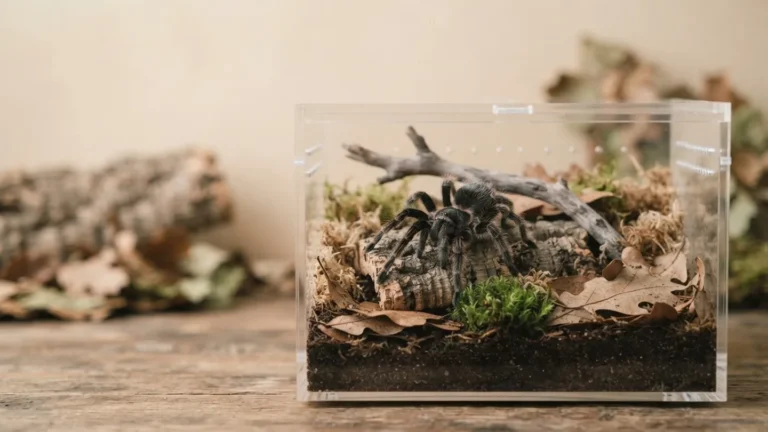
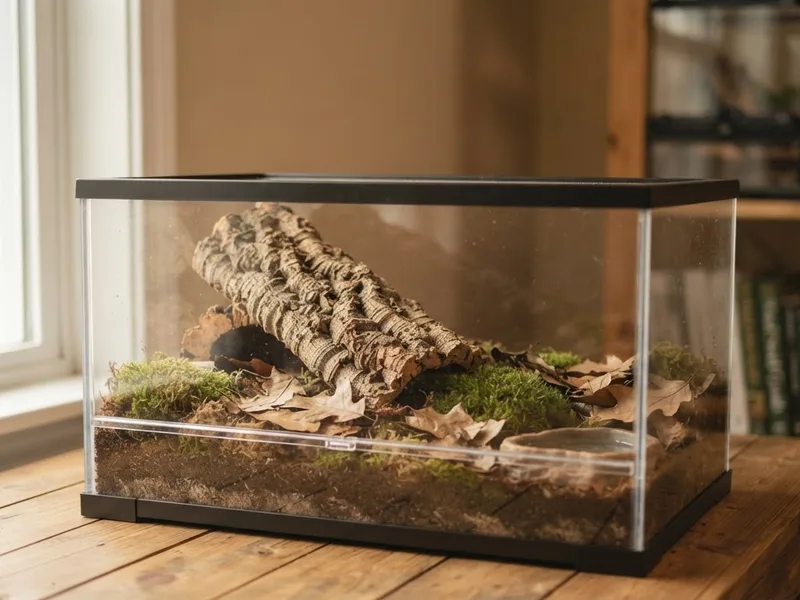
For an adult, give a floor area of at least 12 by 12 inches. If the spider is near full adult size, 16 by 12 inches is more comfortable. Height matters less than floor area. A 4 to 6 inch tall enclosure with enough substrate is better than a tall cage that invites a fall.
Use a secure lid. Tarantulas can escape through gaps that look too small until they test them with legs. Ventilation should be indirect, such as cross ventilation from one side to the top. Avoid a fan blowing directly into the enclosure.
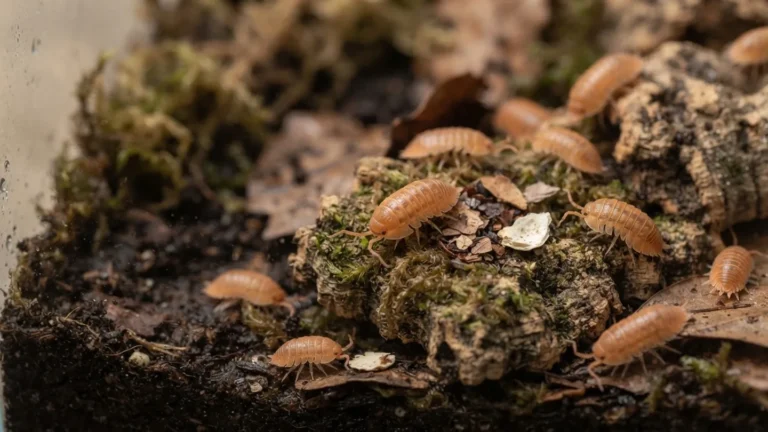
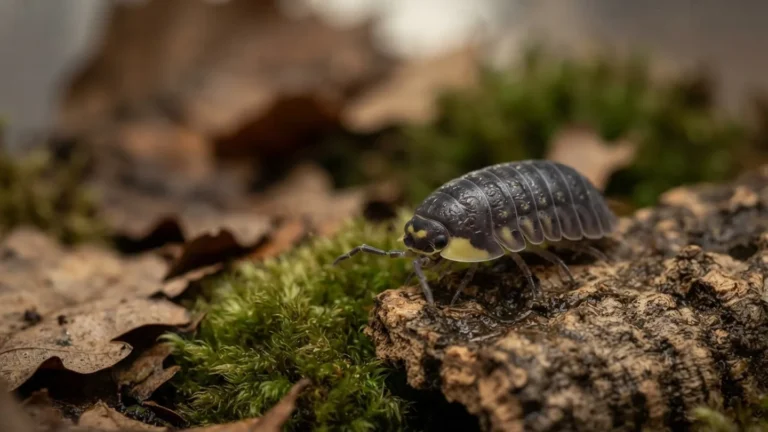
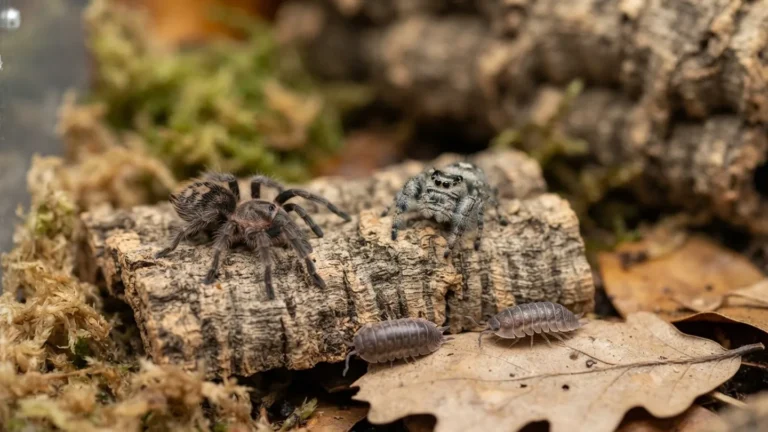
For a first setup, a clean passive enclosure is easier than a bioactive build. Bioactive means a living substrate system with plants, microfauna, and a clean-up crew of isopods or springtails. It can be beautiful, but it adds moisture, plant, and balance problems that a beginner does not need.
Choose the right container
Select a ventilated cup for a sling or a 12 by 12 inch terrarium for an adult.
Add substrate
Add 1 to 2 inches of coco coir, peat mix, or similar substrate for slings, and 3 to 4 inches for adults.
Create moist and dry zones
Moisten one side so the substrate holds shape, then leave the other side drier.
Add hide and water
Place a hide, such as a half cork bark piece, and a shallow water dish.
Introduce the tarantula calmly
Transfer the tarantula with a cup method, not by pinning it, then leave it undisturbed for 3 to 5 days.
Temperature, humidity and moisture
Aim for 75 to 80°F. A room around 72 to 82°F is acceptable. If your home runs colder, check the enclosure with a thermometer rather than guessing. Many keepers add a heat mat to this species by mistake. Most Brazilian black tarantulas do not need one, especially if they live in a normal US room.
If a heat source is needed, use it to take the cool side of the room to the low end of the range. Do not create a hot spot under the spider. Put a heat mat under part of the enclosure only with a thermostat, and make sure the animal can move away from the warm area.
Keep the substrate slightly moist, not wet. A good test is whether it holds together when squeezed but releases only a drop or two of water. In an adult burrowing setup, a moist side gives the spider a place to dig and helps it hold burrow walls. A drier side prevents mold.
Relative humidity is useful only if you measure it. A practical range is about 60 to 75 percent. If you have no hygrometer, use the moist side plus water dish method. Do not seal the enclosure so tightly that condensation sits on the glass for hours.
| Life stage | Prey size | Frequency | Notes |
|---|---|---|---|
| Sling | Small prey, about 1/3 to 1/2 of the spider body length | 2 to 4 small prey per week | Remove uneaten prey after 12 to 24 hours. |
| Juvenile | Prey no larger than the body | 1 to 2 prey every 4 to 7 days | Watch for a fat abdomen and steady growth. |
| Adult female | 1 to 2 large roaches or dubia roaches, depending on size | Every 1 to 2 weeks | Feeding can slow further once the burrow is stable. |
| Mature male | 1 to 2 appropriately sized prey | Every 1 to 2 weeks | Mature males may eat poorly before dying. This is normal, not a keeper failure. |
Molting, premolt and after molt
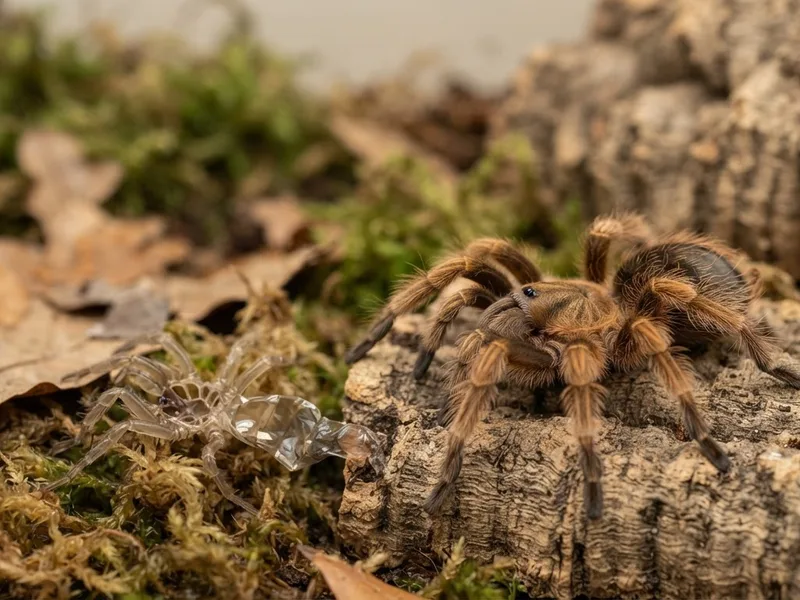
Premolt is the period before the shed. You may see the spider stop eating, become less active, or look shiny. The abdomen may darken or appear bald where urticating hairs have fallen away. These signs are normal, not a diagnosis of disease.
Do not feed a tarantula that is clearly premolting or already molting. If a prey item is still in the enclosure when you notice molting, remove it with care if you can do so without stressing the spider. If not, leave the spider alone and accept the loss. A fresh prey item can damage a soft molting spider.
During molt, keep the enclosure quiet and the water dish shallow. The spider will usually rest, then come out of the old skin. You may see a curled, wrinkled form near a hide. It is still not ready to eat.
After the molt, wait 10 to 14 days before offering food. The fangs and silk glands are soft. A new molt looks pale for a short time and may have shiny hairs. Do not rush it back to normal feeding.
Handling, urticating hairs and bites
Handle only when you must, such as moving it into a new enclosure. Use a cup, not your hand. Place the cup in front of the spider and guide it in gently. If it refuses, do not chase it with your fingers. A calm tarantula can still react faster than your reflexes.
Keep your face away from the rear of the animal. Urticating hairs are the main practical risk. They are barbed hairs that can irritate skin and eyes. A person with sensitive skin may get a rash; hairs in the eyes need prompt flushing with clean water.
Bites are uncommon, but possible. A bite from a commonly kept tarantula usually causes soreness, redness, and swelling, much like an insect sting. People react differently. If pain is severe, swelling spreads, or signs of allergy appear, get medical help.
No product makes handling safe. Gloves can be useful for cleaning, but they do not stop urticating hairs from reaching your arms or clothing. If you want to enjoy this species, learn its body language from a short distance. That is where the value is.
Frequently asked questions
Is Brazilian black tarantula a good first tarantula?
Yes, if you accept that calm does not equal handling and that it grows slowly. It is a good first tarantula for observation, feeding, and learning normal molt signs.
Is Grammostola pulchra the same as Grammostola porteri?
Do not assume. This care sheet is for Brazilian black tarantula, Grammostola pulchra. If a label uses another name, get confirmation before buying, because care can differ.
Why is my Brazilian black tarantula not black?
Many young individuals darken over time. Growth rate, diet, and age affect color. Judge the animal by condition, activity, and molts, not by how black a sales photo promised.
Can I put my tarantula in a bioactive vivarium?
You can, but not recommended for a first setup. Bioactive systems need stable humidity, a healthy clean-up crew, and monitoring for mold. A simple substrate setup is easier to correct.
What should I do if it stops eating?
Check for premolt first. If the spider is not molting, try a smaller, more active prey item, keep temperatures in range, and leave a shallow water dish. Do not force feed with tweezers.