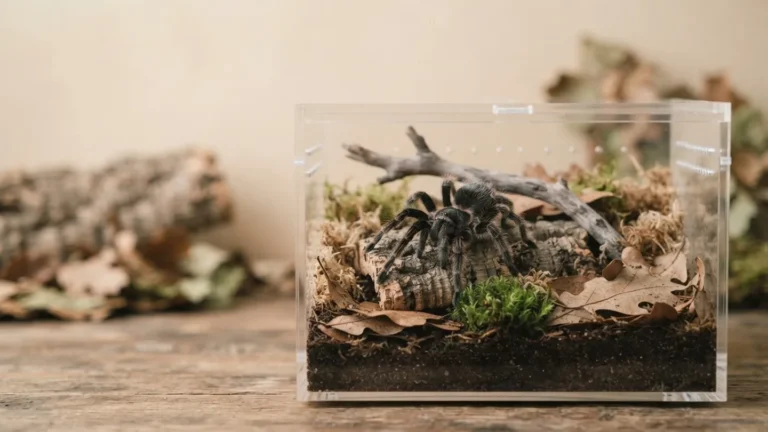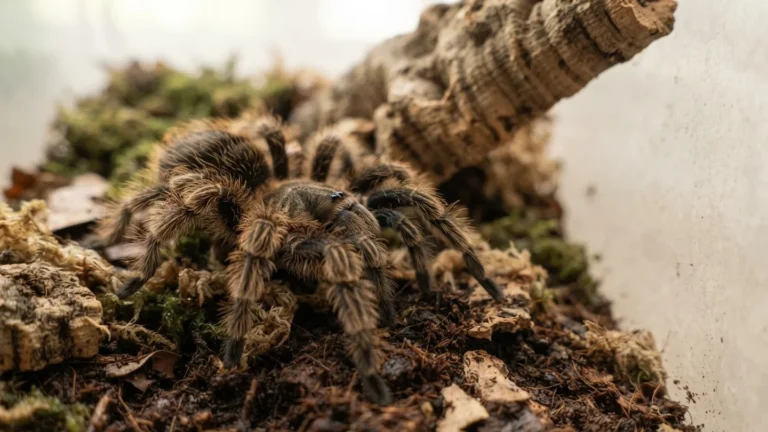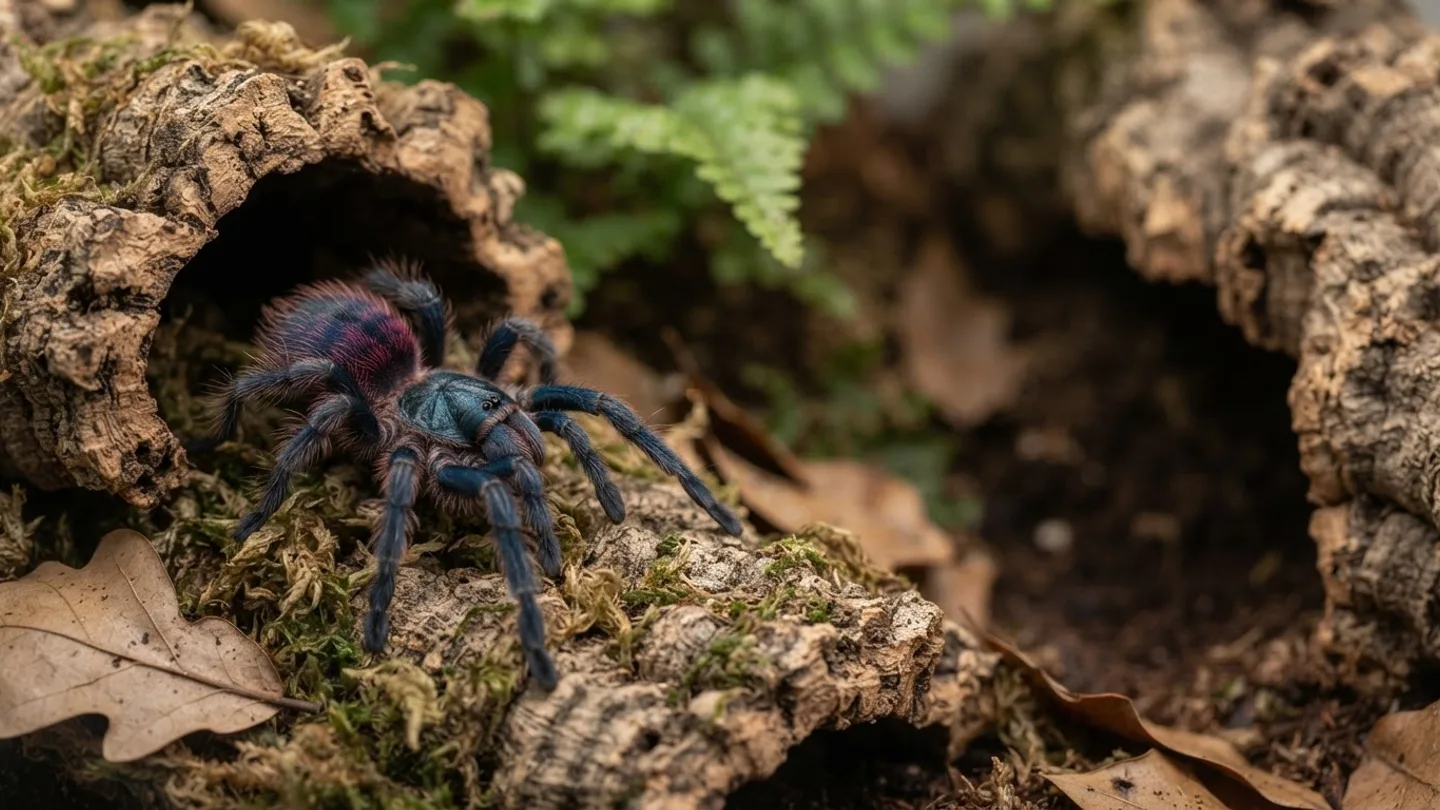
Why Is My Tarantula Not Eating?
The most likely reason is premolt, the stage before a molt. Other common causes are a new enclosure, a full abdomen, a cool room, or a mature male slowing its metabolism.
A healthy sling, meaning a very young tarantula, may skip food for 1 to 2 weeks. A juvenile may skip 2 to 4 weeks. A healthy adult may skip 4 to 12 weeks. A tarantula in premolt may eat nothing for 1 to 6 weeks.
Worry if the abdomen looks shriveled, the legs curl under, there is mold around the shelter, the room stays below 65°F for days, or a molt starts and does not progress for several days.
Quick answer: why is my tarantula not eating? Causes and checks
What to check before you feed again
Do not feed again today. First look for premolt, the stage before a molt. A premolt tarantula may stop eating, become less active, and look dull, shiny, or tight.
Then check the abdomen. If it is round and full, the tarantula may have recently eaten and does not need another meal.
Check the last accepted meal and the room temperature. Many commonly kept tarantulas feed best around 70 to 78°F. If the room stays below 65°F, feeding may slow.
Leave a full water dish in place, and keep a moist corner with a dry side. Do not drown a sling, but keep water available.
Wait before your next feeding attempt. If the abdomen is not full, no premolt signs are present, and the room is warm enough, offer one appropriately sized prey item and remove leftovers after 24 hours.
What to check before you feed again
Look for premolt
Premolt is the stage before a molt. Look for a shiny or bald abdomen, a tight old skin, silk under a hide, a tarantula that stays in a burrow, or a slow response to a gentle cup transfer.
Check abdomen fullness
If the abdomen is round, shiny, or visibly large, the tarantula may be digesting a recent meal. Do not add more food.
Measure temperature
Use a digital thermometer in the keeper room, near the enclosure, not on the animal. Daytime temperatures of 68 to 78°F work for many commonly kept species. If the room stays below 65°F for days, feeding may slow.
Check moisture and space
A moist corner plus a dry side, and a full water dish, helps most keepers. A sling may do well in a 2 to 4 inch tub. A terrestrial adult with a 5 to 6 inch leg span often needs at least a 12 by 12 inch floor. Arboreal species, meaning animals that live above ground, may need more height, bark, and a webbing corner.
Offer one small prey item
If the abdomen is not full, premolt signs are absent, and the room is warm enough, offer one appropriately sized prey item. Remove it after 24 hours.
Record the result
If the tarantula accepts food, note the prey size. If it refuses, wait before the next attempt. Do not keep adding prey items to the enclosure.
| Condition | Normal fast length | What to do now |
|---|---|---|
| Premolt | 1 to 6 weeks | No feeding. Leave a full water dish. Do not disturb. |
| Sling | 1 to 2 weeks | Try a smaller prey item after 3 to 5 days if abdomen is not full. |
| Juvenile | 2 to 4 weeks near molt | Wait 5 to 7 days after a refusal. |
| Adult | 4 to 12 weeks | Check abdomen, temperature, and molt signs before offering food. |
| Full abdomen | 1 to 4 weeks depending size | Wait until the abdomen visibly shrinks. |
| New enclosure | 3 to 7 days | Give quiet time, then offer one small prey item. |
| Cool room | days to weeks | Raise room to 70°F to 78°F without creating hot spots. |
| Mature male | may stop for the rest of its life | Offer once, do not force, and accept natural decline. |
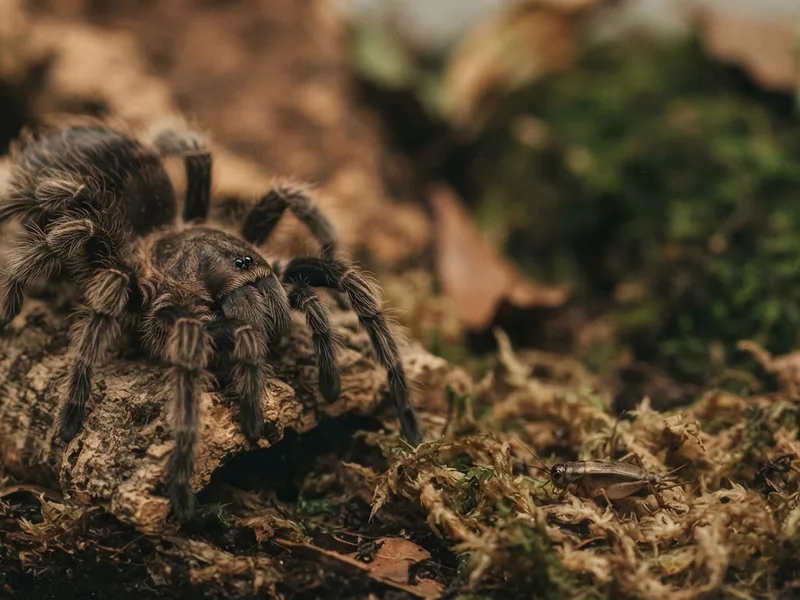
Cold rooms can pause appetite
Cool temperatures are a simple reason for a missed feeding. Many commonly kept tarantulas feed best when the keeper room is 70°F to 78°F. A desert species may feed well at 68°F to 74°F, while a tropical species may do better at 72°F to 80°F with a moist hide.
Do not guess by touch. Use a digital thermometer where the animal would be active. Avoid direct sunlight on a small tub, because it can overheat quickly.
Most commonly kept tarantulas do not need a heat mat. A heat mat can create hot spots, dry out substrate, and harm a small enclosure if it is not monitored. If you use heat, use a thermostat controlled source and remove it if the room reads above 82°F.
The myth that a tarantula must eat every week is wrong. If sources disagree, choose the middle of the range, remove leftovers after 24 hours, and give the animal a water dish.
Pros
- A thermostat controlled heat source can raise the room gently.
- A small insulated box with a safe, monitored heat source can hold steady temperature.
- A digital thermometer gives a number instead of a guess.
- A water dish with pebbles can provide a shallow water point for a sling.
Cons
- Heat mats can overheat small enclosures and dry substrate unevenly.
- Direct heat under the tub can push a tarantula to burrow deeper and refuse food.
- Hot spots can contribute to dehydration or a stuck molt, when a molt starts but cannot be completed.
- Guessing by room warmth can make a cool room look safe when it is not.
Wait for the right moment.
Do not feed if the abdomen is full, if premolt signs are present, or if the enclosure changed in the last 24 to 48 hours.
Use prey smaller than the body length.
For a sling, use a tiny cricket, fruit fly, or pinhead prey. For a juvenile, use a 1/4 to 1/2 inch insect. For a large adult, use a cricket, roach, or pinky mouse only if that species accepts mice.
Introduce one prey item.
Place it near the shelter, not on the spider. A calm predator may hunt when it wants.
Give 24 hours.
Remove any uneaten prey. Leftover crickets can stress a tarantula and nibble it, especially at night.
If it refuses, wait.
For a sling, wait 3 to 5 days. For a juvenile, wait 5 to 7 days. For an adult, wait 7 to 10 days before trying again.
Stop feeding attempts if the animal shows clear premolt signs or starts a molt.
A healthy tarantula may refuse food for weeks, then molt and return to normal.
New enclosure, full abdomen, and mature male
A brand new enclosure can stop feeding. Many tarantulas notice light, vibration, drafts, and a changed floor plan. If you just moved it, leave it quiet for 3 to 7 days. Slings may need 2 to 3 days, while a large adult may take longer. Keep the hide, substrate, and temperature the same. For setup basics, see beginner invertebrate care.
A full abdomen is not a failure. If the abdomen is round and shiny, the animal may be digesting a large meal. Do not add more prey. The next meal can wait 1 to 4 weeks, depending on size.
A mature male may decline. A mature male is a male that has reached its final adult form. It may develop enlarged pedipalps, hooks on the front legs, and a shorter life after maturity. It can stop eating near the end of its life. A mature male is a poor first tarantula if you want a predictable feeding animal.
Some New World species flick urticating hairs. These are tiny irritating hairs that can cause itch or eye irritation. This does not mean the tarantula is dangerous. Do not handle a not eating tarantula unless you must move it. Use a cup and tube if you need to move it.
If the animal is wild caught, newly matured, or a fast, defensive species, a pause can be part of the adjustment. Do not panic. Check temperature, moisture, hide, and last meal before making changes.
Key takeaways
- Premolt is the most likely reason for a healthy tarantula that stops eating.
- Check temperature, abdomen fullness, last meal, new enclosure, and molt signs before offering food.
- Many commonly kept tarantulas do not need a heat mat. A thermometer is more useful.
- Do not keep adding prey. One small offer and 24 hours is enough.
- Worry if the abdomen is shriveled, the spider cannot complete a molt, there is mold, or the room stays below 65°F.
- A mature male may stop eating near the end of its life and is a poor first specimen for many keepers.
Frequently asked questions
How long can a tarantula go without eating?
A healthy sling can often wait 1 to 2 weeks. A juvenile may wait 2 to 4 weeks. A healthy adult can wait 4 to 12 weeks. Premolt and male maturity can extend the pause.
Is my tarantula molting or dead?
Molting tarantulas can look motionless and have legs drawn up. Check for silk, a dull or tight abdomen, and no response to gentle movement. Do not disturb it. A dead tarantula may have a shriveled abdomen and dried legs, but premolt can look similar.
Should I try a different food?
Only if the last prey was too large or the room was cold. Use prey no larger than the body length, offer one item, and remove it after 24 hours. Changing prey daily stresses the animal.
Do I need to move it to a warmer place?
Only if the thermometer shows it is below the safe range for the species. Warm the room slowly to 70°F to 78°F. Do not place it in direct sun or on a heat mat without monitoring.
Can I feed it when I first bring it home?
No. Give a new tarantula quiet time. For a sling, try after 2 to 3 days. For an older animal, wait 5 to 7 days unless a molt is evident.
What does urticating hair irritation mean for feeding?
Some New World species have urticating hairs that can irritate skin and eyes. This does not mean the tarantula is dangerous or sick. Do not handle a tarantula that is not eating unless you must move it, and keep your face away from the enclosure.