How to Breed Isopods: Growing a Culture Fast
Breed Isopods. Most starter cultures grow slowly because the animals are adjusting to a new tub, a new moisture balance, or a room that runs too cool. If you give them stable warmth, calcium, leaf litter, and quiet, the breeding cycle becomes visible in a few weeks to a few months.
A fast culture is usually a patient culture. Do not seal the tub tight. Do not dig every day. Do not flood the litter. More water does not mean more isopods. Leave the animals enough dry ground to retreat to, and let them build the population at their own speed.
In this guide:
What matters most
- Keep cultures at a steady 70 to 78 °F. A cooler room slows growth but is not fatal if conditions stay clean and stable.
- Build a dry side and a moist side. The animals need both, and mold stays down when one side is drier.
- Provide calcium every day. Crushed oyster shell, cuttlebone, or rinsed eggshell helps young isopods harden after molting.
- Feed less than you think. Remove uneaten protein after 2 or 3 days to avoid mold and pest issues.
- Wait 6 to 12 weeks before judging a fast starter tub. Slow species and cooler rooms can need 3 to 6 months.
How Isopod Breeding Works
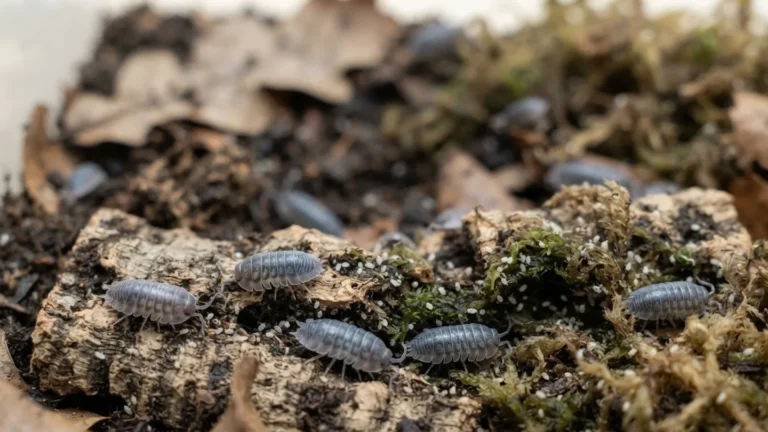
Isopod breeding starts with a simple cycle. The isopods mate, the female carries eggs in a brood pouch, and the young hatch as tiny adults called mancae. They are not larvae, so they do not need standing water to grow. They need calcium, shelter, and stable warmth. They molt repeatedly before becoming breeding adults.
A clean tub is more important than a fancy tub. In hobby terms, bioactive means a living setup with plants and decomposers, and clean up crew means the animals that eat waste, mold, and dead plant matter. Your isopod culture can later join a clean up crew, but while you are trying to breed, the breeding tub should be simple and controlled.
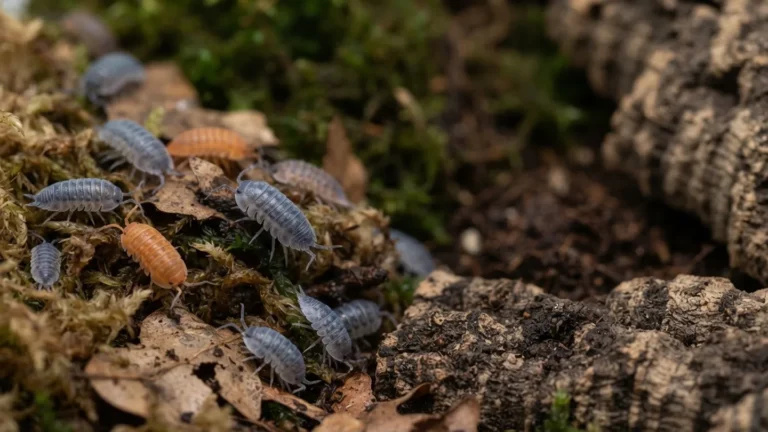
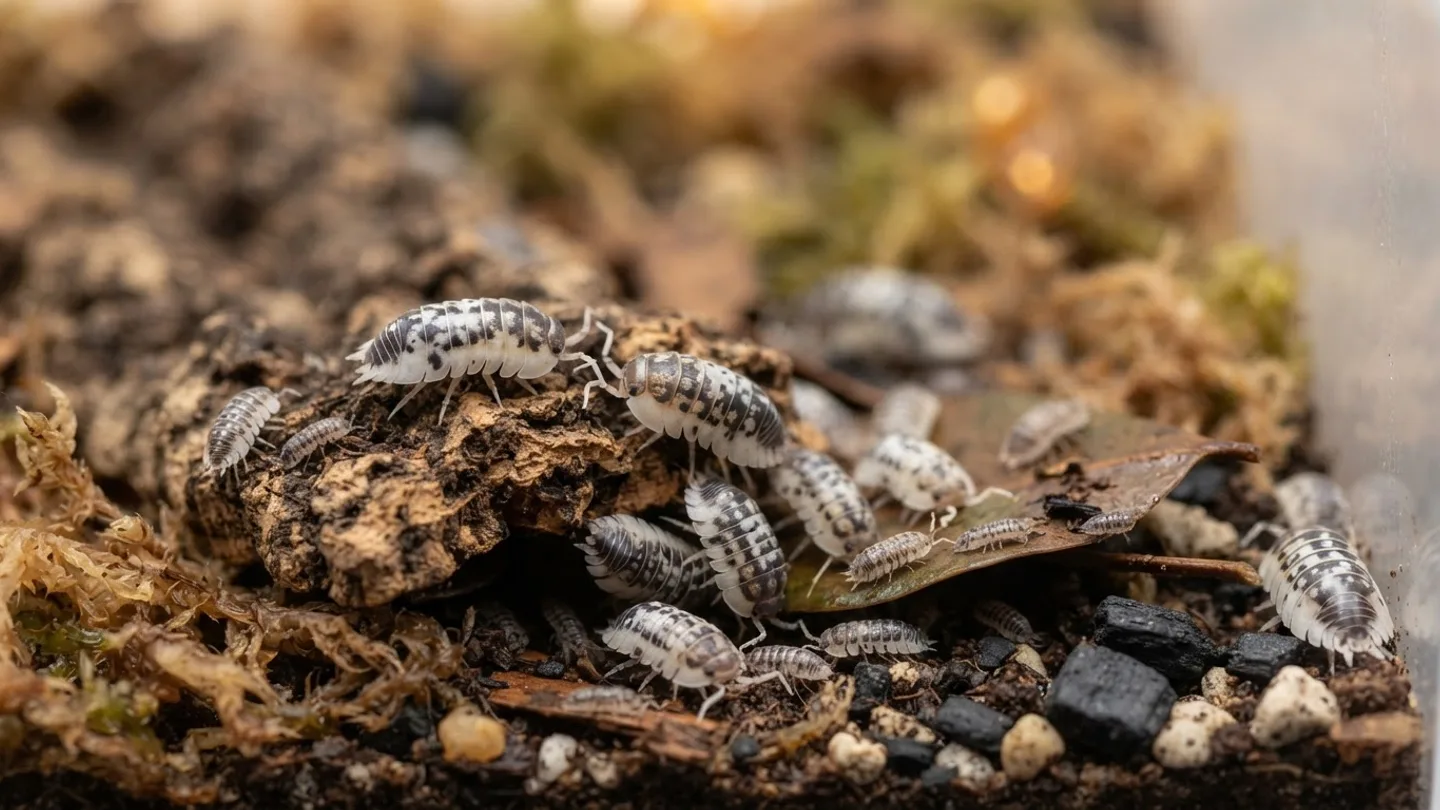
If you buy morph tubs at a US expo or from an online breeder, ask for the species name. Color labels such as powder blue and rubber ducky are hobby names. Many color morphs belong to Porcellionides pruinosus, but the underlying species matters because some species grow faster than others. If the culture may be wild collected, ask about origin and check local rules for moving live invertebrates.
Set the Tub for Breeding
1. Choose the container.
Use a 12 quart plastic bin, roughly 12 by 8 by 5 inches, with a loose lid or lid with small holes. Ventilation should come from the upper sides, not only the top. A tub that is too small loses moisture control; a tub that is too large can go moldy in spots before you can watch it.
2. Build the base.
Add 2 to 3 inches of pesticide free coco coir or plain topsoil mixed with dead leaves. Oak, maple, and magnolia leaves are good. Rinse wild leaves, dry them, and store them for a few weeks so they soften and the dirt settles.
3. Make a moisture gradient.
Dampen one third to one half of the tub. Keep the opposite side dry. A full water dish is risky for tiny isopods. Use a bottle cap with a stone inside, a shallow damp moss patch, or a damp corner. The animals need a wet place to molt and a dry place to move away from when the damp side gets too wet.
4. Add calcium and hides.
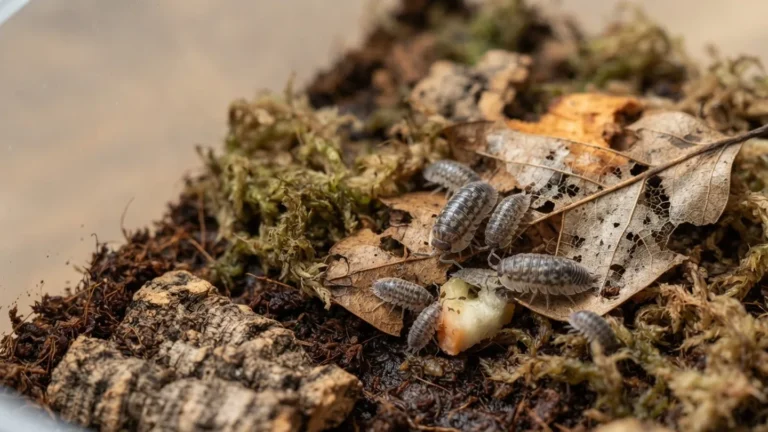
Sprinkle crushed oyster shell, cuttlebone, or finely crushed eggshell over the litter. Add cork bark, half logs, egg carton, or plain wood. These pieces are breeding shelters. They also reduce the stress that causes animals to stay hidden and stop growing.
5. Feed lightly.
Offer a pinch of fish flakes, shrimp pellets, or plain kibble once or twice a week. If the food is not gone in 2 to 3 days, remove it. Uneaten protein is a fast route to mold.
Steady Warmth, Not Hot Boxes
For common tropical starter species, aim for a steady 70 to 78 °F. If your US room sits in that range, skip the heat mat. Most beginner keepers buy heat mats too early and then overheat the bottom of the tub.
If the room runs 65 to 69 °F, cultures can move slowly but still survive. Try a warmer shelf, a higher spot in the room, or an interior cabinet before adding equipment. If you do use heat, mount the pad to the side of the tub with a thermostat. Set it to keep the substrate near 70 to 72 °F, not higher. Do not let the mat dry the tub until it crackles.
Do not chase 80 °F just to grow faster. High heat with wet litter can sour the culture. Keep the warm side gentle, the dry side open, and the airflow steady. A sealed jar is not a better breeding chamber. It is a mold chamber waiting to happen.
Feeding and Calcium for Fast Molts
Young isopods spend energy hardening their shells after each molt. That is why calcium is the first upgrade. Provide crushed oyster shell, plain cuttlebone, or finely crushed eggshell. Eggshell should come from clean, unused shells, be rinsed, and be crushed into a powder or fine flakes.
Protein helps, but it is not the main event. A small pinch once or twice a week is enough. Fish flakes, shrimp pellets, and plain dog kibble can work. If you see fuzzy mold, sour smell, or gnats, stop feeding, remove protein, add dry leaf litter, and open ventilation a little. A quiet tub with a few mold spots can recover; a sour tub can stall.
The real food base is leaf litter, soil life, and the decaying matter that accumulates under the hides. As litter breaks down, it feeds the animals indirectly. If your tub has clean wood and plastic but no leaf litter, the culture will not grow well no matter how many flakes you add.
| Culture situation | What you may see | Best action |
|---|---|---|
| New expo tub moved into a new setup | No visible babies for 2 to 4 weeks | Leave it alone. Keep moisture stable and do not dig. |
| Stable 72 to 78 °F, good litter, calcium, and a mixed starter | More tiny isopods and molt shells after 6 to 12 weeks | Feed lightly and check mold. Consider a split after the tub feels dense. |
| Room stays 65 to 69 °F | Slow increase over 3 to 6 months | Move to a warmer room before using a mat. Target 70 to 78 °F. |
| Tub feels very wet and smells sour | Decline, fewer animals, mold | Remove food, add dry litter, open airflow, let the dry side expand. |
| Large mature species or single-sex tub | Little or no growth | Start with a known mixed tub or ask the seller for species and culture status. |
How to Split a Culture
Split only after the parent culture is doing well. A tub is ready when you can find several tiny animals in the damp leaf litter, when you see molt shells regularly, and when the parent tub still has room to breathe. If the animals are all adults, wait. If the litter smells sour, fix the tub before moving animals.
Use gentle scoops, not tweezers. Move animals with a thick layer of substrate, leaf litter, and a few hides. For a 12 quart tub, 15 to 30 animals is a practical starting number, but it is not magic. If you cannot count them, a heaping handful of animals plus litter can start a new tub, especially if the culture is healthy and young.
Do not rob the parent tub. Split a strong culture into small units and leave the parent bigger than each new tub. That keeps the breeding base intact. Also do not combine unrelated tubs without knowing the species. Mixing morphs can make tracking breeding results harder, and if you ever need to troubleshoot, you want to know what you have.
Questions Keepers Ask
How do I know if my isopods are breeding?
Look in the damp leaf litter for tiny pale young and shed shells. Some species burrow, so absence is not proof. Give a new tub at least 6 weeks before judging. A tub that stays stable for months but never shows young may be single-sex, too cool, or too wet.
Do isopods need a heat mat?
Not usually. If your room is 70 to 78 °F, skip it. If your room is cooler, use side heat only when the substrate drops below about 68 °F. A mat under the tub dries the bottom and can trap heat.
Why does my culture look worse after I moved it?
New animals often stall while they adjust. Temperature shock, substrate shock, and too much handling can all cause this. Give the tub 2 to 4 weeks of quiet time before changing food, heat, or moisture.
Can I add isopods straight to a bioactive enclosure?
Better to let them breed first in a simple tub. A bioactive setup, meaning a terrarium with living plants and decomposers, already has many microhabitats. Add them after they are acclimated and your culture is not collapsing. Also quarantine any tub with unknown mites, fungus, or chemicals.
What is the best species for fast breeding?
Common small starter species are easiest to breed because they tolerate stable room heat and leaf litter. If you want a fast culture, a tub of Porcellionides pruinosus, often sold under morph names such as powder blue and rubber ducky, is a good place to learn. Ask the seller for the species, not just the color.
Can I keep isopods and springtails together?
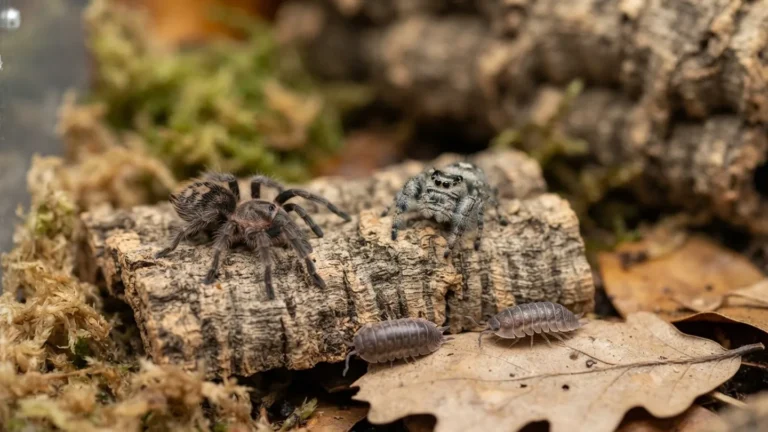
Yes. In many bioactive setups, springtails help manage surface moisture and mold, while isopods break down leaf litter and larger waste. They are different animals. Springtails are smaller and mostly jump to escape moisture or disturbance. Isopods are larger crustacean relatives that crawl and molt visibly.