Tarantula Death Curl: What It Means and What to Try
>{legs curled tightly under the body are a serious warning, not a normal pose. In many cases, a tarantula death curl means severe dehydration, a failed molt, heat stress, or exposure to a bad substrate, chemical, or poor ventilation.}
>{move the spider to a shaded, calm setup today. Use a shallow water dish the spider can stand around and a damp paper towel to raise humidity near the hide. Stop feeding, keep temperatures near 68 to 78°F, and check whether it is premolt instead.}
>{If it has been curled and motionless for more than 24 hours, do not assume there is a reliable rescue. If it still moves when the enclosure is gently tapped, give the moisture step a short, calm trial and watch for a day.}
Key takeaways
- >{A tarantula death curl is an urgent problem, usually tied to water balance, molt, heat, or toxins.}
- >{Dehydration is common in young tarantulas, often called slings, and in species that need a moist hide.}
- >{Shallow water plus humidity is the conservative first step. Do not soak the spider.}
- >{If the animal is stuck in a failed molt, intervention can make the situation worse.}
- >{Most beginner tarantulas do best around 68 to 78°F with good airflow and no direct heat mat under the enclosure.}
What a tarantula death curl looks like
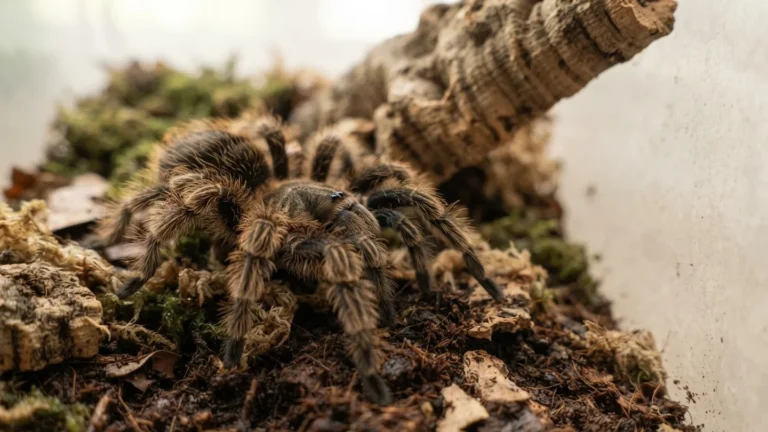
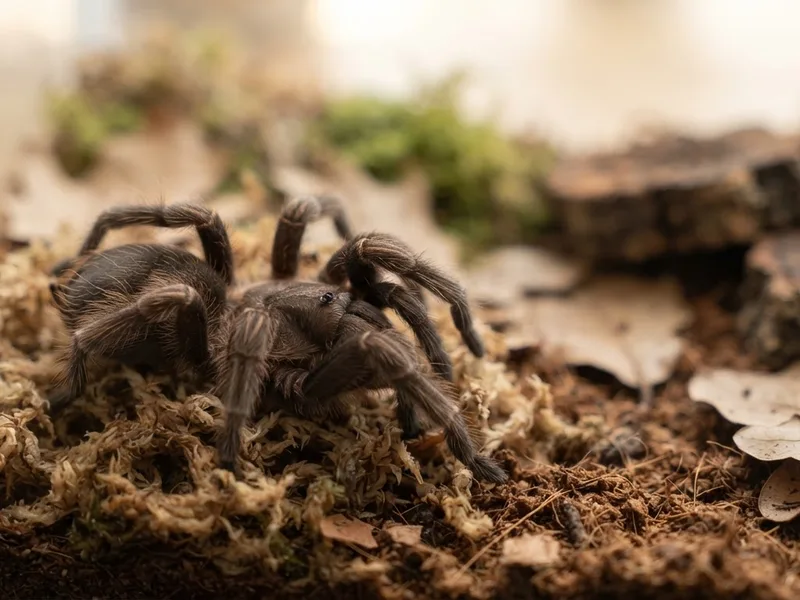
>{It looks like a spider folded under itself. The legs are pulled inward, often unevenly, and the body may sit too high or lie flat depending on size.}
>{Some tarantulas tuck their legs during rest or in a hide, but a healthy animal will uncurl if disturbed and can right itself. With a death curl, the animal often cannot coordinate its legs. It may also be dehydrated, shriveled, soft, or still wearing an old molt.}
>{If you see a tarantula in this pose, check three things before touching it: temperature, whether it is premolt, and whether the humidity and water dish are doing their job. Premolt is the stage before shedding; a tarantula may stop eating, darken, and tuck its legs. That is not the same as a failed molt, where the animal cannot complete the shed.}
| >{Cause} | >{What you might see} | >{First fix} |
|---|---|---|
| >{Dehydration} | >{Shriveled abdomen, dry hide, no recent water, curled or tucked legs} | >{Add a shallow water dish and a damp paper towel in one corner; do not soak.} |
| >{Heat or hot enclosure} | >{Spider found on top of hide, legs curled, enclosure near 85°F or above} | >{Remove heat source, move to 68 to 78°F, increase shade and airflow.} |
| >{Failed molt or stuck shed} | >{Old exoskeleton still partly attached, legs curled or stuck, soft body} | >{Do not pull. Keep humidity high but safe and wait unless the animal is actively trapped.} |
| >{Too much moisture or mold} | >{Wet substrate, mold, smell, spider at surface or unable to burrow} | >{Replace the affected substrate, improve ventilation, keep only a moist corner.} |
| >{Poor ventilation} | >{Condensation, musty smell, weak movement, stressed animal} | >{Add cross ventilation without drafts, and check that screen tops are not sealed.} |
| >{Chemicals or fumes} | >{Recent spray, plug in scent, essential oil diffuser, aerosol, smoke} | >{Remove the source, ventilate, and replace contaminated substrate if needed.} |
| >{Injury} | >{Missing leg, bleeding, torn abdomen, sudden curl after handling or a fall} | >{Isolate in a clean, simple setup. Avoid feeding until stable.} |
| >{Stress from handling} | >{Animal throws urticating hairs, runs, drops, or hides, then curls} | >{Stop handling for days. Urticating hairs are irritating barbs some species kick.} |
What to try tonight: shallow water and damp paper towel
Make a calm rescue setup
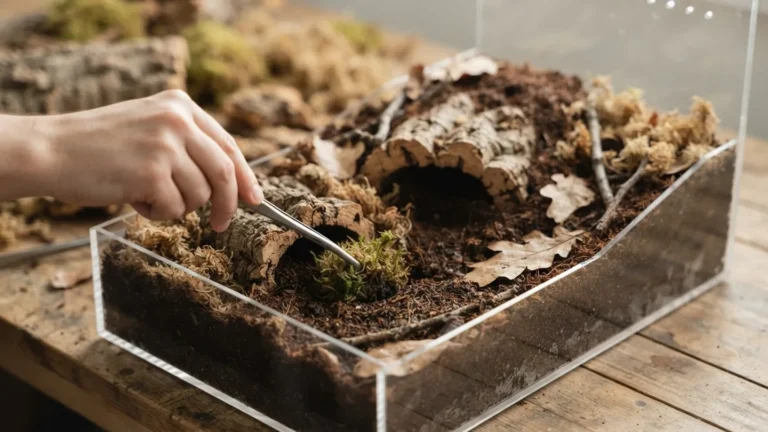
>{If possible, move the tarantula to a simple, dry enclosure with a hide. Use a container large enough for at least 2 to 3 times the leg span across the floor. For a small sling, 4 by 3 by 3 in may work; for an adult with a 4 in leg span, 8 by 10 in is a safer minimum.}
Check temperature without touching the spider
>{A thermometer should read 68 to 78°F for most beginner tarantulas. If it is near 85°F or higher, remove the heat source and let the enclosure cool in shade. A heat mat is often unnecessary and can create hot spots.}
Offer shallow water
>{Use a jar lid, bottle cap, or shallow dish with pebbles. The spider should be able to stand on the rim with its legs out. Do not place it in a deep dish or submerged under water.}
Add a damp paper towel, not a wet enclosure
>{Place a paper towel strip, lightly damp not dripping, under one corner or inside a hide. Keep the opposite side dry. Check every few hours and replace if it dries or smells.}
Wait and observe
>{Leave the spider alone for 12 to 24 hours. If it is premolt, do not disturb it. If it has not started a shed, look for movement, standing up, or a relaxed curl.}
Do not force feeding or handling
>{A curled tarantula is already under stress. Offer a small prey item only after it is upright and clearly active. Do not hold it, tap its legs, or pull shed fragments.}
When to worry, what not to try, and the honest odds
>{If the tarantula moves, rights itself, or drinks, your odds improve. The water and humidity step can be enough when dehydration is caught early.}
>{If it has been curled and motionless for more than 24 hours, be cautious about expecting recovery. If the legs are stuck under an old molt, direct pulling can tear limbs or damage the animal. Keep humidity stable and only intervene if the tarantula is clearly trapped, using very gentle moisture around the stuck point.}
>{Do not soak the spider. Do not spray it directly. Do not use alcohol, hydrogen peroxide, oils, or household cleaners on the tarantula. Do not keep trying to feed an animal that cannot stand. Each of those adds stress.}
>{If your tarantula was recently bought at an expo, pet store, or from an online breeder, ask what substrate and humidity it came with. A sudden change in moisture or temperature can be enough to push a stressed animal into a death curl.}
>{If you are choosing your first spider instead of rescuing this one, read beginner invertebrate species before buying an enclosure or a heat mat.}
Frequently asked questions
Is a tarantula with curled legs dead?
>{Not always. A very fresh curl may be caused by dehydration or heat, and the animal may recover. If it is motionless, shriveled, or has been curled for more than a day, the odds are lower. Do not keep disturbing it to check repeatedly.}
Should I mist a tarantula showing a death curl?
>{Usually no. Direct misting can stress the animal or leave standing water on its body. Use a damp paper towel in one corner and a shallow water dish instead.}
Can tarantulas die during a molt?
>{Yes. Molting is high risk, especially for slings and species that need humidity. A failed molt can look like a death curl if legs remain tucked inside the old exoskeleton. Keep humidity stable and leave a molting tarantula alone.}
How much water should I give a dehydrated tarantula?
>{Enough to stand near without drowning. A jar lid or bottle cap is better than a deep bowl. Add pebbles or a cork piece if the lid is slippery. The spider may not drink immediately even if the water helps.}
Should I remove my tarantula to feed it after a curl?
>{No. Feed only after it is upright, active, and settled. A curled animal does not need extra handling and may refuse food because it is dehydrated, stressed, or premolt.}
Do isopods and springtails prevent death curl?
>{They help with clean-up and moisture balance in some bioactive builds, but they are not a cure. Poor drainage, a sealed lid, or over wet substrate with a clean-up crew can still create problems.}
Prevention: enclosure size, temperature, and moisture
>{Most death curls are easier to prevent than to reverse. A stable setup reduces the chance of dehydration, heat stress, mold, or failed molt.}
>{Temperature first: 68 to 78°F is conservative for most beginner tarantulas. Use a thermometer near the enclosure, not directly against the glass, and avoid hot spots above 80°F unless a specific care sheet says otherwise. If you use heat, place it on the side, not under the enclosure.}
>{Enclosure size next: for terrestrial species, use floor area at least 2 to 3 times the leg span. For an arboreal species, height matters more, but the floor should still not be cramped. A large adult may do well in 8 by 10 in floor space, while a small sling may be safer in a 3 to 4 in container with a proper lid.}
>{Humidity is where many keepers go wrong. Desert species need a dry side plus a moist hide. Tropical species need slightly moist substrate plus a dry hide or climbing surface. A bioactive build, an enclosure that uses soil, plants, and a clean-up crew such as isopods and springtails, needs good drainage and airflow. Over wet substrate can harm the animal even if the water dish looks clean.}
Key takeaways
- >{Check temperature, water dish depth, substrate moisture, and ventilation before assuming the spider is dying.}
- >{Shallow water and a damp paper towel are the conservative first aid steps for a death curl tarantula.}
- >{If the animal is in a failed molt, direct pulling can cause fatal injury.}