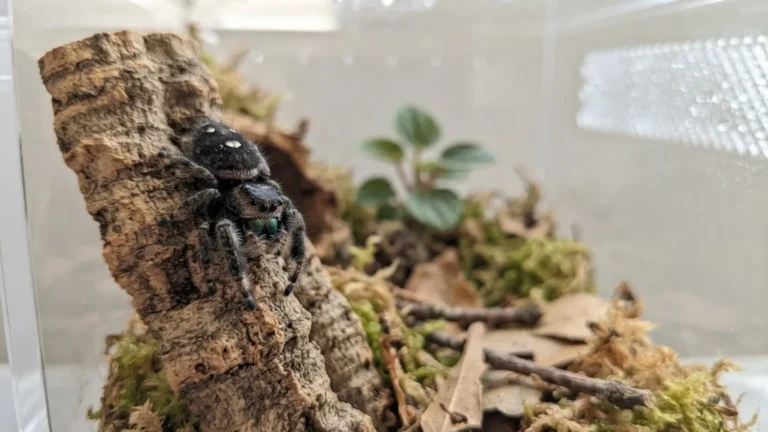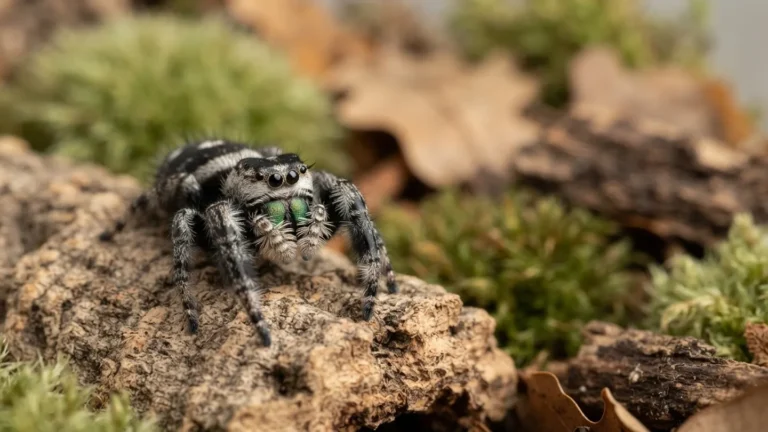
Jumping Spider Molting: Signs, Hammocks and Timing
A jumping spider that stops eating and builds a silk hammock is usually preparing to molt, not dying. The safest move is to leave the retreat intact, remove live prey before it is sealed, and keep temperature, water, and handling steady.
Jumping spiders (Salticidae) shed their exoskeleton to grow. The exact timing varies by species, life stage, and warmth, so the goal is to create a quiet setup rather than to force a schedule.
What is in this guide? You can jump to the part you need tonight. Here you will find a quick answer, premolt signs, hammock care, timing, and feeding advice after the molt.
Quick answer: jumping spider molting
- Most likely cause: premolt, especially when eating slows, movement settles, and a silk retreat appears.
- What to do now: never open the hammock, remove live prey before the spider seals, keep a small water source, and hold temperature steady around 68 to 78°F for many commonly kept species.
- What to avoid: tapping the enclosure, moving the spider, adding heat to rush the molt, or soaking the silk chamber.
- When to worry: the spider stays sealed longer than expected, cannot emerge, emerges stuck, or remains limp after several days.
Premolt signs: what to look for before the molt
Eating slows or stops
A spider that normally takes fruit flies or crickets may refuse for several days. This is common before molting and is not a reason to force feed.
The web changes
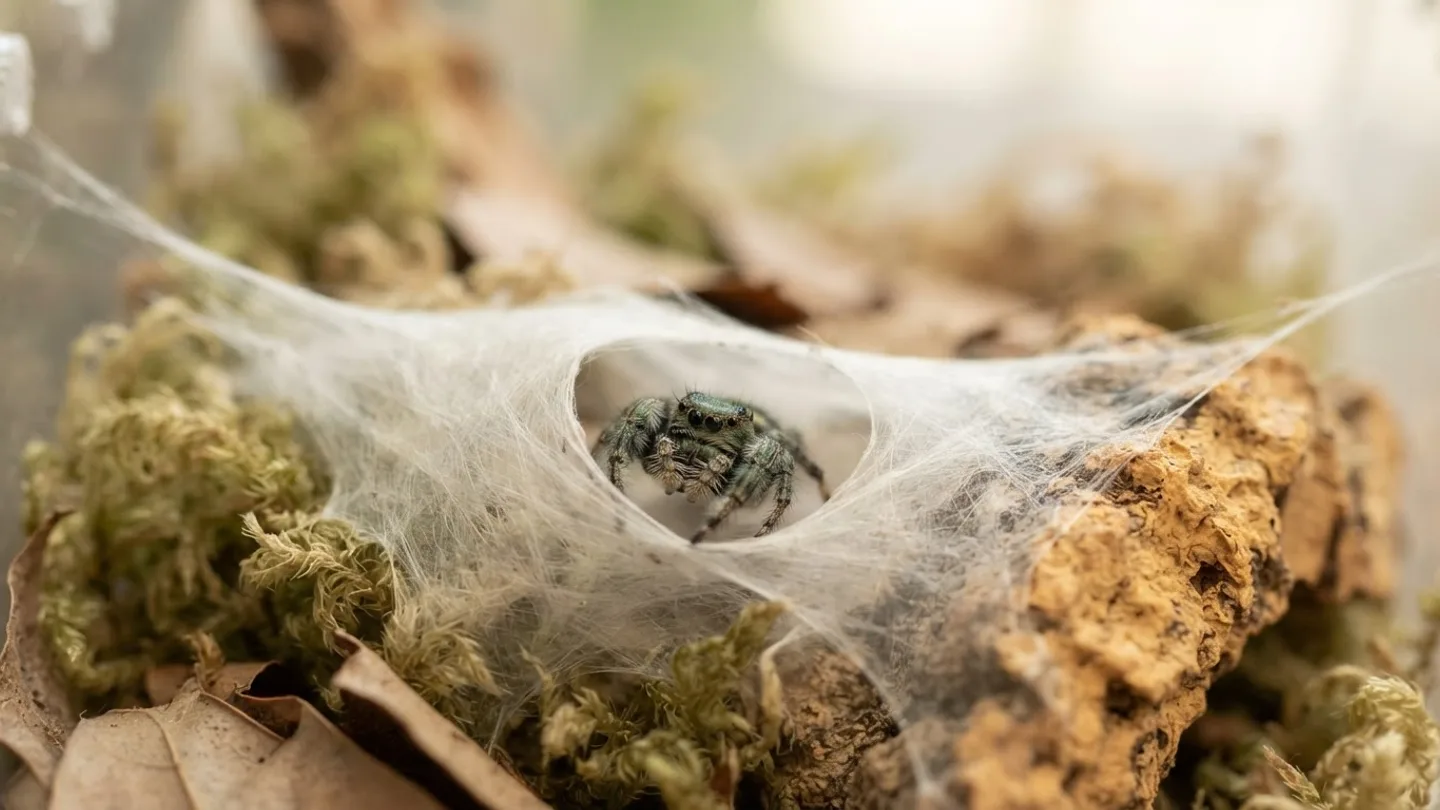
Many jumping spiders spin a denser silk hammock, pouch, or folded retreat in a corner or on a wall. This chamber is usually quieter than a normal resting web.
Movement and alertness drop
You may see the spider sit still, tuck its legs, or stop hunting. Jumping spiders are active normally, so stillness can be a signal.
The body looks tight or off color
A premolt abdomen may look stretched, glossy, or darker. A sling, which is a very young spider, can also look pale because the old skin is separating from the new one underneath.
The silk hammock: why a molting chamber is left alone
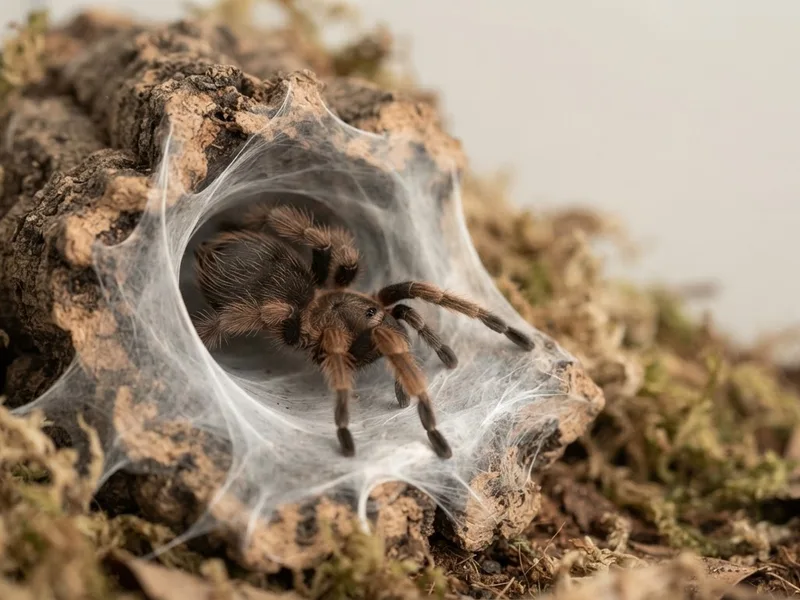
The silk hammock is a molting shelter, not a trap. The spider seals into it to lower stress and hold a small area of higher humidity around its body. That makes shedding easier and protects the soft new exoskeleton while it finishes.
Because the seal matters, do not open it. If a live prey item is outside the chamber or can be removed without disturbing the web, take it out. If it is sealed inside, leave it. A fruit fly or pinhead cricket is unlikely to kill a resting spider, but your hand or a tap can damage a soft animal.
Keep the enclosure setup ordinary. A shallow water dish, a small damp corner, and stable room temperature are enough for many species. I do not recommend heat mats or special molting packs unless a specific jumping spider care sheet says otherwise.
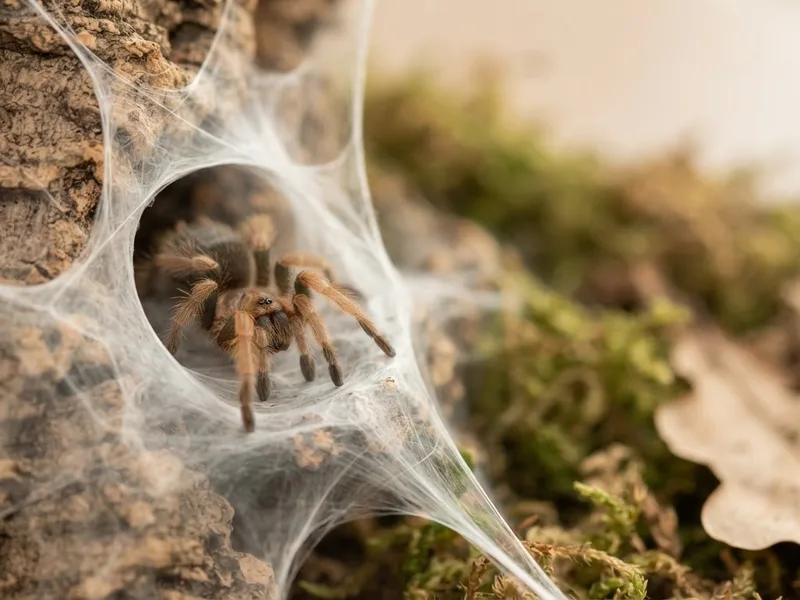
What happens during the molt
The spider rests inside the chamber
The sealed pause may last from hours to a couple of days. During that time, you may see very little. For smaller species, the body can be almost hidden by silk.
The old exoskeleton separates
Inside the silk, the spider swallows air and fluid, then splits the old skin. You may not see this part. If you do see a pale shape with darker edges, that can be the new spider leaving the old skin.
The new spider emerges and rests
After emerging, it often stays curled, limp, or motionless while it hardens. This is normal. The old exoskeleton may remain beside it or inside the hammock.
Hardening continues
Legs stiffen, eyes look less milky, and the body color deepens. Depending on size, this can take about 24 to 72 hours, with larger spiders needing longer.
| Observation | Usually normal | Watch closely | Do now |
|---|---|---|---|
| Stops eating | For several days before premolt | For many weeks after emerging, or if very small and no web | Do not force feed; keep water available |
| Builds silk chamber | Yes, often before a molt | If chamber stays empty for days | Leave it alone; do not open |
| Still or curled | While molting or hardening | More than several days after emergence | Check for stuck shell and remove live prey |
| Pale or shiny | Right after molt | If still soft and cannot move normally after 3 to 5 days | Keep temps steady and avoid disturbance |
| Old exoskeleton visible | Inside or near chamber | Stuck to legs or face | Do not pull; seek help from an experienced invertebrate keeper or vet if available |
Color and molt timing by life stage
Right after a molt, a jumping spider often looks paler, shinier, washed out, or less contrasty. The abdomen may look softer or smaller, and the eyes can seem less dark. Color and posture usually deepen over one to three days. The exact pace depends on size and species.
Young slings often molt more often because they are growing fast. When food and warmth are good, molts can arrive every few weeks, not every few days. A few weeks is a common pattern, not a promise.
Larger juveniles and subadults usually slow down. Their intervals can run several weeks to months, and they may pause eating longer before sealing into the hammock.
Adult females often molt less frequently than slings, sometimes several months apart, depending on species and temperature. Males usually end up as a mature male, a male that has completed its final molt and often spends less time feeding. A mature male may still make a chamber, but its goal is not growth in the same way.
Precise molting intervals are not well documented for every jumping spider, so treat these as keeper patterns, not guarantees. If you know the species, follow that species care sheet because smaller or larger species can differ from the general rule.
A safe feeding restart after a jumping spider molt
Wait for hardening, not for color
Offer food only when the spider can hold its legs normally, can turn on the web or wall without flopping, and no shell fragment is attached. A safe minimum is usually 24 hours for a small sling and 48 to 72 hours for larger animals.
Start with prey that matches size
Choose something smaller than the abdomen, such as a flightless fruit fly or pinhead cricket. Do not leave a large cricket in the enclosure while the spider is still soft.
Put one item in, then watch
Remove uneaten prey after about 24 hours. If the spider eats, offer the next meal in a few days only if it is active and hunting normally.
Keep the setup quiet for 3 to 7 days
A newly molted spider is easy to damage. Avoid handling, moving the enclosure, or adding heat to force feeding. Normal feeding usually resumes without intervention.
Common jumping spider molting questions
Do all jumping spiders make a molting hammock?
Many do, but some will molt in an ordinary retreat or even on a flat surface. If a species builds the chamber, it is usually a sign it wants a safer microclimate. The important thing is not the shape of the web, but that you leave it alone.
How long does jumping spider molting take?
The whole sequence can be short or stretched. Premolt rest may last hours to a few days, emergence often takes a few hours, and hardening can take about a day to several days. Species and size change the timing, so do not expect a fixed number.
Can I remove the old skin after a molt?
Yes, once the spider has moved away and the old exoskeleton is dry. It is not harmful to leave it, but removing it can keep the enclosure cleaner. Do not pull at anything attached to the spider.
My jumping spider molted and will not eat. Is that normal?
It can be normal for several days if it is still hardening. After it walks normally, offer a small prey item once, then remove it if ignored. If it remains inactive or refuses food for a long stretch after emerging, consider whether it is entering another premolt, is too cool, or is stressed by handling.
Should I increase humidity for a molting jumping spider?
Keep humidity steady and the chamber damp enough to be protected by the spider itself. Do not soak the enclosure. A water dish and normal misting are safer than trying to make a wet box, because jumpers need good airflow.