Jumping Spider Feeding Chart: How Often and How Much
You are building the feeding routine around the animal in the container, not around a calendar. Jumping spiders change appetite with size, room temperature, molts, and whether they are still growing or already adult. This jumping spider feeding chart gives conservative prey size, amount, and frequency from tiny spiderling to adult, so you can act tonight without guessing.
Start with prey no larger than the spider's body length, offer one item for larger spiders, and check the abdomen before every meal. That one habit prevents the most common feeding problems: refusing food, stress, and live prey bothering a spider that is about to molt.
Jumping spiders eat live insects and other small invertebrates. In this guide, 'instar' means the stage between molts, 'prey size' means the length of the insect as it is offered, and room temperature means about 70 to 78 °F, a typical US indoor range for many beginner setups.
Key takeaways
- Offer live prey no larger than the jumping spider's body length.
- Tiny spiderlings usually need small fruit flies once daily or every other day.
- Older juveniles and adults often do better every 2 to 4 days, not every day.
- An overfed spider may refuse food and show a large, glossy abdomen.
- Stop feeding at premolt and wait about 1 to 2 weeks after a molt before offering prey.
- Mature females may accept larger prey, but prey size still stays below the spider's body length.
Read the abdomen before every feeding
For jumping spiders, use body length, not leg span. Leg span can look dramatic while the spider is still small enough for fruit flies.
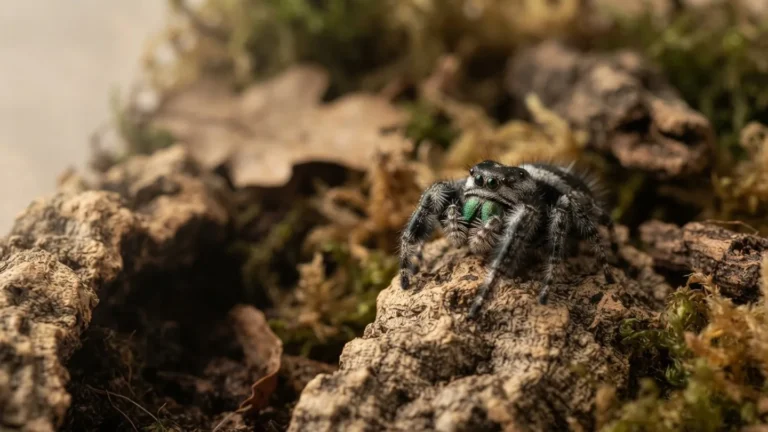
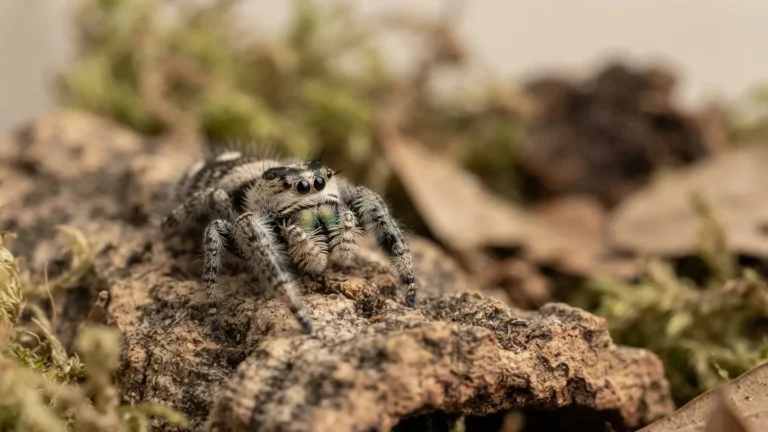
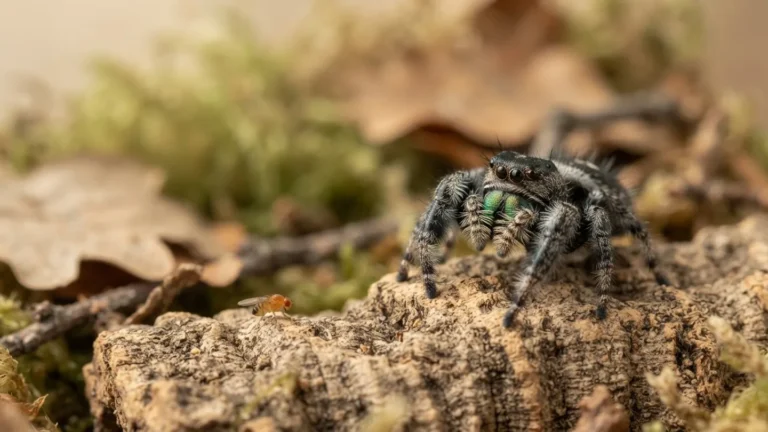
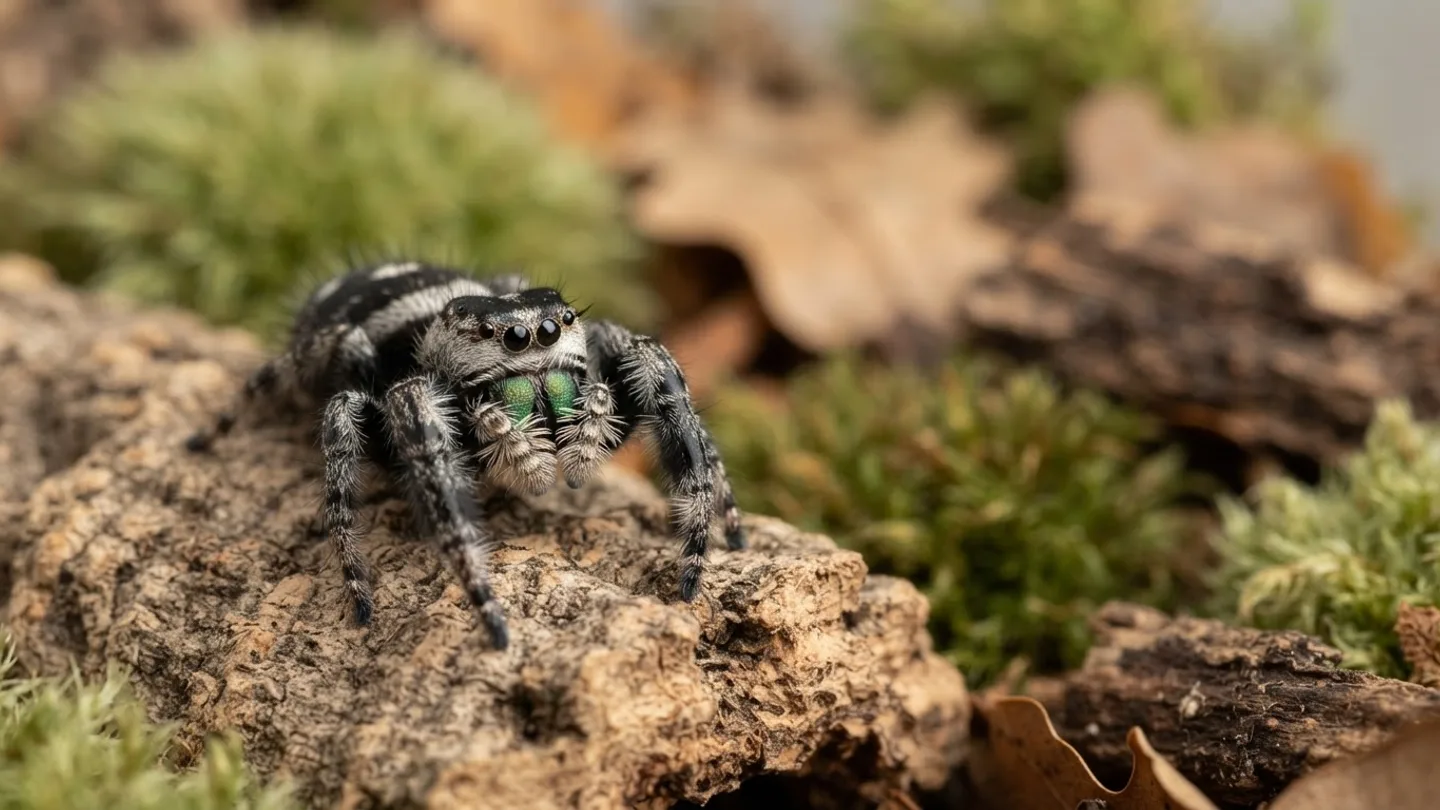
A hungry jumping spider usually has a matte, slightly wrinkled abdomen. The back end does not look fully round or shiny. A full spider has a larger, glossy abdomen that looks firm from above. The abdomen may look bigger after a meal, then shrink over several days as digestion finishes.
Compare the abdomen with the cephalothorax, the front body section that carries the head and legs. In an active spiderling, a normal abdomen is close to the cephalothorax length. If it looks smaller, offer prey. If it looks much larger or stretched, wait.
A spiderling is often around 1/8 to 1/4 inch in body length. A mature female of a larger species may be about 1/2 inch or more, depending on species and lineage. If you are unsure about size, choose the smaller insect and start with fewer prey items.
Check the abdomen
Look from above. Offer food only if the abdomen looks matte, wrinkled, or unchanged from a previous healthy feed.
Choose prey no larger than the body
For tiny spiders use flightless fruit flies. For larger juveniles and adults use pinhead or small crickets. Avoid prey whose legs reach wider than the spider's body.
Offer a small amount
Place two or three fruit flies in the enclosure for a spiderling. For an older juvenile or adult, place one small cricket and leave the room for 20 to 30 minutes.
Remove uneaten live prey
Take uneaten prey out after 24 hours. If the spider ignored it, do not add more that day. If it finished the prey, return to the next scheduled feed.
Keep water shallow
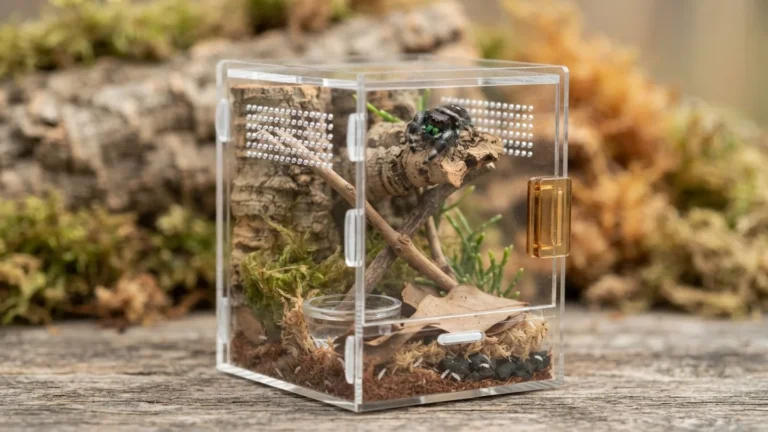
Use a damp cotton ball or a small lid with pebbles. A deep water dish is unnecessary for many jumping spider setups and can be risky for tiny spiders.
| Stage | Prey type | Prey size in inches | Amount offered | Frequency at 70 to 78 °F | Pause or change |
|---|---|---|---|---|---|
| Spiderling to second molt, young spider, sometimes called a sling in tarantula circles | Flightless fruit flies, Drosophila melanogaster | Flies about 1/8 inch or smaller | 2 to 4 flies | Once daily or every other day | Skip one day if the abdomen looks glossy or the spider hides |
| Third to fifth molt, early juvenile | Flightless fruit flies, Drosophila hydei, or pinhead crickets | Fruit flies about 1/4 inch, pinhead crickets about 1/16 to 1/8 inch | 2 to 3 flies, or 1 pinhead cricket | Daily or every 2 days | Stop if refusals reach 3 days and look for premolt signs |
| Mid juvenile to late juvenile, approaching subadult | Pinhead crickets, small crickets, or tiny mealworm pieces | Cricket body about 1/8 to 1/4 inch | 1 to 2 small crickets | Every 2 to 3 days | Increase only if the abdomen stays matte and the spider grows steadily |
| Subadult | Small crickets, tiny mealworms, or occasional waxworm | Insect body about 1/8 to 1/4 inch, or a mealworm piece 1/4 inch or less | 1 to 2 prey | Every 2 to 3 days | Remove fatty treats if the abdomen becomes round too quickly |
| Adult female | Small to medium crickets, mealworm, or waxworm only as an occasional treat | Cricket body about 1/4 to 3/8 inch, kept below the spider's body length | 2 to 3 prey | Every 3 to 4 days | During egg sac guarding, offer smaller prey and remove uneaten food within 24 hours |
| Adult male, a mature male with enlarged pedipalps | Small crickets or mealworm pieces | Insect body usually 1/4 inch or less for many common species | 1 to 2 prey | Every 3 to 5 days | Do not chase appetite with daily feeding, expect normal fussiness near the end of life |
Why refusing food is not always a problem
A jumping spider can become overfed when a keeper reads refusal as failure and keeps offering food. The abdomen becomes large, round, and glossy, and the spider loses interest. This is normal, not a sign that your feeding is wrong.
The animal may ignore a cricket, groom, or turn away. Do not keep trying with multiple live insects. A full spider may become stressed by prey moving around, and that stress can look like appetite loss.
If refusal comes with premolt signs, stop feeding anyway. If it comes after several days of good feeding, the likely cause is fullness. If it lasts longer than a week in a young spider, check temperature, water, and hiding spots before adjusting the chart.
A calm pause is better than a forced meal. If the spider still looks normal, it may simply be full.
Frequently asked questions
How much food does a jumping spider need at one time?
Start with prey no larger than the spider's body length. For a small spiderling, offer two or three tiny fruit flies. For a larger juvenile or adult, offer one small cricket and wait 20 to 30 minutes. If the spider declines, stop for that day.
Should I leave live prey in the enclosure?
Remove uneaten live prey within 24 hours. Live crickets or flies can stress a full spider or bother a spider that is molting. If you need to keep prey available for a short time, use very small prey and check the spider often.
How do I know if my jumping spider is molting rather than sick?
A premolt spider may hide, become quiet, refuse food, and show a dull or swollen abdomen. If the abdomen looks tight and glossy, it may simply be full. If activity loss lasts several weeks and the spider looks sunken or unsteady, reassess the setup, but first pause live prey and keep the enclosure calm.
What if my adult jumping spider only accepts fruit flies?
Some small species or fussy individuals still prefer fruit flies. Use flightless fruit flies and try placing a fly on a small leaf, wall, or corner where the spider can see movement. Do not switch to large crickets just because the spider is adult.
Do jumping spiders need supplements or calcium powder?
Most hobby keepers do not need to dust prey with calcium or supplements if the diet includes a reasonable variety of live insects. Gut loading is helpful but not required for a single spider. Focus first on prey size, water access, and a calm enclosure.
Molting pauses, mature females, and species differences
Premolt is the stage before shedding. A jumping spider in premolt may stop eating, hide more, and look less active. The abdomen can look darker or swollen. This is a reason to pause feeding, not a reason to try bigger prey.
After molting, the new exoskeleton is soft. Wait until the spider looks like its usual color, the abdomen is firm, and movement returns. For young spiders, this often takes 1 to 2 weeks. For adults, it can take longer.
Mature females, meaning adult females that have finished growing, may accept larger prey, but prey size should still stay below the spider's body length. If she is guarding an egg sac, she may eat more at first, then refuse while staying near the sac. Offer small, manageable prey and leave the enclosure quiet.
Species differences matter. A small Hentzia jumping spider may need Drosophila melanogaster for a longer time, while a mature female bold jumping spider (Phidippus audax) or regal jumper (Phidippus regius) may take pinhead crickets or small crickets. Use the chart as a starting point, then adjust to the animal in front of you.
If you are choosing a first jumping spider, our beginner invertebrate guide covers starter species and enclosure basics.