Best Tarantula Substrate: Coco Fiber, Topsoil and Mixes
S substrate is one of the fastest ways to make a tarantula setup work, and one of the easiest ways to ruin it. The wrong depth, the wrong moisture or the wrong ingredient can cause stuck molts, mold, burrow collapse and unnecessary stress.
For most beginners, coco fiber and untreated organic topsoil are the two safest starting points. Peat moss can work in a controlled mix, but it is less forgiving. A good mix gives you burrow structure, stable moisture and room for your spider to hide.
What this guide covers
Key takeaways
- Coco fiber is the most useful all around choice when it is rinsed, low salt and not saturated.
- Use untreated organic topsoil for burrowers that need a tunnel that holds its shape.
- Avoid cedar, pine, fertilized soil, potting mixes with added nutrients, and any soil with pesticide or herbicide residue.
- For most tarantulas, the substrate should feel cool or damp in one corner, not wet throughout the enclosure.
- Small young tarantulas usually need only 1 to 2 inches of depth, while an adult burrower may need 5 to 8 inches.
Substrate is a job, not a decoration
Substrate does four jobs. It lets a terrestrial tarantula dig. It holds humidity for a species that needs a damp retreat. It hides the spider so it feels secure. It absorbs waste long enough to keep the enclosure clean.
For slings, which are young tarantulas, the margin for error is smaller. A container that is too deep can make hunting and walking awkward. For adult burrowing species, too little depth can frustrate the animal and make it more likely to stay exposed.
Many keepers use a water dish instead of soaking the whole substrate. That is often safer, because a damp area can dry between waterings, and standing water in a deep pot can trap a small tarantula.
| Option | Best for | How to keep it | Main risks |
|---|---|---|---|
| Coco fiber or coconut coir | Most beginner setups and species that need some humidity | Damp but not dripping for humid species; dry or slightly cool for desert species | Can mold if soaked; can compact into a hard crust |
| Untreated organic topsoil | Terrestrial and burrowing tarantulas that need tunnel structure | Moist enough to form a clean burrow, not like wet clay | Must have no fertilizer, pesticide or herbicide residue; can dry hard |
| Peat moss | A thin layer or part of a mix for humid species | Uniformly damp, never saturated, and never left bone dry | Often acidic, compact, and water repelling when dry |
| Coco fiber plus sand | Dry or partly tree dwelling species and burrowers that need drainage | Keep the top mostly dry and add a moist corner or water dish | Too much water creates a sour smell; coarse sand can irritate |
| Topsoil plus coco fiber | Large terrestrial and partly tree dwelling species | Moist on one side, dry on the other, with a stable hide | Heavier to change and can hold mold if overwatered |
Choose substrate depth by tarantula type
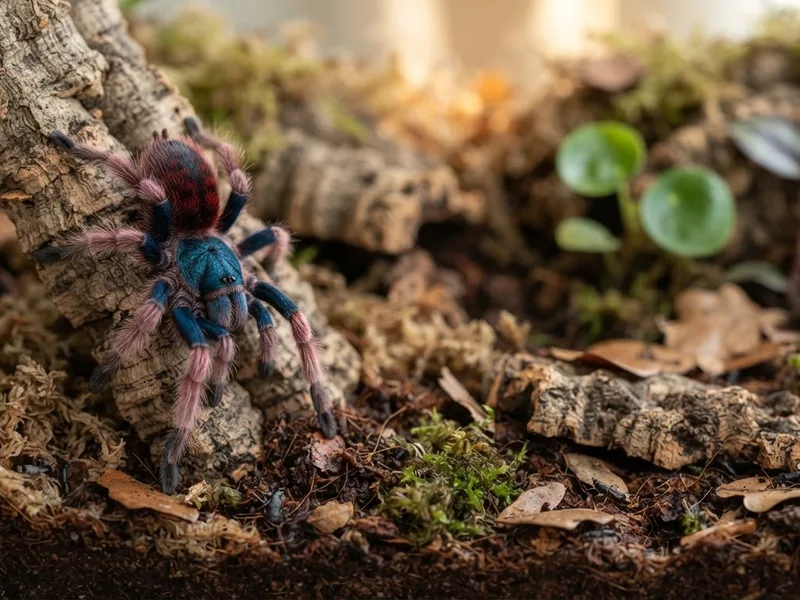
Depth depends more on behavior than leg span alone, but leg span helps you estimate the animal's body size. A practical rule is to provide at least one body length of substrate, and much more if the species digs vertical tunnels.
For small young tarantulas, use 1 to 2 inches of substrate in a cup that matches the body length. They need to be able to move, hunt, and hide without climbing a deep pit.
For common adult terrestrial species, use 3 to 5 inches. If the species is a true burrower, also called a fossorial species that spends most of its life underground, aim for 5 to 8 inches of depth.
For partly tree dwelling species, use 1 to 2 inches. They need climbing space and a hide near the top, not a deep digging chamber.
How to replace tarantula substrate with minimal stress
Decide whether it is needed
Replace only when the substrate smells sour, has unwanted mold, is waterlogged, has collapsed badly, or contains old waste that cannot be removed by spot cleaning.
Prepare the new setup first
Put clean substrate at the same depth and moisture in the enclosure or a spare container. Have the water dish in place.
Skip disturbing a molting or premolt spider
A spider in premolt is preparing to molt. If you see a bald abdomen, darkened body, reduced feeding, or a sealed web retreat, leave the enclosure alone.
Move the tarantula with a container, not a hand
For most keepers, the safest method is to coax the animal into a clear cup with a piece of cardboard or your hand as a backing.
Sift or scoop old material
If the spider has a stable burrow and the substrate is still clean, you can carefully add fresh substrate around the entrance instead of removing the whole spider. If the old material is moldy or contaminated, remove it.
Check moisture after the change
Add small amounts of water, let it dry, and keep a dry hiding spot available.
Set moisture without guessing
A damp substrate should feel cool to the touch, not like a wet sponge. If water pools on top, the substrate is too wet. If a burrow falls in immediately, it is too dry.
For most beginner species, a full water dish plus a moist corner is better than soaking the whole enclosure. Recharge the moist side by misting or adding a small amount of water, then let the top of the dry side recover between sessions.
For humid species, the whole substrate may be lightly damp, but it still should not smell swampy. If it smells sour within a few days, reduce water or add more ventilation.
For desert species, keep the main floor dry. A very shallow water dish is enough for drinking, and a hidden moist patch can be offered only when needed for molting.
Common questions
Can I use garden soil?
Only if it is untreated topsoil with no fertilizer, pesticide, or herbicide residue. Sift it to remove rocks and roots. If you do not know its history, do not use it.
Is coconut fiber the same as coco coir?
Yes. Coco fiber is coconut husk fiber, often sold as coco coir. Choose low salt material and rinse it if the package recommends it.
What is a clean up crew, and do I need one?
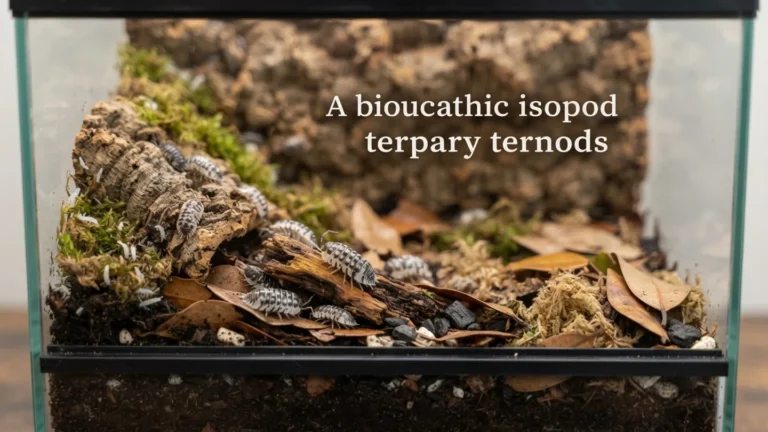
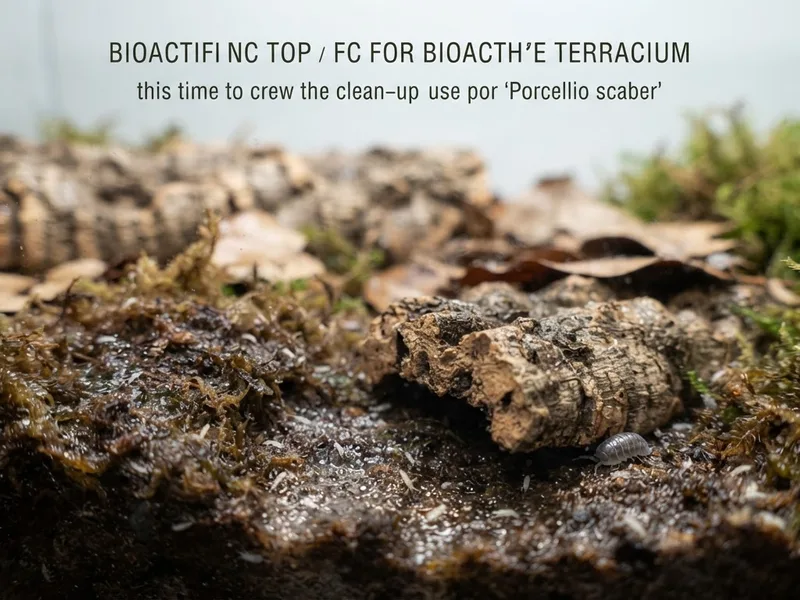
A clean up crew is springtails or isopods that help break down mold and leftover food. You do not need one for a simple tarantula setup. If you add one, it must be established before you need it, because a new crew cannot handle a sudden mold outbreak. A bioactive enclosure is a living system with plants, substrate, and a clean up crew.
How often should I replace tarantula substrate?
There is no universal schedule. Replace when it smells, molds badly, becomes waterlogged, or loses structure. Some clean setups go for many months.
Can I use a heat mat with substrate?
Usually, no. Most commonly kept tarantulas do not need a heat mat, and direct heat under a pot can dry the substrate and harm the spider. If your room temperature is too low for the species, use a controlled heating method outside the enclosure and follow species care guidance.
Do I need thick substrate for urticating hairs?
Urticating hairs are barbed defense hairs. Substrate does not stop them from being flicked. It helps provide cover, which can reduce the chance your spider feels stressed enough to use them.