Tarantula Molting: Signs, Stages and What to Do
A tarantula that refuses food and goes still can make a keeper think it is dying. Most of the time, it is preparing to molt, and the best help you can give is to leave it alone.
Molting is how a tarantula grows. It sheds its old exoskeleton, works free of the old skin, and lets the new one harden. The animal can look strange during each stage, especially if it has never molted in your room before.
This guide covers premolt signs, what to do now, what to avoid, how long it takes, and the few situations where you should step in. If you need starting care numbers for a new spider, see this beginner tarantula care guide.
Key takeaways
- A tarantula that stops eating and sits still is often in premolt, not in danger.
- Remove live prey, leave the spider alone, and keep a shallow water dish available.
- Do not handle, mist directly, feed, move, or heat a molting tarantula.
- Hardening can take days to weeks after the old skin comes off.
- If old skin is stuck, give light humidity and do not pull at it.
Quick answer for a molting tarantula
Most likely cause: premolt. The tarantula is preparing to shed. Common signs are food refusal, dull or darker appearance, reduced movement, and a silk mat on the floor or near a hide.
What to do now: remove live prey, leave the enclosure alone, and keep a shallow water dish available. Do not feed, mist directly onto the spider, or move it to a new setup.
When to worry: if the old skin is trapped on legs or the abdomen for more than a day, if you see bleeding, mold, a foul smell, or a severe leg injury. If you are unsure, isolate the spider gently and ask an experienced tarantula keeper before pulling anything.
Handling a molting tarantula is not a safety step. Its new skin is soft, and it can still kick urticating hairs if disturbed. If hairs land on your skin, rinse the area and wash your hands; avoid rubbing.
| Sign | Likely normal | Check for |
|---|---|---|
| Refuses food for days or weeks | Common in premolt | Also can be too cold, too dry, or an injured spider; compare with normal care |
| Darker or dull coloring | Can appear before molt | Mold, soft dark patches, or foul smell are not normal |
| Builds silk and lies still | Often molt preparation | Stuck with old skin visible for more than a day |
| Abdomen looks shrunken after a molt | New skin is stretching and hardening | If legs stay curled, bent, or trapped, stop feeding and inspect carefully |
| Becomes restless before stillness | Some species move before settling | If it falls, gets stuck, or shows repeated leg loss, check enclosure floor and temperature |
Premolt signs that are normal
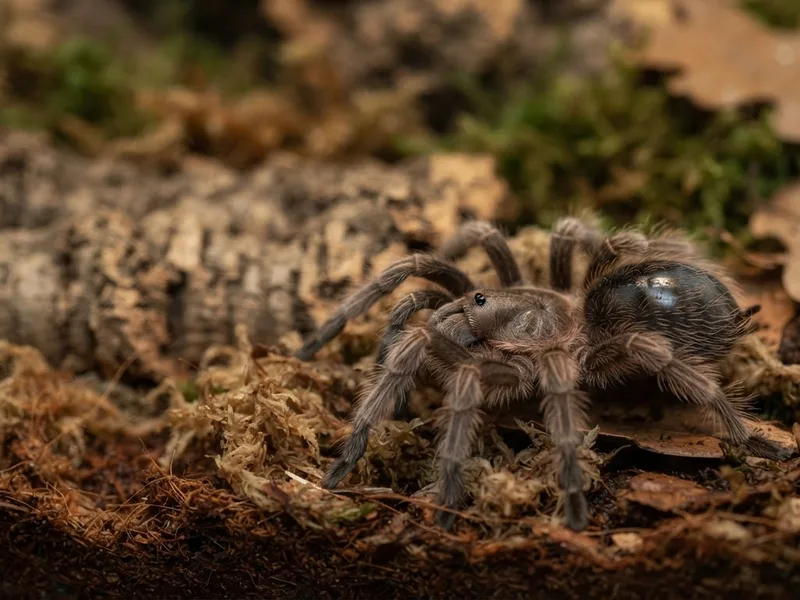
A premolt is the preparation period before the actual shed. The tarantula may stop eating for days, or for weeks in slower growing adults. This alone is not proof of illness.
Color changes vary by species. Many ground-dwelling tarantulas look duller or darker, especially on the abdomen. Some arboreal species show little color change and mainly seem still, hidden, or silked up.
Younger animals can be easier to miss. A sling, meaning a very young tarantula, may still seem normal while it is preparing. Do not offer extra large prey to force a molt. A prey item larger than the spider's body is risky at any stage.
A mature male may behave differently before its mature form develops. It can become restless, build a small web, and ignore food. That is not the same as a stuck molt, and it still does not need handling.
What a molt looks like stage by stage
Premolt preparation
The spider hides, refuses food, and may spin silk. Keep the water dish shallow and leave everything else undisturbed.
Silk mat and settling
A ground-dweller usually lies on a silk mat. An arboreal species may settle on webbing against a hide. If it is in a safe place, do not move it.
Flipping onto its back
Legs draw up, then the spider turns onto its back. This looks scary, but it is normal for many species.
Splitting the old exoskeleton
The old front body and legs begin to loosen. The chelicerae, the mouth parts with the fangs, may stay attached longer than you expect.
Pushing free from the old skin
The spider pushes its abdomen and legs out. If the old skin comes free easily, do not help by pulling.
Hardening
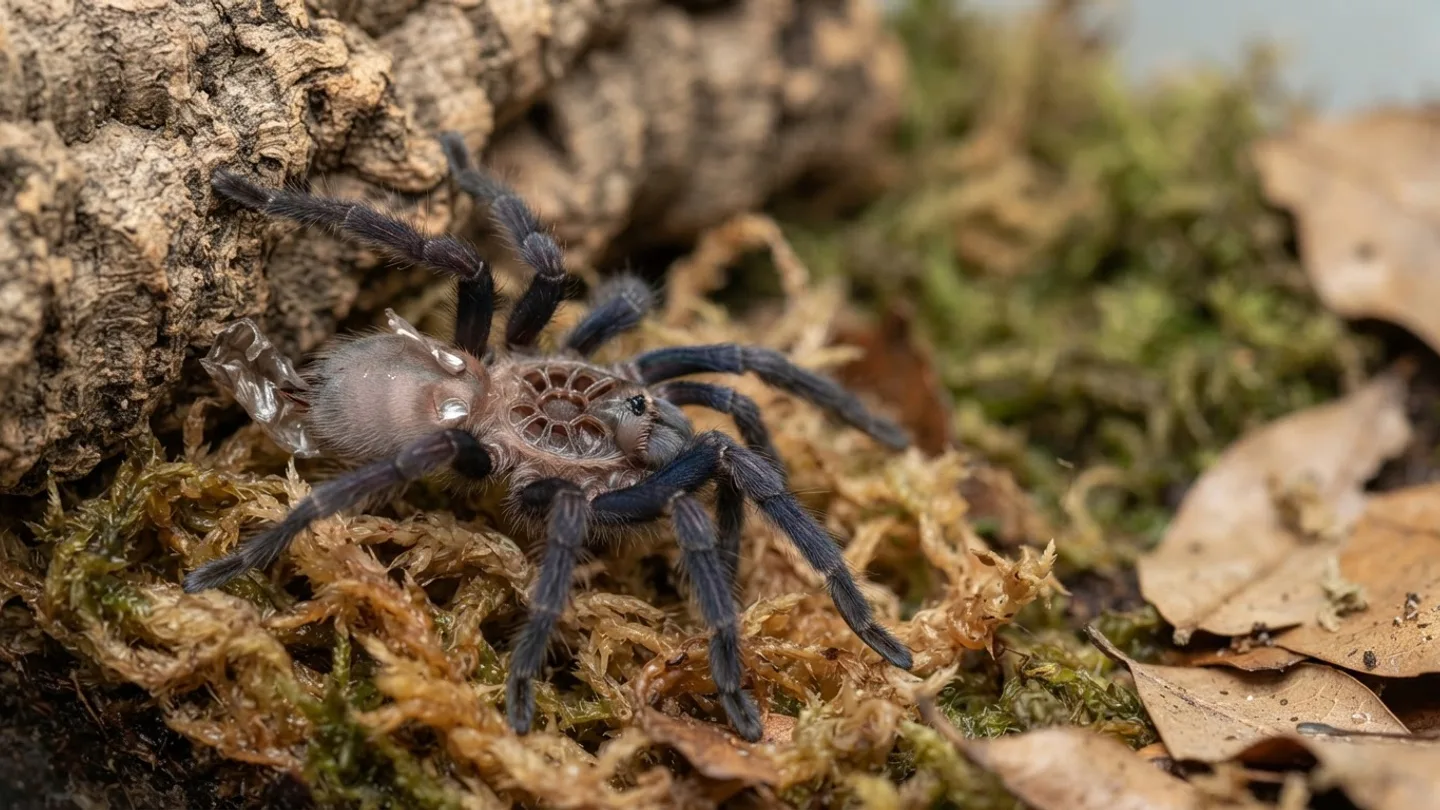
The new exoskeleton is pale and soft. It hardens slowly, and the spider should not be fed until the legs and mouth parts feel firm and it moves normally.
What to do now and how long to wait
During a molt, the only job is to make the environment calm. Remove live prey after the spider stops eating. Uneaten crickets or roaches can bite a helpless spider, so take them out within 24 hours.
Keep a shallow water dish available. If your species normally needs light misting on a side wall, keep that habit gentle. Do not soak the substrate, and do not mist directly onto the animal.
Do not move the enclosure, handle the spider, brush off urticating hairs by hand, or add a heat mat to speed the process. If your species is normally kept at room temperature, hold it in its usual range, often around 70 to 80°F. Do not make it hotter than its care sheet allows.
How long it lasts varies. The active shed often finishes within a few hours, but some take up to 24 hours. Hardening may take 5 to 14 days for many commonly kept species, and older or larger animals can take longer. If care sources for your species disagree, use the longer wait.
Resume feeding with a small, appropriately sized prey item only after the legs and chelicerae feel firm and the animal is active. A good rule is prey no larger than the spider's body, and no feeding into premolt.
| What you see | Safe response | Do not do |
|---|---|---|
| Old skin trapped on one or more legs | Place the tarantula in a small ventilated container with lightly damp paper and leave it alone | Do not pull, cut, or stretch the old skin |
| Bleeding from the molt line or abdomen | Isolate on damp paper, keep it quiet, and seek advice | Do not apply powder or handle repeatedly |
| Soft legs that stay curled or bent after several days | Do not feed; keep humidity light; observe for 2 to 3 days | Do not force it upright or move it to a large enclosure |
| Mold or bad smell near old skin | Remove only loose, clearly separated skin; ask an experienced keeper if the skin is attached | Do not soak the animal or put it in water |
| Spider remains still and pale after 2 to 3 days | Check temperature, water, and whether it is actually molting; leave it undisturbed before handling | Do not discard quickly; do not handle without a cup and lid |
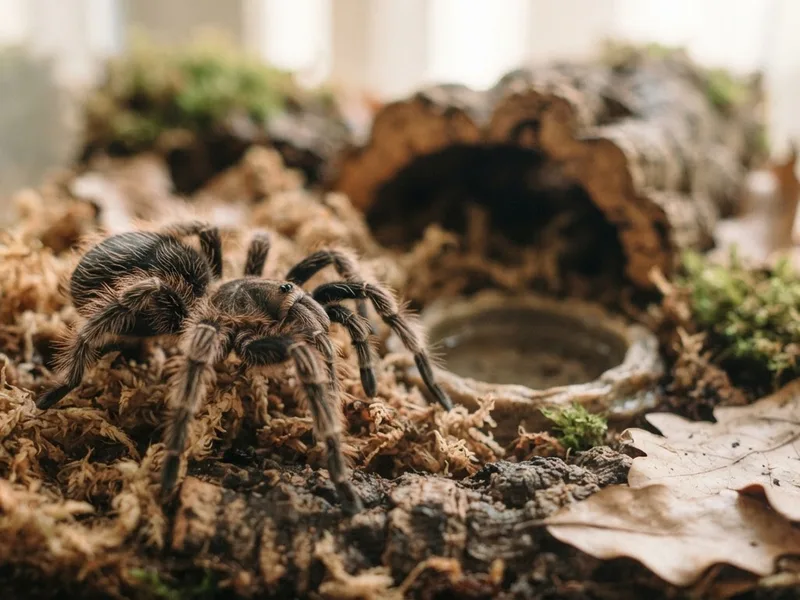
Enclosure size, moisture, and heat mat myths
Give a molting tarantula enough space to flip onto its back without touching a wall or hide. For most ground-dwelling species, floor space should be at least 1.5 times the leg span in each horizontal direction. Arboreal species need enough vertical webbing and hide material so they can settle without falling.
Keep moisture where your species normally lives it. A dry side with a small moist area is common for many ground-dwellers, while forest dwellers may prefer overall light dampness. For a molt, avoid both extremes. Dry substrate can make shedding harder, and soaked substrate can cause mold and stress.
A heat mat is not a molting tool. Most commonly kept tarantulas do not need a heat mat, and a hot spot can create uneven temperature, premature activity, or a stuck molt. Use supplemental heat only if your species care sheet calls for it, then keep it within the stated range and never on the spider directly.
If your setup is bioactive, meaning it has living plants and a clean up crew such as isopods and springtails, watch the crew. A small clean up crew can remove leftover prey and waste, but a heavy population around a helpless spider is not worth the risk.
Common questions about tarantula molting
Should I feed my tarantula before it molts?
No if it has stopped eating. Offer a normal meal during its usual feeding cycle, not in the middle of premolt. If it accepts food, that does not prove it is not preparing to molt.
Can I touch a molting tarantula?
No. Handling during molt can damage the animal, knock it off its silk, or cause it to kick urticating hairs. If you must move it, use a cup and a soft lid, and do not lift it with your fingers.
Why does my tarantula look dead?
Molting tarantulas can stay rigid, pale, or limp while the new skin hardens. Leave them alone for 2 to 3 days, then observe. A truly dead spider usually develops odor, mold on joints, and no change over a longer period.
Do I need to raise humidity?
Not always. Lightly mist a side or add a shallow water dish if the area is dry, but do not soak. If the molt stalls, isolate the spider on a lightly damp paper towel in a ventilated container.
Can it molt more than once?
Yes. Tarantulas molt throughout life. Slings can molt several times per year, while larger adults may molt less often, sometimes once every one to two years depending on species and feeding.