What Do Tarantulas Eat? Prey Size and Safe Feeders
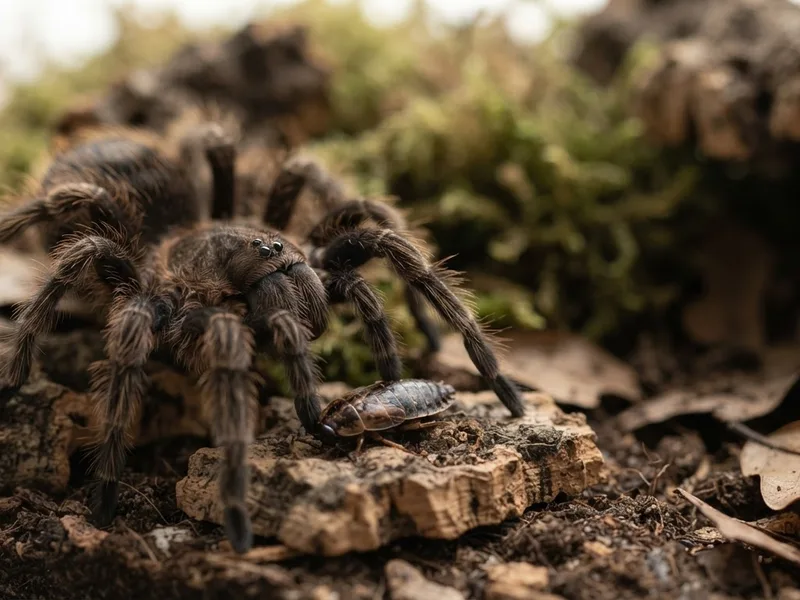
The simple answer to what does a tarantula eat is this: captive tarantulas eat live insects like crickets, roaches and mealworms. If you are deciding what to buy tonight, choose appropriately sized feeder insects and remove leftovers within a day.
How much and how often depends on the life stage. A sling, meaning a young tarantula under about 1 inch in leg span or body length, usually needs tiny prey and more frequent small meals. An adult can go weeks between meals. Do not confuse slow feeding with neglect; tarantulas are ambush predators, not high-metabolism pets.
Start conservative. Too-large prey can injure the spider or stress it into defensive behavior. Uneaten feeders can harm a molting spider. When in doubt, feed smaller, fewer, and check for uneaten prey the next day.
Key points
- A captive tarantula eats live insects such as crickets, roaches and mealworms.
- Choose prey no larger than the spider's body. For most keepers, slightly smaller is safer.
- Feed slings more often with tiny prey. Feed adults every few weeks when appetite is strong.
- Remove uneaten live prey within a day. Leaving feeders risks bites, stress and danger during a molt.
- Do not feed wild-caught insects, pesticide-exposed feeders, or prey larger than the spider.
Key feeding rules
A tarantula eats what it can catch. In captivity, that means insects you can culture or buy from a reliable feeder source. The animal does not need variety the way a dog might. It needs safely sized prey, occasional nutrition from gut-loaded feeders, and a quiet setup.
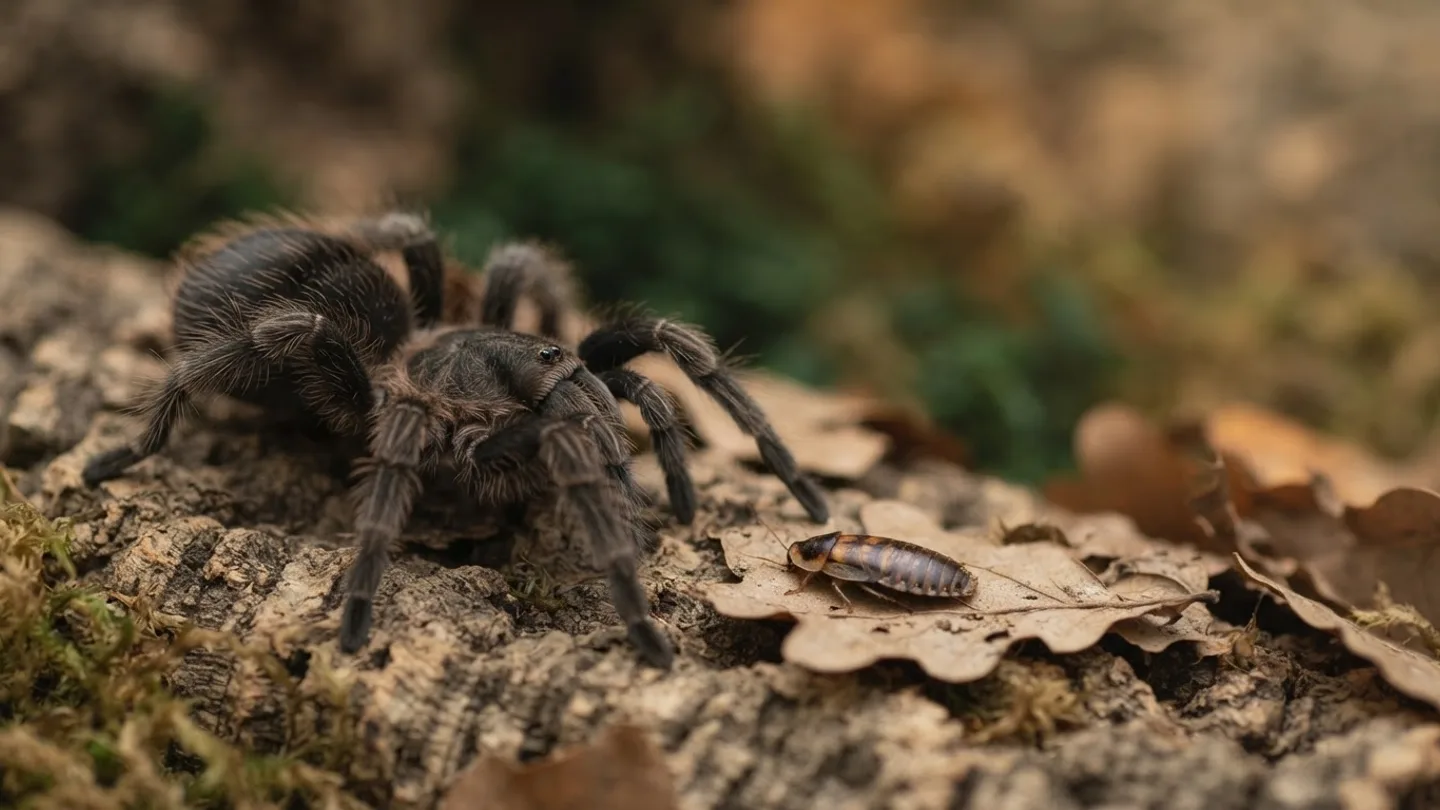
Use body size, not enclosure size, to judge prey. For a spider with a 1/2 inch body, offer prey about 1/4 to 1/2 inch. If the feeder looks like it could tackle the spider, remove it. The prey should not be longer than the spider's body from front to back. For a first spider, this one rule prevents many accidents.
Feed frequency follows age and appetite. A sling may eat every 3 to 7 days. A juvenile may eat every 7 to 14 days. A healthy adult may go every 2 to 4 weeks. Do not feed on a strict schedule if the spider refuses. Offer two or three appropriately sized feeders in the evening, then check the next morning.
If the spider is in premolt, the stage before molting, stop feeding and remove live prey. Do not mistake a slow appetite for hunger. Species vary. Large ground dwellers may accept bigger roaches, and fast tree species may prefer softer prey. Start with the body-size rule, then adjust to what your spider eats comfortably. For more on setting up the whole system, see beginner invertebrate care.
| Feeder | Best for | Size rule | Main risk |
|---|---|---|---|
| Live crickets | Most species and everyday feeding | Use pinhead or appropriately sized crickets, no larger than body | Oversized crickets can attack; escaped feeders become stress in the room |
| Dubia roaches | Larger spiders and steady feeding | Same size rule as crickets; remove within a day | They can climb if the enclosure is loose; not for very small slings unless nibbled or small nymphs |
| Mealworms | Mid-sized juveniles and adults | Use 1/4 inch to 1/2 inch mealworms for small to medium bodies | Hard exoskeleton can be difficult for very young spiders; leftovers can chew substrate or harm a molting spider |
| Superworms | Larger adult tarantulas | Offer only if the spider's body is clearly large enough | Their jaws can grab the spider if left too long or if the spider is small |
| Flightless fruit flies | Tiny spiderlings and slings | Use only for very small bodies, under about 1/4 inch | Too small to sustain most growing tarantulas beyond the earliest stage |
| Dead frozen prey | Occasional feeding when the spider accepts it | Thaw fully, offer same size as live prey, remove within a day | Spoils quickly; harder to tell whether the spider is genuinely eating |
| Wild insects and vertebrate prey | No, avoid for typical pet setups | Do not collect from yards, gardens, or unknown areas | Pesticides, parasites, toxins, and oversized prey can kill or injure the spider |
Safe feeding routine
Choose the right size
Pick prey no larger than the spider's body. For slings, use pinhead crickets, flightless fruit flies, or tiny mealworms. For adults, use larger crickets, roaches, or appropriately sized mealworms.
Gut load 12 to 24 hours before
Feed the insects clean oats, wheat bran, a slice of potato or squash, or a commercial gut load. This adds body nutrition and water. If your keeper supplies are limited, even a quick oats rinse in a small cup for a few hours helps.
Offer 2 to 3 pieces in the evening
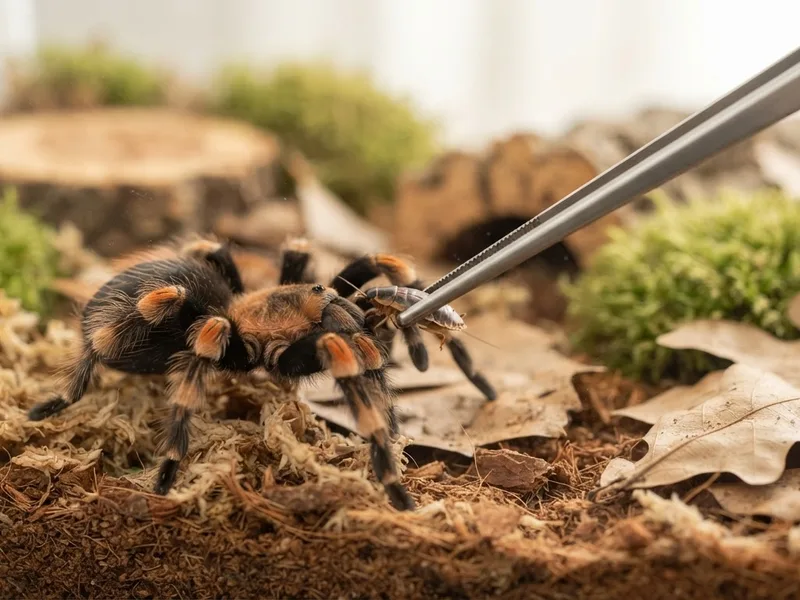
Place them gently in a water dish lid, on substrate, or use feeding tongs. Do not crowd the enclosure. If the spider does not eat them, remove them the next day.
Remove uneaten prey within 24 hours
Crickets and roaches can bite or stress a resting spider. Mealworms can chew through soft substrate or harm a molting spider. This is the one habit that matters most if you are not sure.
Reassess before the next meal
If the spider ate and looks normal, repeat in 3 to 7 days for young spiders or 2 to 4 weeks for adults. If it refuses repeatedly and is premolt or recently molted, stop feeding.
Use optional dusting sparingly
Most keepers do not need to dust feeders for adult tarantulas. A light dusting with plain calcium powder can help fast-growing juveniles or breeding spiders. Dust only the insects, not the enclosure.
What not to feed and feeding around molts
Do not feed wild-caught insects. A spider can tolerate a mealworm, but a pesticide-treated or toxic insect can kill it. Fireflies, ladybugs and brightly colored beetles are examples of prey that should stay out of the enclosure. Yard insects also carry parasites and soil residues.
Avoid prey that is too large. A large superworm or oversized cricket may grab the spider's legs or abdomen. Some New World species can release urticating hairs when stressed, and an ill-sized meal can make handling or cleanup more stressful for both of you.
Do not feed during premolt or while the spider is molting. Signs include a dark or shiny abdomen, rearing, reduced appetite and a balding spot. If you are unsure, assume molting and remove live prey. After molting, wait 5 to 7 days and offer a small feeder first.
Dead prey can be fed if frozen and thawed from a reliable source, but remove it within a day. It spoils faster and does not show appetite behavior as clearly. Live prey is still the better default for most keepers.
You do not need a mouse, a pinky rat, or a rotating menu. For a typical pet tarantula, a few species of feeder insects sized correctly are enough.
Common questions
Can I feed wild crickets to my tarantula?
No. Wild insects may have pesticides or parasites. Buy feeder insects from a reliable source.
Is a dead cricket okay?
Occasionally, yes. Thaw frozen dead prey completely and remove it within a day. Do not leave dead prey in the enclosure overnight.
How often should I feed my tarantula?
Small young spiders may eat every 3 to 7 days. Juveniles often take 7 to 14 days. Healthy adults can eat every 2 to 4 weeks if appetite is strong. Refusal during premolt or postmolt is normal.
Can a tarantula starve with food left in the enclosure?
Starvation is unlikely in healthy adults. The bigger risk is live prey attacking a vulnerable spider, especially in premolt or after molting. Remove uneaten prey within a day.
Do I need to dust feeders?
Not usually. A light dusting of calcium powder can help fast-growing young or breeders. For most adults, gut loading and correct prey size matter more.