Powder Blue and Powder Orange Isopods (Porcellionides pruinosus) Care Sheet
A powder blue isopod is a beginner culture when the container has one damp side and one dry side. If you bought a tub from an expo, a pet store, or an online breeder, this care guide covers the settings that keep the culture stable.
At a glance: species behind the morph, Porcellionides pruinosus; common morph names, powder blue and powder orange; difficulty, beginner; adult size, about 0.4 to 0.7 inches; temperature, 65 to 80 °F; enclosure, 8 to 12 inches long with a tight mesh lid; moisture, damp side plus dry side; feeding, leaf litter always, small protein treat 1 to 2 times a week; breeding, fast; best use, feeder culture, clean up crew, bioactive damp zone.
Powder orange is the same species with a different color form. Most care is shared, so keep one care plan and only change your expectations about appearance.
What this care guide covers, in order of use tonight
Powder blue and powder orange forms
Powder blue isopod
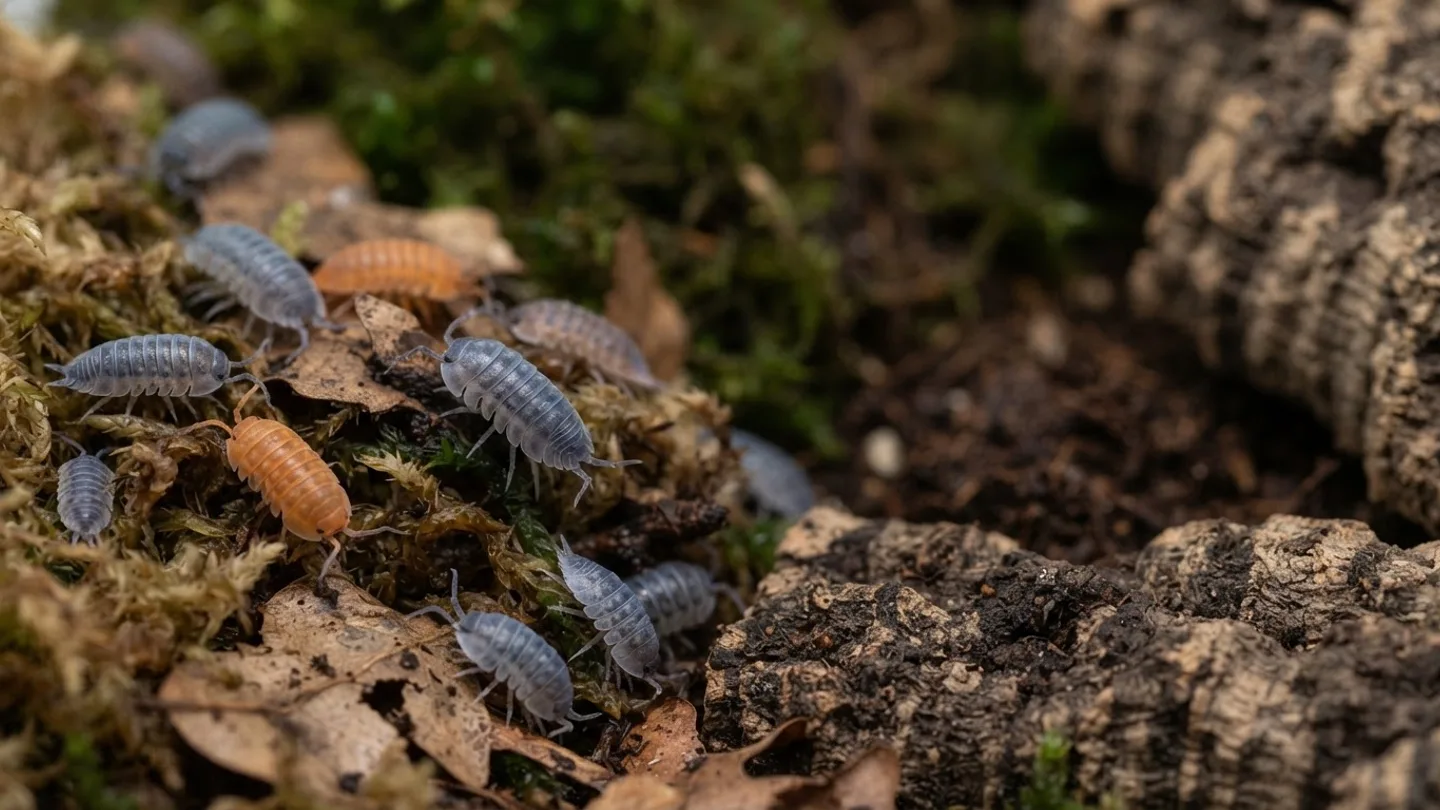
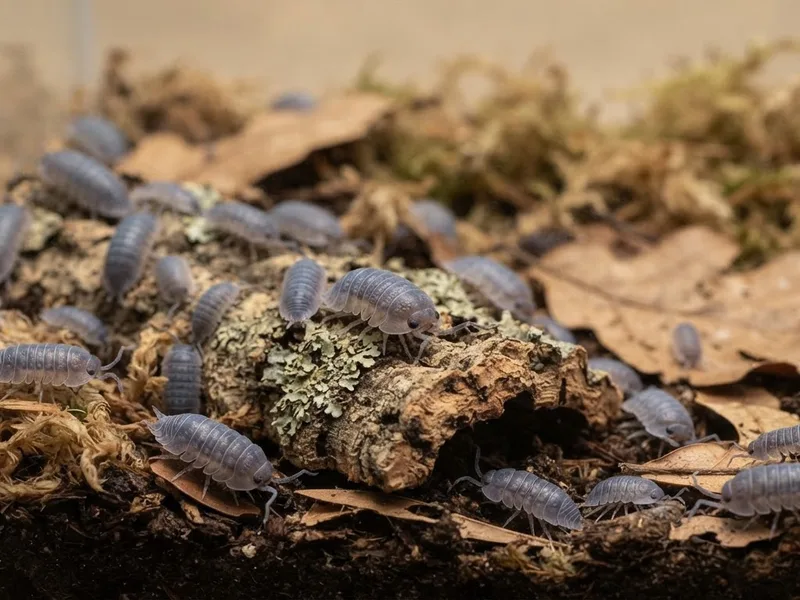
Powder blue is the name most hobby keepers search for. It refers to a pale blue to grayish blue color form of Porcellionides pruinosus. Young animals may look washed out, and adults can lose brightness after many molts.
Keep this form as a culture, not a single pet. The blue shade is most visible under good leaf litter and a shallow layer of substrate.
Powder orange isopod
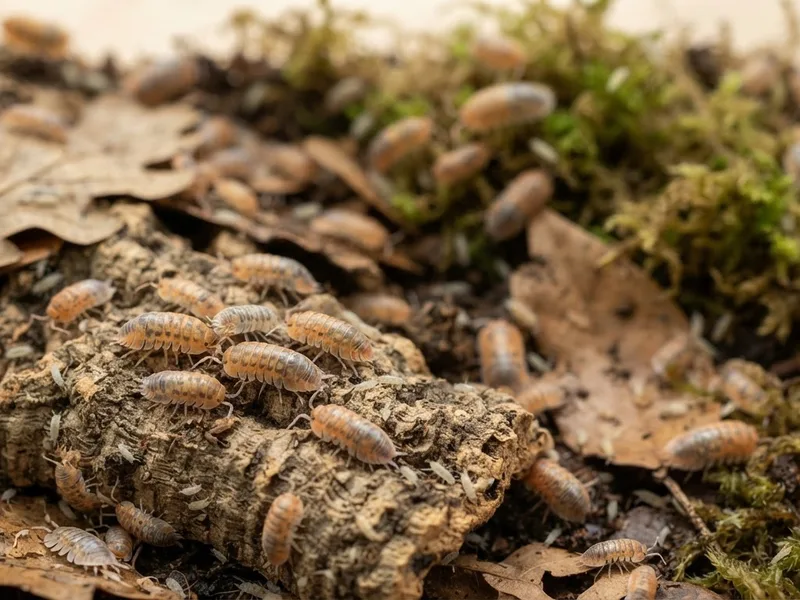
Powder orange is the same species and the same care plan, with a warmer tan to orange tone. Color is not a reliable health check on its own. A healthy orange culture should still move, molt, and leave young behind the damp side.
Because they are small and fast, both forms benefit from a smooth container wall and a lid. They can escape through a gap that feels too small for a finger.
Key takeaways
- Powder blue and powder orange isopods are Porcellionides pruinosus color forms, not separate species.
- Keep a moisture gradient. A damp side plus a dry side prevents mold and escape pressure.
- Feed leaf litter first. Protein should be a small pinch, not a staple.
- Use them as feeders or a bioactive clean up crew, but only in humid or moist zones.
- When buying a morph, ask for the species name and any collecting or shipping permits.
Starter care settings for a powder blue isopod culture
Use a small plastic storage box for a new culture. The inside length should be 8 to 12 inches, and the height should be 4 to 6 inches. These isopods are not climbers that need a tall habitat, but they need enough surface area to find food, mate, and hide.
Cut ventilation into the lid or cover a vent hole with fine mesh. If the mesh is coarse, they can still crawl out. A fine window screen works well in most rooms.
Keep the temperature in the 65 to 80 °F range. Normal US indoor temperatures are usually enough. Do not use a heat mat unless the room is consistently cold. Heat mats can dry the damp side and create a hot spot that is harder to notice.
If your room gets above 85 °F, move the container to a cooler interior shelf. If it gets below 50 °F, treat the culture as at risk and move it indoors before the next feeding.
Use a moisture gradient instead of soaking the whole container. Make one half damp and one half dry. The damp side should feel moist when you press it, but it should not release standing water.
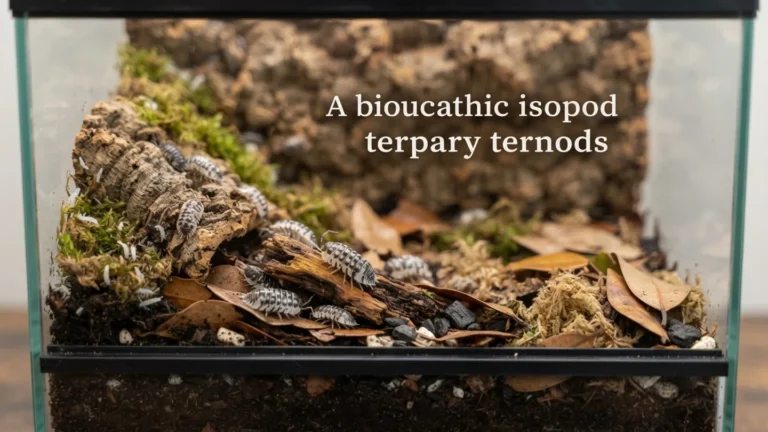
Choose a substrate that holds shape without turning to paste. A simple mix is leaf litter, rotting wood or cork, and a small amount of plain organic potting soil. Avoid fertilized potting soil, aromatic cedar shavings, and fresh paint residue.
Add food in the same spot each time, on the damp side. Leaf litter is the staple. It gives them a place to feed, molt, and hide. If you see mold, remove the moldy piece and make the damp side drier for one to two days.
For calcium, lay a small piece of cuttlebone, crushed eggshell, or a calcium supplement in the dry area. It will last weeks, so do not sprinkle powder all over the container.
Set up a starter powder blue isopod culture
Choose the container
Use an 8 to 12 inch long plastic box with 4 to 6 inches of height. Make sure the lid sits flat and has fine mesh over any vent.
Build the moisture gradient
Spread a shallow layer of leaf litter, rotting wood, and plain organic potting soil. Keep one half damp and one half dry.
Add calcium and a small food dish
Place cuttlebone or crushed eggshell on the dry side. Add a tiny piece of leaf litter with a pinch of dry food on the damp side.
Add the isopods
Set the culture on the damp side and leave it for 24 to 48 hours. Molting, which means shedding a skin, is normal, so do not disturb shed skins.
Check weekly
Look for live young, shed skins, and new mold. Add damp leaf litter as needed. If mold appears, remove the bad spot and let the damp side dry for one to two days.
Use as feeders, a bioactive clean up crew, or a display culture
Powder blue isopods make a good feeder option for small reptiles, small amphibians, and other invertebrate pets. They are small, so match them to an animal that can eat them safely.
Gut load means feeding the culture nutritious food before it is used as food. Prepare the container for 24 to 48 hours with leaf litter, calcium, and a small amount of protein.
Use them as a clean up crew only in an enclosure with leaf litter, a damp corner, and enough ventilation. A bioactive build is an enclosure designed to support decomposers.
They are not a cure for mold. Mold usually comes from overfeeding, poor ventilation, or too much standing water. Fix those first.
Pros
- Fast breeder under stable moisture and warmth
- Small size works for tiny feeder animals
- Easy to gut load with leaf litter and calcium
- Active foragers that show culture health quickly
- Useful in damp bioactive zones with leaf litter
Cons
- Can escape through small lid gaps
- Not suited to a dry tank
- Color can fade with age or poor lighting
- Can crowd a small container if overfed
- Not a good single display pet
Permit rules and buying powder blue isopods legally
Powder blue and powder orange are color morphs, so a seller should name the species, not only the trade color. The species name is Porcellionides pruinosus. If a page says only powder blue, ask the seller for the scientific name before ordering.
If you collect isopods yourself, check your state and local wildlife agency. Many US states have collecting rules, closed areas, and permit requirements. A common backyard isopod may be allowed, but another species or location may not be.
If you ship cultures across state or national borders, follow the live animal shipping rules for the seller, buyer, and carrier. Do not rely on a color name alone. Ask whether the culture is captive bred, and keep a trade record.
If a listing does not name Porcellionides pruinosus, the morph name may still be correct, but your care and permit expectations should be based on the species name.
Frequently asked questions
Are powder blue and powder orange isopods the same species?
Yes. Both are color forms of Porcellionides pruinosus.
Why did my powder blue isopods turn pale?
Young animals and older adults can look washed out. Pale color is not always a problem if they move, feed, and molt.
How wet should the substrate be?
Use a gradient. Keep one side damp and one side dry. The damp side should hold together under gentle pressure, with no puddles.
Do powder blue isopods need a heat mat?
Usually no. Normal indoor rooms in the 65 to 80 °F range are enough. A heat mat can dry the damp side too fast.
Can I keep them in a reptile bioactive enclosure?
Yes, if the enclosure has a damp zone, leaf litter, and enough ventilation. Do not add them to a dry tank and expect them to thrive.
Are they safe to handle?
They are generally harmless for short checks, but wash your hands after and do not let them crawl on your face or eyes.
How do I harvest without losing too many adults?
Move a damp leaf litter dish onto the damp side and wait until many gather, then gently transfer the dish. Do not dump the whole container into a feeder.